
Îles Saint-Marcouf
Îles Saint-Marcouf are two small, uninhabited islands located off the coast of Normandy, France, in the Baie de la Seine region of the English Channel. These islands lie approximately 6.5 km (4.0 mi) east of the Cotentin Peninsula coast near Ravenoville and about 13 km (8 mi) from the island of Tatihou and the harbour at Saint-Vaast-la-Hougue. The islands consist of the larger île du Large and the smaller île de Terre, separated by 500 m (1,600 ft) of water. Together, they cover a total area of approximately 1,400 hectares (3,500 acres) and reach a maximum elevation of 10 m (33 ft).
Historical significance and early occupation
The islands are named after Saint Marcouf, a 6th-century saint born in Bayeux, renowned for his reputed ability to cure scrofula, a form of tuberculosis. Saint Marcouf died on the islands on 1 May 588 CE. The islands hosted a monastic community from the early medieval period until the 15th century, reflecting their religious importance during the Middle Ages. This monastic presence contributed to the islands' role as a spiritual refuge and place of pilgrimage.
Military architecture and fortifications
Due to their strategic location controlling access to the Baie de la Seine and the approaches to Normandy, the Îles Saint-Marcouf were fortified extensively, particularly during the 18th and 19th centuries. The islands feature a bastioned fortress design, a style of military fortification characterized by angular bastions projecting from the curtain walls, allowing for defensive crossfire and better protection against artillery.
The fortifications include thick stone walls, bastions, ramparts, and defensive ditches. These defenses were designed to repel naval attacks and to secure the islands against enemy landings. The bastioned layout reflects the influence of military engineers such as Vauban, who revolutionized fortress design in France during the 17th century, although the specific construction phases on the islands occurred later.
During the Napoleonic Wars, the islands served as a key defensive position guarding the French coast against British naval incursions. The fortifications were maintained and upgraded through the 19th century, adapting to advancements in artillery and naval warfare.
Lighthouse and modern additions
On the larger île du Large, a lighthouse was constructed in 1948. This lighthouse remains a prominent feature of the island, aiding navigation in the busy shipping lanes of the English Channel. It stands as a modern complement to the historical military structures.
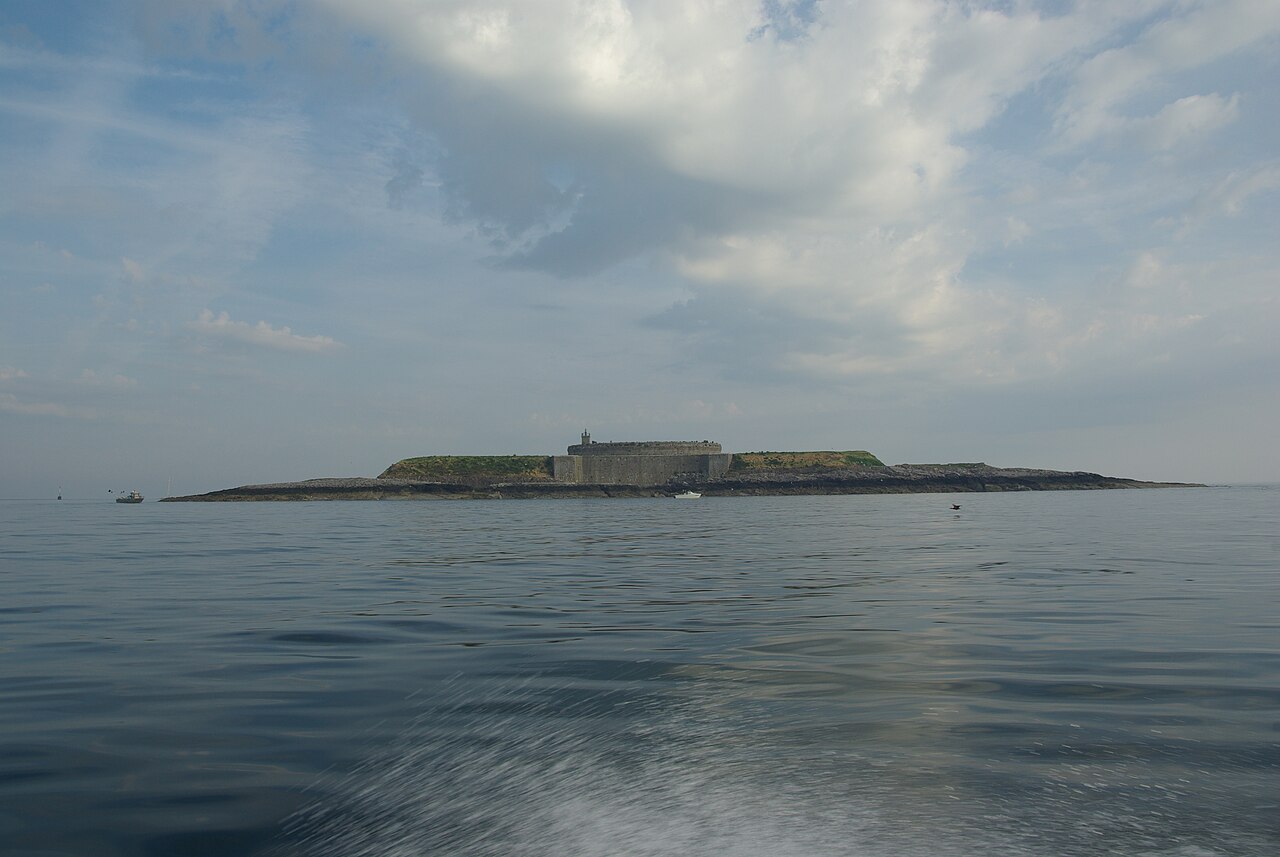
Photo by Jeremy14650 • CC BY-SA 3.0
Geographical and environmental context
The islands' low elevation and proximity to the mainland have made them vulnerable to erosion and changing sea levels. Their uninhabited status today helps preserve their natural environment and the integrity of the historic fortifications.
The surrounding waters are rich in marine biodiversity, and the islands form part of a protected area that balances heritage conservation with ecological preservation.
Visiting Îles Saint-Marcouf
Access to the islands is limited due to their protected status and military heritage. Visitors interested in military history and coastal fortifications may find the islands intriguing, though arrangements for visits typically require special permission or guided tours. The islands offer a rare glimpse into coastal defense systems of the 18th and 19th centuries, combined with a unique natural setting.
Frequently asked questions (FAQ)
- How do I get to Îles Saint-Marcouf?
- You can reach Îles Saint-Marcouf by taking a boat from the nearby coastal town of Barfleur. The journey offers stunning views of the coastline and surrounding waters, making it a delightful experience for visitors.
- What is the historical significance of Îles Saint-Marcouf?
- Îles Saint-Marcouf holds historical importance due to its strategic location in the English Channel, which was pivotal during various military conflicts. The islands served as a base for naval operations and played a role in the defense of the French coastline.
- When was Îles Saint-Marcouf constructed?
- The fortifications on Îles Saint-Marcouf were built in the 17th century, primarily to defend against English and Dutch naval threats. The structures showcase the military architecture of the time and reflect the historical tensions in the region.
- Can I visit Îles Saint-Marcouf year-round?
- Visiting Îles Saint-Marcouf is typically best during the spring and summer months when the weather is more favorable for boat trips. However, access may be limited during the winter due to rough seas, so it’s advisable to check local schedules before planning your visit.
- Why is the architecture of Îles Saint-Marcouf noteworthy?
- The architecture of Îles Saint-Marcouf is noteworthy for its well-preserved military fortifications and unique design that reflects the military engineering techniques of the 17th century. Visitors can explore various structures that illustrate the historical context and strategic significance of the islands.
- Is it possible to explore the islands on foot?
- Yes, visitors can explore Îles Saint-Marcouf on foot, enjoying scenic walks around the fortifications and natural landscapes. However, it’s important to wear appropriate footwear and be cautious of the terrain, as some areas may be rugged.
- What are the ticket prices for visiting Îles Saint-Marcouf?
- Ticket prices for boat trips to Îles Saint-Marcouf can vary, typically ranging from €10 to €20 for adults, with discounts available for children and seniors. It's best to check with local tour operators for the most current pricing and any package deals.
- What are the opening hours for Îles Saint-Marcouf?
- Îles Saint-Marcouf does not have traditional opening hours, but boat services operate during specific times, usually from late spring to early fall. It’s recommended to check the boat schedule beforehand to plan your visit effectively.
- Are there any nearby attractions to visit after Îles Saint-Marcouf?
- Yes, after visiting Îles Saint-Marcouf, you can explore nearby attractions such as the picturesque village of Barfleur and the historic town of Cherbourg. These locations offer rich cultural experiences and beautiful coastal scenery, making them ideal for a full day of exploration.
Photo gallery

Information
Loading map...
Visitor reviews
No reviews yet. Be the first to share your experience!