Küssaburg Castle Ruins
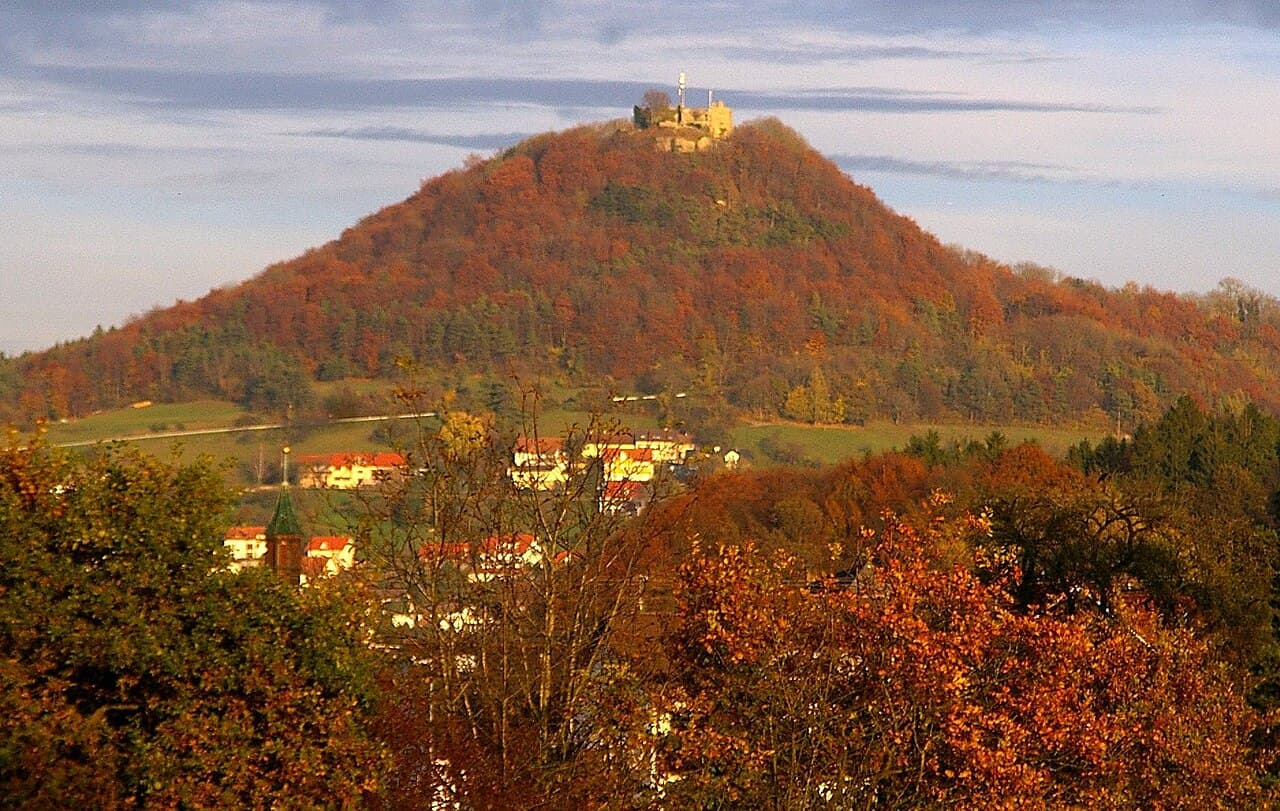
Küssaburg castle ruins stand prominently on a hilltop at an elevation of 634 meters above sea level in Bechtersbohl, a village within the municipality of Küssaberg in the county of Waldshut, Baden-Württemberg, Germany. This hill castle is one of the most significant historic structures along the High Rhine, serving as a landmark for the region. The name "Küssaburg" possibly originates from the Roman personal name Cossinius or from the German word "Kissen" (Alemannic "Chüssi"), meaning "cushion," which aptly describes the rounded shape of the mountain on which the castle is situated.
Early construction and ownership
The castle was likely built between 1125 and 1141 during the high medieval period. It was initially constructed as a defensive stronghold to control the strategic area near the Rhine river and oversee the surrounding territories. Over the centuries, ownership of the castle passed through several hands, including the counts of Küssenberg, the Bishopric of Constance, and the counts of Sulz. Each proprietor contributed to the castle's development, adapting it to the military and residential needs of their time.
Architectural features and fortress development
Originally designed as a hill castle, Küssaburg was later enhanced and expanded into a fortress. The castle's elevated position provided natural defense advantages, with steep slopes protecting it on several sides. The ruins today reveal remnants of thick defensive walls, towers, and gate structures typical of high medieval fortifications. The castle complex included residential quarters, a courtyard, and defensive battlements, reflecting its dual role as a noble residence and military stronghold.
Defensive structures
The castle's fortifications were strengthened over time, particularly in response to evolving military technologies and threats. The presence of a keep or donjon is suggested by the remains of central towers, which would have served as the last line of defense. Additionally, the castle's walls were likely surrounded by a moat or dry ditch to hinder enemy approaches.
Destruction and decline
Küssaburg's military significance continued until the Thirty Years' War, a devastating conflict across Central Europe from 1618 to 1648. On 8 March 1634, as the Swedish Army advanced, the castle's garrison deliberately set fire to the fortress to prevent its capture. This act of scorched earth led to extensive damage and the beginning of the castle's decline.
Further destruction occurred on 25 December 1664 when a landslide impacted the already damaged ruins, accelerating their deterioration. Following these events, the castle was abandoned and fell into ruin.
19th-century rediscovery and modern significance
Interest in the ruins revived in the 19th century when efforts began to uncover and preserve the remains of Küssaburg. Archaeological work and restoration initiatives aimed to stabilize the ruins and make them accessible to visitors. Today, the site is a popular destination for tourists and history enthusiasts, offering panoramic views of the Rhine valley and insights into medieval fortification architecture.
Cultural and heritage importance
Küssaburg is recognized not only for its historical military role but also as a symbol of the region's medieval past. The ruins serve as an educational site illustrating high medieval castle construction and the turbulent history of the area during the Thirty Years' War. The castle's prominent location and evocative remains continue to attract visitors interested in history, architecture, and scenic landscapes.
Visitor information and accessibility
The ruins are accessible via hiking trails from the village of Bechtersbohl and nearby towns. Visitors can explore the remnants of the castle walls, towers, and courtyards while enjoying views of the surrounding Black Forest and the Rhine River. Interpretive signage provides historical context, enhancing the visitor experience. The site is open year-round, with no entrance fee, making it an attractive destination for casual tourists and serious history buffs alike.
Frequently asked questions (FAQ)
- When was Küssaburg castle originally built?
- Küssaburg castle was likely constructed between 1125 and 1141 during the high medieval period as a strategic hilltop fortress.
- What caused the destruction of Küssaburg castle?
- The castle was deliberately set on fire by its garrison on 8 March 1634 to prevent capture by the Swedish Army during the Thirty Years' War, and further damaged by a landslide on 25 December 1664.
- Is Küssaburg castle open to visitors?
- Yes, the ruins of Küssaburg castle are open year-round and can be accessed via hiking trails from Bechtersbohl. There is no entrance fee.
- What architectural features can be seen at Küssaburg castle ruins?
- Visitors can observe remnants of defensive walls, towers, gate structures, and the castle courtyard, reflecting typical high medieval hill castle architecture.
- Why is Küssaburg castle historically significant?
- Küssaburg is an important historic building on the High Rhine, illustrating medieval fortification techniques and the region's history during the Thirty Years' War.
Photo gallery

Photo by R.Kirchner•Public domain
Information
Loading map...
Visitor reviews
No reviews yet. Been here? Write the first review and help other travelers!
Write the first reviewVisited this castle? Share your experience
Your review helps other travelers and adds first-hand knowledge to our encyclopedia.