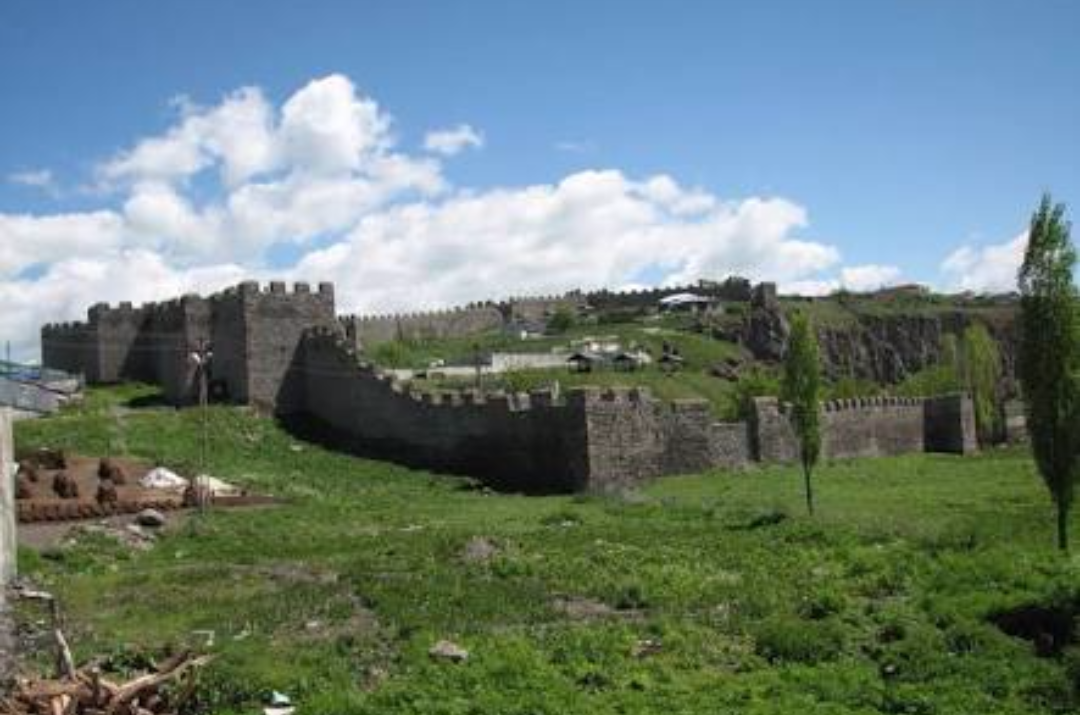
Kirnav Castle
Kirnav Castle, known locally as Kirnav Kalesi, is a historic fortress situated on a prominent hill northwest of the village of Çayağzi in the Ardahan province of northeastern Turkey. This hill castle occupies a strategic position overlooking the surrounding plains, commanding views of the nearby river crossing and the road leading north towards Hanak. The castle's location suggests it played a role in controlling important regional routes during its active use.
Architectural features and layout
The castle exhibits a somewhat triangular ground plan, a distinctive shape that likely reflects the topography of the hill it occupies and the defensive needs of its builders. Although much of the structure is now in ruins, scattered wall fragments indicate that the castle was once enclosed by substantial defensive walls. These walls appear to have been constructed using building techniques similar to those of Ardahan Castle, which is located nearby and dates to the same period.
The masonry style, characterized by robust stonework and the use of mortar, aligns with 16th-century Ottoman military architecture. The castle's walls may have included towers or bastions at key points to enhance its defensive capabilities, though much of this detail is lost due to the ruinous state of the site.
Historical context and significance
The exact date of construction of Kirnav Castle remains uncertain, but architectural analysis and comparison with nearby fortifications suggest it was built during the 16th century, a time when the Ottoman Empire was consolidating control over this region. The castle likely served as a military outpost or watchtower to monitor and secure the important road leading north to Hanak, as well as to oversee the river crossing in the area.
While there is a lack of detailed historical records specifically mentioning Kirnav Castle, its similarities with Ardahan Castle and its strategic placement imply that it was part of the Ottoman defensive network in northeastern Anatolia. This network was essential for controlling trade routes, military movements, and regional administration during the Renaissance period under Ottoman rule.
Current condition and accessibility
Today, Kirnav Castle is in a ruined condition. The scattered remains of its walls suggest that parts of the structure may have been deliberately destroyed, possibly with dynamite, which has contributed to the fragmentation of the site. Despite this, the castle remains freely accessible to visitors, who can explore the ruins and enjoy panoramic views of the Ardahan plains and surrounding landscape.
The site offers a quiet and evocative glimpse into the region's past military architecture and provides opportunities for historical exploration and photography. Its hilltop position makes it a notable landmark within the local geography.
Visitor information and surrounding area
Kirnav Castle can be reached via the nearby D955 road and is located close to the village of Çayağzi. There are no formal visitor facilities or entrance fees, making it an open site for those interested in history and architecture. Visitors should prepare for uneven terrain and bring appropriate footwear for exploring the ruins safely.
The castle's proximity to Ardahan and other historical sites in the region makes it a worthwhile stop for travelers exploring northeastern Turkey's rich cultural heritage. The surrounding area is characterized by natural beauty, including rolling plains and river valleys, which complement the historical experience.
Frequently asked questions (FAQ)
- How do I get to Kirnav Castle?
- Kirnav Castle is located northwest of the village of Çayağzi in Ardahan province, accessible via the nearby D955 road. Visitors typically reach the site by car or local transport from Ardahan city.
- What is the historical period of Kirnav Castle?
- Kirnav Castle dates back to the 16th century during the Renaissance period under Ottoman rule, reflecting military architecture of that era.
- Is Kirnav Castle open to the public?
- Yes, Kirnav Castle is freely accessible with no entrance fee. Visitors can explore the ruins and enjoy views of the surrounding plains.
- What architectural style is Kirnav Castle built in?
- The castle's construction techniques resemble those of Ardahan Castle, typical of 16th-century Ottoman military architecture, though exact stylistic details are not well documented.
- What is the condition of Kirnav Castle today?
- Kirnav Castle is in ruins, with many wall fragments scattered around the site, possibly due to deliberate destruction. Despite this, it remains a notable historic ruin.
Information
Loading map...
Visitor reviews
No reviews yet. Been here? Write the first review and help other travelers!
Write the first reviewVisited this castle? Share your experience
Your review helps other travelers and adds first-hand knowledge to our encyclopedia.