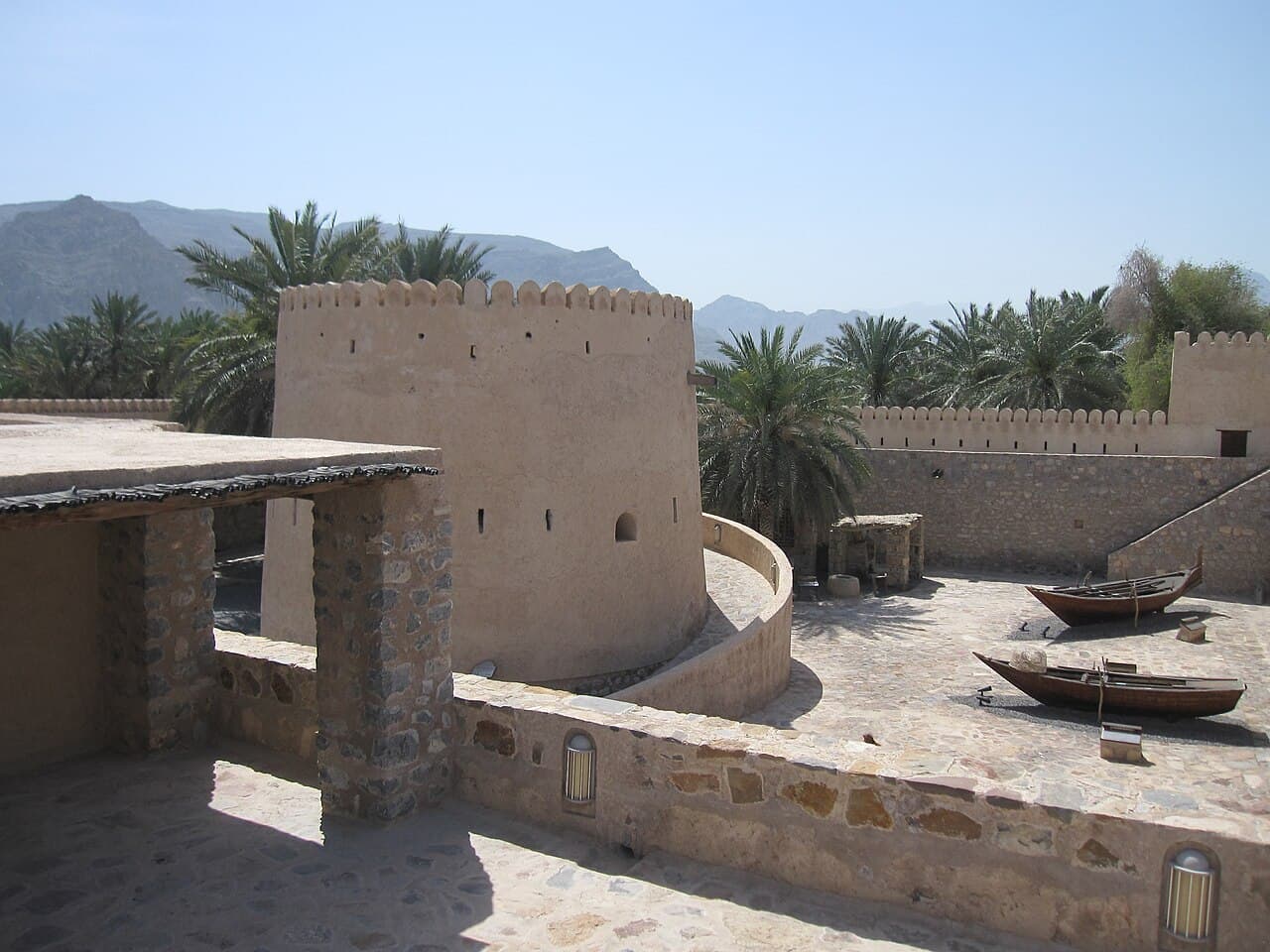
Khasab Castle
Khasab Castle is a prominent example of a Portuguese bastioned fortress constructed in the early 17th century during the Renaissance period. Located in the quiet fishing town of Khasab in the Musandam Governorate of Oman, this castle stands as a testament to the strategic military architecture employed by the Portuguese during their expansion into the Arabian Peninsula.
Historical background and strategic significance
The castle was originally built by the Portuguese around the beginning of the 17th century, likely on the foundations of an earlier indigenous fortification. This earlier structure suggests the site had long been recognized for its strategic importance, controlling maritime routes through the Strait of Hormuz. The Portuguese aimed to secure their dominance over these crucial sea lanes by establishing fortified positions along the coast.
Approximately 25 years after its construction, the Portuguese were expelled from Oman by local forces. Subsequently, the castle was taken over and modified by Omani rulers to suit their own military and administrative requirements. This transition marks an important phase in the castle's history, reflecting the shifting power dynamics in the region during the early modern period.
Architectural features and layout
Khasab Castle is designed as a square bastioned fortress with a distinctive combination of towers. It features three rectangular corner towers and one round corner tower, along with a central round tower situated within the courtyard. This layout exemplifies the bastioned fortification style, which was developed to improve defense against artillery fire and provide overlapping fields of fire.
Originally, the castle was located directly adjacent to the beach, allowing it to control maritime access and provide a defensive stronghold against naval attacks. Over time, the sea has receded, and land reclamation has altered the immediate surroundings, with new developments now lying between the castle and the shoreline.
Defensive structures
The bastioned design incorporates thick walls and angled bastions to deflect cannonballs and enable defenders to cover all approaches. The central round tower likely served as a keep or last line of defense, offering elevated observation and commanding views of the surrounding area.
The castle's position atop a slight elevation further enhanced its defensive capabilities, enabling it to monitor both land and sea approaches effectively.
Restoration and current use
In 1990, Khasab Castle underwent restoration to preserve its structural integrity and historical value. The restoration work aimed to maintain the castle's original architectural elements while stabilizing deteriorated sections.
Today, the castle functions as a museum, showcasing the region's history and the castle's role in maritime defense. Visitors can explore its battlements, towers, and interior chambers, gaining insight into the military architecture of the Renaissance period and the Portuguese influence in Oman.
Visiting Khasab Castle and nearby attractions
The castle is open to visitors for a small admission fee. It offers a unique glimpse into the military history of the Musandam Peninsula and the broader geopolitical struggles of the 17th century.
Nearby, visitors can explore other historic sites such as Al Kamazra Castle and Bani Sanad Fort. While there is a walking path from Khasab Castle to Al Kamazra Castle, it is recommended to use a vehicle due to the challenging terrain and risk of getting lost.
These sites collectively provide a comprehensive understanding of the region's fortifications and their evolution over time.
Frequently asked questions (FAQ)
- What is Khasab Castle known for?
- Khasab Castle is known for its stunning architecture and historical significance as a strategic fortress in Oman. Built in the 17th century, it served as a military stronghold and a residence for local governors, showcasing traditional Omani design and craftsmanship.
- When was Khasab Castle built?
- Khasab Castle was constructed in the early 17th century, specifically around 1620. It reflects the rich history of the region and has been well-preserved, allowing visitors to explore its ancient walls and structures.
- What are the opening hours for Khasab Castle?
- Khasab Castle is typically open to visitors from 8:00 AM to 4:00 PM, Saturday through Thursday. It is advisable to check for any seasonal changes in hours or holiday closures before planning your visit.
- Can I take photographs inside Khasab Castle?
- Yes, visitors are generally allowed to take photographs inside Khasab Castle, but it's recommended to be respectful of the site's historical significance. Some specific areas may have restrictions, so be sure to check for any signs or guidelines during your visit.
- Is Khasab Castle accessible for visitors with mobility challenges?
- Khasab Castle has some accessibility features, but due to its historical nature, certain areas may have uneven surfaces and stairs. It's advisable for visitors with mobility challenges to plan ahead and inquire about specific access options upon arrival.
- When is the best time to visit Khasab Castle?
- The best time to visit Khasab Castle is during the cooler months, from October to April, when temperatures are more pleasant for exploring. Visiting during this period also allows you to enjoy the surrounding natural beauty and attractions without the extreme heat of summer.
- What are some nearby attractions to Khasab Castle?
- Nearby attractions include the stunning Musandam Fjords, where you can enjoy boat tours and stunning scenery. Additionally, the local markets and traditional villages offer cultural experiences that complement your visit to Khasab Castle.
- What are the ticket prices for Khasab Castle?
- Currently, the entrance fee for Khasab Castle is quite affordable, making it an excellent option for travelers. It's best to check for the latest ticket prices and any potential discounts for children or groups before your visit.
Photo gallery

Information
Loading map...
Visitor reviews
No reviews yet. Been here? Write the first review and help other travelers!
Write the first reviewVisited this castle? Share your experience
Your review helps other travelers and adds first-hand knowledge to our encyclopedia.


