Karpniki
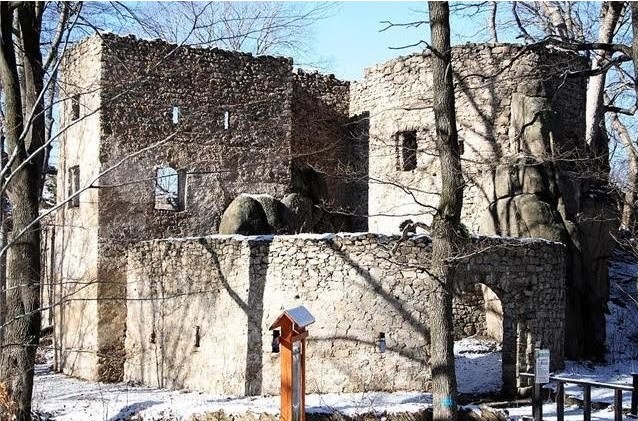
Karpniki Castle, located in the village of Karpniki in southwestern Poland, is a remarkable example of a medieval bastioned fortress that evolved through centuries into a neogothic summer residence. Nestled at the foot of the Sokole Mountains amidst the picturesque landscape of the Jelenia Góra Valley, the castle's history spans from the 13th century to the present day, reflecting the architectural and political transformations of the Silesian region.
The village of Karpniki was founded in the 13th century, with the first documented mention appearing in 1300. By the early 15th century, the estate came under the ownership of the von Predel family, and in 1438 it was sold to the knight Cunz "Bieler" von Reichenbach. Later, in 1476, the Schoff brothers from Chojnik acquired the property, and after division in 1478, Caspar Schoff established Karpniki as the seat of his family branch. It was during this period, around the turn of the 15th and 16th centuries, that the first substantial stone fortress was constructed, replacing an earlier, possibly wooden manor house whose exact location remains uncertain and is subject to archaeological investigation.
Medieval origins and defensive architecture
The original castle built by Caspar Schoff was a quadrangular stone structure measuring approximately 28 by 23 meters, surrounded by a defensive curtain wall and protected by a water-filled moat fed by a nearby river. A prominent feature was the round tower at the southwest corner, projecting beyond the wall line to enable flanking fire along the approach to the castle gate, which was located in the western wall and accessed via a drawbridge over the moat. The northern curtain wall was adjoined by a two-story residential building, while a narrower, vaulted economic building was attached along the eastern curtain. This layout typifies a bastioned fortress adapted to the defensive needs of the late medieval period in Silesia.
Renaissance expansion and baroque modifications
In 1572, after the estate passed to Friedrich von Kanitz und Talowitz, the castle suffered a fire in 1593 caused by a lightning strike. Christoph von Kanitz undertook a comprehensive rebuilding and expansion, adding two new two-story wings with pitched roofs on the western and southern sides of the castle. This renovation preserved the inner courtyard dimensions but added a wooden gallery for circulation. The entrance was enhanced with a late Renaissance portal, richly decorated and signifying the castle's elevated status. The moat was widened and set further from the buildings to improve defense.
During the 18th century, the castle's wings, except the western one, were raised by an additional story. A baroque elliptical staircase tower was constructed in the southwest corner, adding both aesthetic and functional value. The medieval tower was topped with a baroque-style roof, reflecting architectural trends of the period.
19th-century neogothic transformation
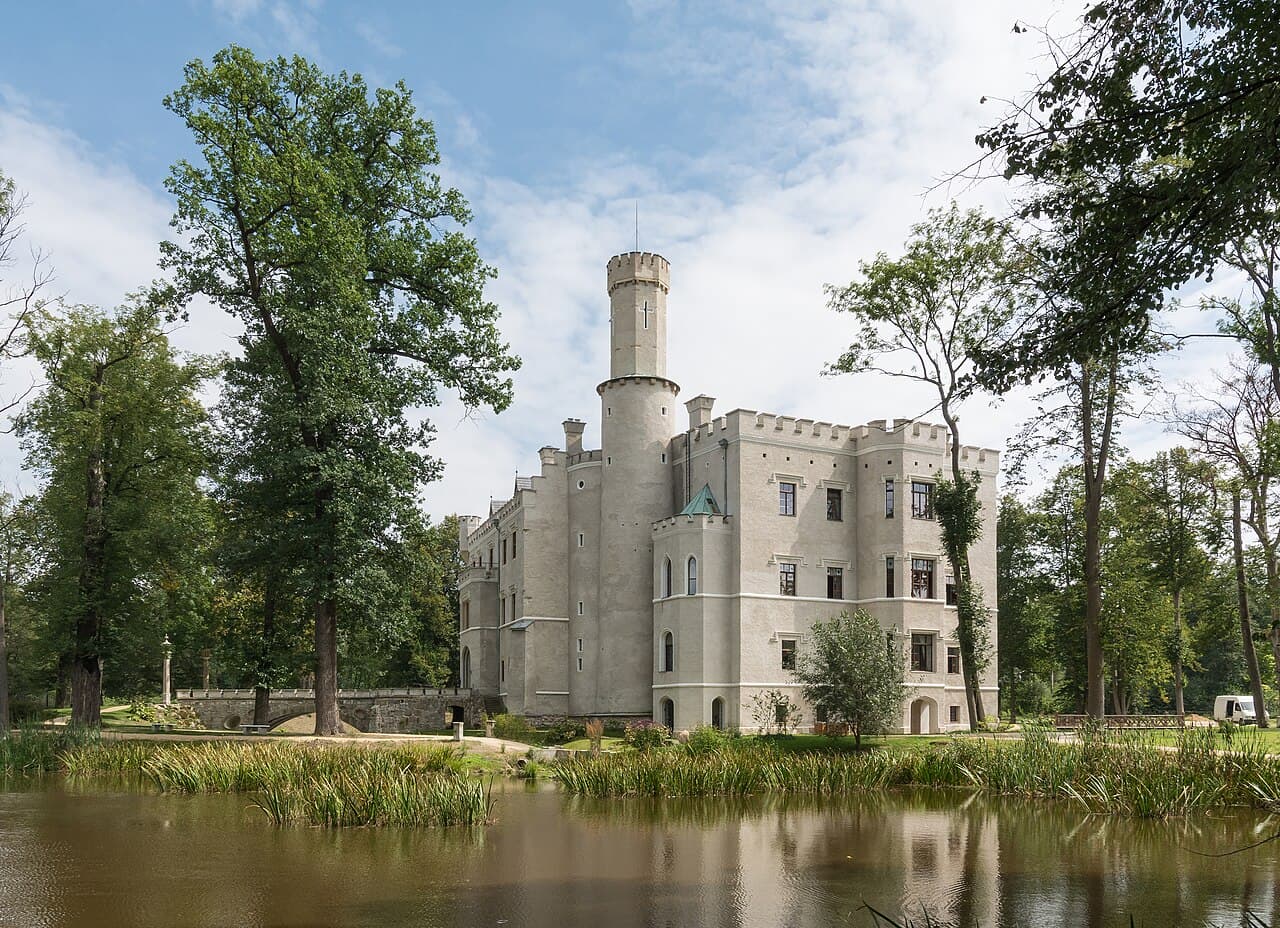
In 1822, the estate was acquired by Prince Wilhelm of Hohenzollern, brother of King Frederick William III of Prussia. Between 1844 and 1846, the castle underwent a significant remodeling in the neogothic style under the direction of architect Friedrich August Stüler. This transformation turned the fortress into a romantic summer residence, incorporating crenellations, pseudo-defensive turrets, and a polygonal tower extension. The western wing was heightened, the entrance gate redesigned, and cloisters were added to the courtyard, blending medieval defensive elements with 19th-century romantic aesthetics.
The interiors were also renovated to reflect contemporary tastes, with richly decorated rooms that balanced historical motifs with modern comfort. The castle and its surrounding English landscape park became a favored retreat for the Hohenzollern family and visiting royalty, including King Frederick William IV and other European aristocrats. The castle's location in the Jelenia Góra Valley, a royal hideaway, underscored its cultural significance.
20th-century uses and restoration
Following World War II, the castle's function shifted dramatically. Initially housing a popular university and later a special institution for children, the castle became a holiday home in 1973. Ownership transferred to the local municipality in 1981, but lack of use led to deterioration. In 2009, a private development company purchased the castle and park, undertaking extensive restoration that preserved the historical fabric while adapting the building for use as a luxury hotel and restaurant.
Despite the many alterations, Karpniki Castle retains significant medieval and Renaissance elements, including the base of the original tower, lower parts of the eastern and northern wings, and the Renaissance floors of the southern and western wings. The baroque staircase and the moat with its stone bridge remain prominent features. The castle's layered history is visible in its architecture, making it a valuable cultural landmark and a vivid testament to Silesian heritage.
Architectural highlights and features
- Quadrangular stone plan with defensive curtain walls and moat
- Round southwest tower projecting beyond the walls for flanking defense
- Drawbridge and western gate providing controlled access
- Two-story residential and economic buildings attached to the northern and eastern walls
- Late Renaissance portal marking the main entrance
- Baroque elliptical staircase tower in the southwest corner
- Neogothic crenellations and turrets added in the 19th century
- English landscape park surrounding the castle
- Stone bridge over the moat leading to the castle entrance
Historical significance and cultural legacy
Karpniki Castle exemplifies the evolution of a defensive medieval fortress into a romantic residence reflecting changing architectural styles and social functions over seven centuries. The castle's association with prominent Silesian noble families and the Prussian royal house highlights its regional importance. Its survival through wars, fires, and political upheavals, followed by careful restoration, ensures its place as a cherished cultural monument and a destination for heritage tourism in Poland.
The castle's transformation in the 19th century into a neogothic summer residence underlines the 19th-century European fascination with medieval architecture and romantic historicism. This period also marks the castle's role as a social and cultural hub for aristocratic gatherings and royal visits, enriching the historical narrative of the Jelenia Góra Valley as a royal retreat.
Today, Karpniki Castle operates as a luxury hotel, offering visitors a unique opportunity to experience its rich history and architectural grandeur firsthand, set within a beautifully maintained parkland that complements its historic character.
Frequently asked questions (FAQ)
- When was Karpniki Castle originally built?
- Karpniki Castle was originally constructed in the 13th century, with significant expansions occurring in the late 15th and 16th centuries.
- What architectural styles are represented in Karpniki Castle?
- The castle features a blend of medieval bastioned fortress architecture, Renaissance additions, Baroque modifications, and a 19th-century neogothic transformation.
- Can visitors tour Karpniki Castle?
- Yes, Karpniki Castle is currently operated as a luxury hotel and restaurant, and visitors can tour parts of the castle during their stay or special events.
- What notable features does Karpniki Castle have?
- Notable features include a round southwest tower, a late Renaissance portal, a baroque elliptical staircase tower, neogothic crenellations, and a surrounding English landscape park.
- Who owned Karpniki Castle in the 19th century?
- In the 19th century, Karpniki Castle was owned by Prince Wilhelm of Hohenzollern, who commissioned its neogothic remodeling.
Photo gallery

Information
Opening hours
Hotel and restaurant open daily, hours vary
Ticket prices
Varies, hotel guests and visitors
Current owner
Private owner
Website
Visit websiteSources & official resources
Verify the information above using these authoritative references.
Loading map...
Visitor reviews
No reviews yet. Been here? Write the first review and help other travelers!
Write the first reviewVisited this castle? Share your experience
Your review helps other travelers and adds first-hand knowledge to our encyclopedia.