
Hillsborough Castle
Hillsborough Castle stands as a prominent example of an 18th-century Georgian country house located in the village of Royal Hillsborough, Northern Ireland. Originally established by the Hill family, who held the title Marquesses of Downshire, the estate has evolved from a private family residence into the official government house of Northern Ireland, reflecting significant political and architectural history over the past three centuries.
The origins and architectural character of Hillsborough Castle
Constructed in the 18th century, Hillsborough Castle was designed in the Georgian architectural style, characterized by its symmetry, proportion, and adherence to classical principles. Unlike medieval castles built for defense, Hillsborough Castle embodies the elegance and domestic comfort typical of Georgian country houses. The structure features a balanced façade, sash windows, and restrained decorative elements that emphasize harmony and order.
The castle's layout includes a central block with flanking wings, set within expansive landscaped grounds that have been carefully developed over generations. The estate's grounds contain formal gardens, woodlands, and a variety of mature trees planted by notable residents and visitors, contributing to the site's historical ambiance and heritage value.
Transition from private estate to official government residence
Owned by the Hill family for over a century, Hillsborough Castle served as their private residence until the early 20th century. The political landscape changed dramatically following the Anglo-Irish Treaty of 1921, which led to the establishment of Northern Ireland as a separate entity within the United Kingdom and the abolition of the office of Lord Lieutenant of Ireland.
In 1922, the British government purchased the estate from the 7th Marquess of Downshire to provide a suitable official residence for the newly created post of Governor of Northern Ireland. The castle was renamed Government House and underwent renovations completed by 1925 to adapt the building for its new administrative and ceremonial functions. These renovations were carried out with respect for the original Georgian style, preserving the building's architectural integrity while upgrading its facilities.
Hillsborough Castle remained the official residence of the Governor of Northern Ireland until the office was abolished in 1973. This abolition followed the introduction of direct rule from London and the dissolution of Northern Ireland's devolved government in 1972. Subsequently, the Secretary of State for Northern Ireland took up residence at the castle, continuing its role as a center of political administration.
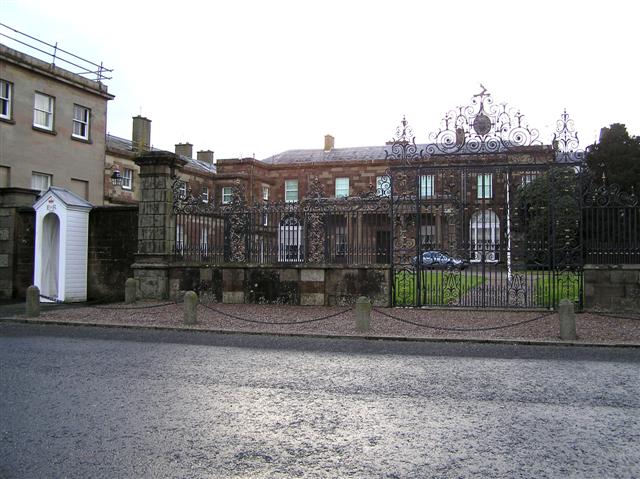
Photo by Kenneth Allen • CC BY-SA 2.0
Political significance and notable events
Throughout the late 20th and early 21st centuries, Hillsborough Castle has played host to numerous important political events and dignitaries. Among the most significant was the signing of the Anglo-Irish Agreement in November 1985, a landmark accord between the United Kingdom and the Republic of Ireland aimed at fostering cooperation and peace in Northern Ireland.
The castle has also been the venue for high-level discussions addressing regional challenges, including policing reforms in 2010. It has welcomed distinguished visitors such as Queen Elizabeth II and Prince Philip during the monarch's Golden Jubilee in 2002, US President George W. Bush in 2003, and King Charles III with Queen Camilla in 2022 shortly after the death of Elizabeth II.
In April 2014, management of Hillsborough Castle was transferred to Historic Royal Palaces, marking a new chapter in its history as it was opened to the public. That same year, the castle hosted an investiture ceremony conducted by the then Prince of Wales, the first such event held in Northern Ireland at this residence since it assumed a royal function.
Gardens and landscape heritage
The estate's grounds are an integral part of its historical significance. The landscape includes a range of mature trees and plantings that reflect the estate's long history of continuous care and enhancement. Notably, the 3rd Duke of Abercorn, the first Governor of Northern Ireland, planted a fir tree in October 1925, symbolizing the castle's transition into an official governmental role.
The gardens and woodlands surrounding the castle have been preserved to maintain their historical character, offering visitors a glimpse into the estate's evolution from a private family home to a seat of government authority. The grounds continue to serve as a backdrop for official events and public visits, blending natural beauty with cultural heritage.
Architectural preservation and current status
Today, Hillsborough Castle retains its well-preserved Georgian architectural form and setting. The building's careful maintenance and sensitive renovations have ensured that its character as an elegant country house endures alongside its role as a government residence. The estate's extensive grounds and historical plantings contribute to the site's overall heritage value.
As a property managed by Historic Royal Palaces, Hillsborough Castle is accessible to the public, offering guided tours that highlight its architectural features, historical significance, and the political events that have shaped Northern Ireland's modern history. The castle stands as a testament to the region's complex past and continuing cultural importance.
Frequently asked questions (FAQ)
- How do I visit Hillsborough Castle?
- Hillsborough Castle is open to the public under the management of Historic Royal Palaces. Visitors can explore the castle and its grounds through guided tours and special events. It is advisable to check the official website for current opening times and ticket information.
- What is the historical significance of Hillsborough Castle?
- Hillsborough Castle has played a central role in Northern Ireland's political history, serving as the official residence of the Governor and later the Secretary of State for Northern Ireland. It was the site of the signing of the Anglo-Irish Agreement in 1985 and has hosted numerous important political figures.
- When was Hillsborough Castle built and what architectural style does it represent?
- Hillsborough Castle was built in the 18th century and is an example of Georgian architecture, known for its symmetry, classical proportions, and elegant domestic design.
- Can I explore the gardens and grounds of Hillsborough Castle?
- Yes, the estate's extensive grounds, including formal gardens and woodlands, are part of the visitor experience. The grounds feature historic trees planted by notable figures, contributing to the site's heritage.
- Is Hillsborough Castle accessible for visitors with disabilities?
- Hillsborough Castle strives to accommodate visitors with disabilities. Facilities and access routes are designed to be as inclusive as possible, but it is recommended to contact the management in advance for specific accessibility information.
Photo gallery

Information
Loading map...
Visitor reviews
No reviews yet. Be the first to share your experience!