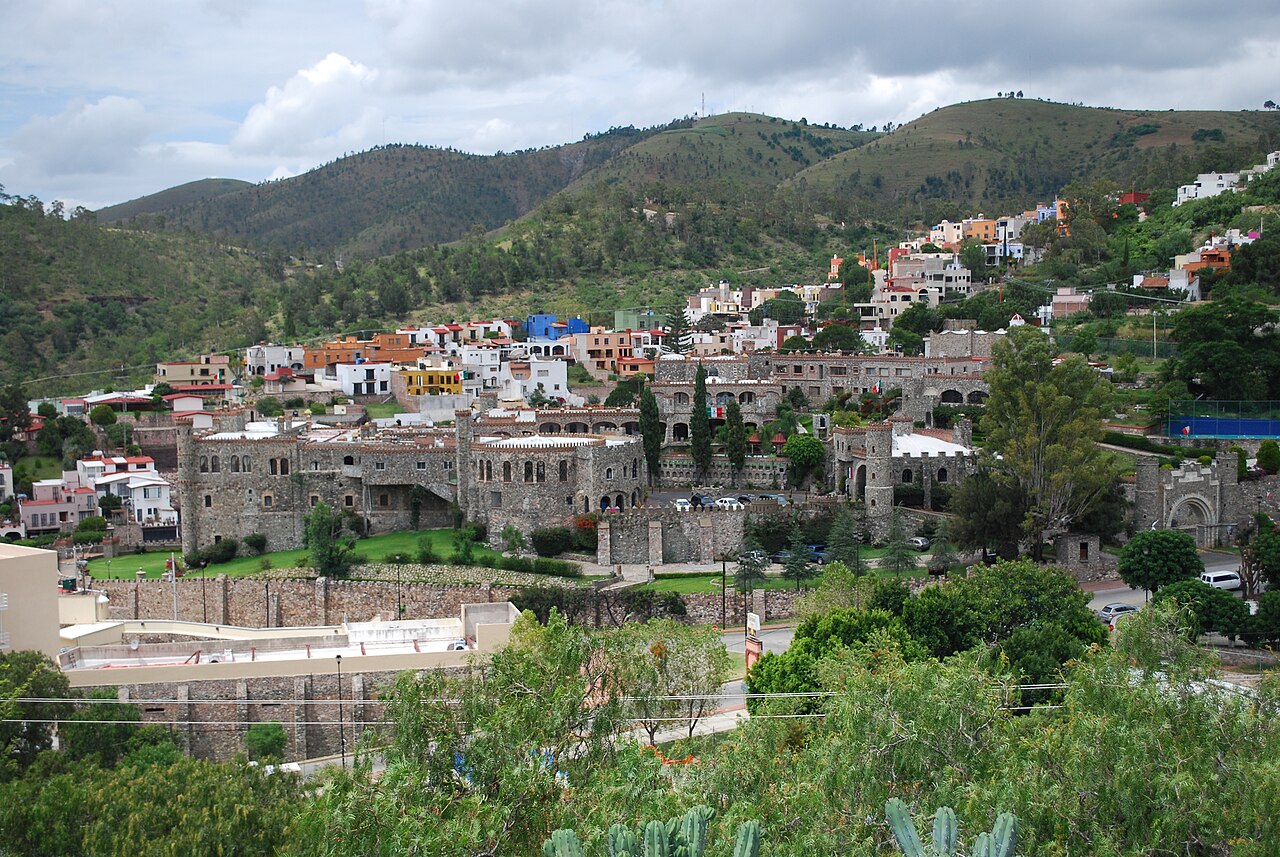
Hacienda del Jaral de Berrios
The Hacienda del Jaral de Berrios stands as one of the most expansive and historically significant estates in Mexico, located in the Guanajuato region. Its remains, though weathered by time, still convey the grandeur of colonial hacienda architecture and the cultural wealth of Mexico's agricultural aristocracy during the 18th and 19th centuries. This estate was a vital center of economic and social life, reflecting the power and influence of the Berrio family, who played a prominent role in Mexico's colonial and post-independence eras.
Founded in the late 18th century, the hacienda was originally granted in 1774 to Miguel de Berrio y Zaldívar, then the mayor of Mexico City. The estate remained in the hands of the Berrio lineage for several generations, including notable figures like Juan Nepomuceno de Moncada y Berrio, reputed to be the wealthiest man in Mexico in the 1830s. The hacienda flourished during the 19th century, becoming a self-sufficient community and a symbol of colonial wealth and rural power.
Architectural features and estate layout
The hacienda complex was designed as a multifunctional estate, combining agricultural production with residential and administrative functions. The main building was an imposing structure featuring frescoed walls and lavish furniture, indicative of the wealth and status of its owners. Surrounding the main house were numerous auxiliary buildings, including massive rooms for workers and guests, grand staircases, and functional spaces for the estate's operations.
The estate also included a parish church, which served the spiritual needs of the community, two primary schools that provided education to the children living on the property, and a post office and railroad station that connected the hacienda to broader commercial networks. These features illustrate the hacienda's role as a near-autonomous community, supporting thousands of inhabitants and facilitating commerce and communication.
The social and economic significance of the hacienda
At its peak in the 19th century, the Hacienda del Jaral de Berrios was home to approximately 6,500 people, including laborers, artisans, administrators, and the Berrio family itself. The estate's vast population and infrastructure underscore its importance as a major economic hub in the region. The hacienda produced a variety of agricultural goods, which were likely transported via its own railroad station, enhancing its commercial reach.
The presence of educational institutions and a church within the estate reflects the hacienda's comprehensive social structure, providing for the welfare and cultural needs of its inhabitants. This self-contained community model was typical of large colonial haciendas, which functioned as microcosms of rural society.
Current condition and preservation
Today, the Hacienda del Jaral de Berrios exists mostly as ruins, with many buildings suffering from crumbling walls and buckling floors. Despite this, the site remains a compelling destination for explorers and historians interested in Mexico's colonial past and architectural heritage. Efforts to preserve and study the hacienda could provide valuable insights into the social, economic, and architectural history of the region.
The ruins evoke the estate's former splendor and serve as a tangible reminder of the complex history of landownership, labor, and colonial power in Mexico. Visitors to the site can witness the scale and ambition of one of Mexico's largest haciendas, appreciating both its historical significance and the challenges of heritage conservation.
Frequently asked questions (FAQ)
- When was Hacienda del Jaral de Berrios built?
- The hacienda was established in 1774 when it was granted to Miguel de Berrio y Zaldívar, marking its origins in the late 18th century.
- What makes Hacienda del Jaral de Berrios historically significant?
- It was one of Mexico's largest haciendas, housing thousands of people and featuring its own church, schools, post office, and railroad station, reflecting its economic and social importance.
- Can visitors explore the ruins of the hacienda today?
- Yes, visitors can explore the ruins, although many buildings are in a state of disrepair with crumbling walls and unstable floors, so caution is advised.
- What architectural features are notable at the hacienda?
- Notable features include frescoed walls, grand staircases, massive rooms, and the estate's parish church, which together illustrate the wealth and social structure of the estate.
- How large was the population living on the hacienda during its peak?
- At its height in the 19th century, the hacienda supported around 6,500 inhabitants, including workers, administrators, and the owning family.
Information
Website
Visit websiteSources & official resources
Verify the information above using these authoritative references.
Loading map...
Visitor reviews
No reviews yet. Been here? Write the first review and help other travelers!
Write the first reviewVisited this castle? Share your experience
Your review helps other travelers and adds first-hand knowledge to our encyclopedia.