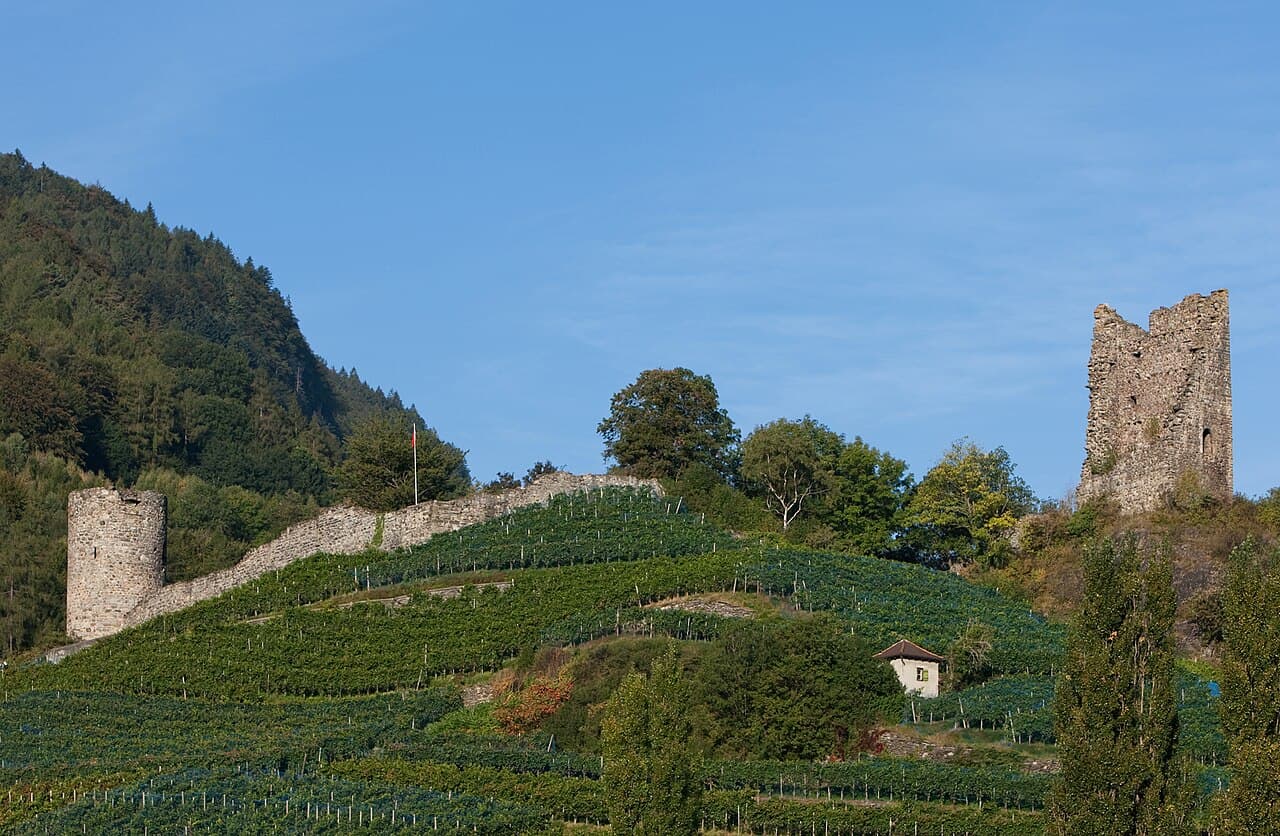
Freudenberg Castle Ruins
Freudenberg Castle ruins stand as a significant medieval site in Bad Ragaz, Switzerland, reflecting the region's turbulent history and medieval architecture. Constructed in the first half of the 13th century, this castle was among the largest fortifications in the area, showcasing the strategic importance of its location and the architectural ambitions of its builders, the Lords of Wildenberg.
Architectural features and layout
The castle's core structure included a keep with a trapezoid floor plan, a distinctive design choice that provided both defensive advantages and a commanding presence over the surrounding landscape. The curtain wall enclosed an area approximately 80 meters long and 60 meters wide, indicating a substantial fortified space that would have accommodated various essential buildings and courtyards within its perimeter.
One of the notable defensive elements was a round tower located at the southwest corner of the curtain wall. This tower would have served as a critical vantage point and a stronghold against attackers, enabling defenders to monitor and repel advances effectively. The castle's design reflects typical high medieval military architecture, emphasizing strong fortifications, strategic placement, and durable construction materials.
Historical context and ownership
Freudenberg Castle was originally built by the Lords of Wildenberg, a noble family influential in the region during the high medieval period. Over time, ownership passed through several families, reflecting the shifting political and feudal allegiances common in medieval Europe. Eventually, the castle came under the control of imperial Austria, indicating its continued strategic and political importance.
The castle's history is marked by significant conflict, notably the siege on May 26, 1437, which arose from a dispute over the legacy of the last Count of Toggenburg. Troops from Zurich besieged the castle, ultimately capturing, plundering, and setting it on fire. This event effectively ended the castle's role as a military stronghold and led to its decline into ruin.
Post-medieval history and preservation
Following its destruction, Freudenberg Castle fell into ruin, with only remnants of the original structures surviving. The site remained an important historical landmark, representing the medieval heritage of the Canton of St. Gallen and Switzerland as a whole.
Since 1985, the ruins have been owned by the municipality of Bad Ragaz, which has maintained the site and made it accessible to the public. Visitors today can freely explore the remains, gaining insight into medieval fortification techniques and the region's feudal history.
Cultural significance and heritage status
Freudenberg Castle is recognized as a Swiss heritage site of national significance. This designation underscores its value not only as an archaeological and architectural monument but also as a cultural symbol reflecting the complex history of territorial control, noble lineage, and military conflict in medieval Switzerland.
The castle ruins offer a tangible connection to the past, illustrating the evolution of castle construction during the high medieval period and the socio-political dynamics of the region. Its preservation allows historians, archaeologists, and visitors to study and appreciate the architectural and historical context of medieval fortifications in the Alpine region.
Visiting freudenberg castle ruins
The site is open to the public without an entrance fee, providing an accessible opportunity for those interested in medieval history and castle architecture. Visitors can explore the extensive ruins, including the remains of the keep, curtain walls, and the round tower, while enjoying panoramic views of the surrounding landscape.
Interpretive signage and local guides may offer additional historical context, enriching the visitor experience. The castle's location near Bad Ragaz makes it a convenient destination for travelers exploring the cultural heritage of the Canton of St. Gallen and eastern Switzerland.
Architectural details worth noting
- The trapezoid-shaped keep is unusual compared to more common rectangular or circular towers, indicating a unique adaptation to the site's topography or defensive needs.
- The curtain wall, measuring 80 by 60 meters, enclosed a significant area, suggesting the castle functioned as a self-contained stronghold with multiple internal buildings.
- The round tower at the southwest corner provided a strategic defensive position, typical of high medieval fortifications designed to cover vulnerable angles.
Historical events impacting the castle
The siege of 1437 was a pivotal moment in the castle's history, linked to the wider regional conflicts following the extinction of the Toggenburg lineage. The attack by Zurich forces reflects the political tensions and territorial disputes of the period, which often resulted in the destruction and abandonment of castles.
Freudenberg castle in the context of swiss medieval castles
Freudenberg Castle is representative of the high medieval castles found throughout Switzerland, characterized by robust defensive structures and strategic siting. Its ruins contribute to understanding the development of castle architecture and feudal power structures in the Alpine region.
Frequently asked questions (FAQ)
- How do I get to Freudenberg Castle Ruins?
- Freudenberg Castle Ruins is located in Bad Ragaz, Switzerland, and can be accessed via hiking trails that lead from the village. The trails vary in difficulty, so be sure to choose one that matches your fitness level. Public transportation options are available to reach the starting points of these trails.
- What is the historical significance of Freudenberg Castle?
- Freudenberg Castle, built in the 13th century, played a significant role in controlling the trade routes in the region. It served as a fortress and residence for noble families and has witnessed numerous historical events over the centuries. Today, it stands as a monument to the medieval history of Switzerland.
- When was Freudenberg Castle built?
- Freudenberg Castle was constructed around the year 1250. It was strategically built on a hill to oversee the surrounding areas and protect the important trade routes. The ruins today reflect the architectural styles of the medieval period.
- Can I visit Freudenberg Castle Ruins year-round?
- Yes, Freudenberg Castle Ruins is open to visitors year-round, but the best time to visit is during the spring and summer months when the weather is pleasant. Be sure to dress appropriately for hiking, as the trails can be steep and rugged.
- Why is Freudenberg Castle a popular tourist attraction?
- Freudenberg Castle is popular due to its stunning views of the surrounding landscape and its rich historical background. Visitors enjoy exploring the ruins and learning about its significance in Swiss history. The castle also offers an opportunity for outdoor adventure through hiking.
- Is it possible to take guided tours of the castle ruins?
- Currently, there are no formal guided tours available for Freudenberg Castle Ruins. However, many visitors explore the site on their own, using information from local resources or guidebooks. Bring a camera to capture the breathtaking views and architectural remnants.
- What are the opening hours for Freudenberg Castle?
- Freudenberg Castle Ruins is accessible at all hours since it is an outdoor site. However, it is advisable to visit during daylight hours to fully appreciate the ruins and the surrounding scenery. Make sure to check local weather conditions before your visit.
- Are there any nearby attractions to visit?
- Yes, nearby attractions include the picturesque town of Bad Ragaz, known for its thermal baths, and the scenic Tamina Gorge. Both locations offer additional opportunities for outdoor activities and cultural experiences. The region is rich in hiking trails and beautiful landscapes that are worth exploring.
- What are the ticket prices for visiting Freudenberg Castle?
- There is no entrance fee to visit Freudenberg Castle Ruins, making it an affordable outing for families and history enthusiasts. However, consider budgeting for transportation or any guided services you may wish to use to enhance your visit.
Photo gallery

Information
Loading map...
Visitor reviews
No reviews yet. Been here? Write the first review and help other travelers!
Write the first reviewVisited this castle? Share your experience
Your review helps other travelers and adds first-hand knowledge to our encyclopedia.



