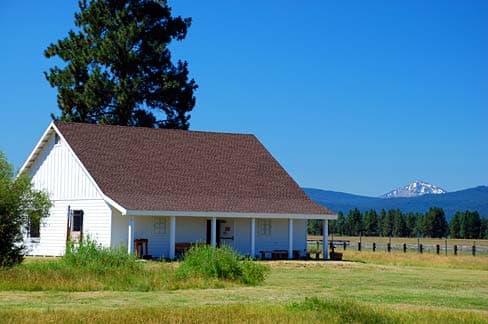
Fort Klamath
Fort Klamath served as a significant military outpost in the 19th century, strategically located near the western terminus of the Oregon Trail in Klamath County, Oregon. Positioned between Crater Lake National Park and Upper Klamath Lake, the fort played a crucial role in the United States' efforts to secure and manage the expanding western frontier during a period of intense settlement and Native American conflicts.
Historical background and strategic importance
Established in the 19th century, Fort Klamath was part of a network of military installations designed to protect settlers and maintain peace in the region. The fort's location was chosen for its proximity to the Oregon Trail, a vital route for pioneers moving westward. It also served as a base for operations during conflicts with local Native American tribes, including the Modoc War, which underscored the tensions between indigenous populations and settlers during the era.
Architectural features and fortifications
Fort Klamath was constructed as a bastioned fortress, a design characterized by angular bastions projecting from the main walls to enable defensive fire in multiple directions. This style was typical of military forts in the 19th century, reflecting advances in military architecture aimed at maximizing defensive capabilities against both infantry and artillery attacks.
The fort included several key structures such as barracks, officers' quarters, storehouses, and defensive walls. The bastions allowed soldiers to cover the perimeter effectively, creating overlapping fields of fire. The use of earthworks and timber was common in its construction, adapted to the available local materials and the need for rapid construction in a frontier environment.
Role in regional conflicts and military operations
During its operational period, Fort Klamath was a staging ground for military campaigns, most notably during the Modoc War of 1872-1873. The fort's garrison provided logistical support and a secure base for troops engaged in the conflict. The war was one of the last armed conflicts between Native Americans and the U.S. Army in the Pacific Northwest, highlighting the fort's role in the broader narrative of westward expansion and Native American resistance.
Preservation and current status
Today, the site of Fort Klamath is recognized on the U.S. National Register of Historic Places, acknowledging its historical and cultural significance. Although the original structures are no longer intact, archaeological remains and interpretive markers provide insight into the fort's layout and historical context. The site is located about a mile southeast of the modern community of Fort Klamath, Oregon, and is accessible to visitors interested in the military history of the American West.
Visiting Fort Klamath and surrounding attractions
Visitors to Fort Klamath can explore the historical site and enjoy the natural beauty of the surrounding region. Its proximity to Crater Lake National Park offers opportunities for hiking, sightseeing, and learning about the area's geological and cultural history. Interpretive displays at the site help contextualize the fort's role in the 19th-century military strategy and frontier life.
Frequently asked questions (FAQ)
- How do I get to Fort Klamath?
- Fort Klamath is conveniently located off Highway 62 in southern Oregon. You can reach the castle by car, and there is ample parking available on-site for visitors.
- What is the historical significance of Fort Klamath?
- Fort Klamath was established in 1863 as a military post during the Indian Wars and played a crucial role in the region's history. It served as a supply base for military operations and is now a testament to the complex history of U.S. military interactions with Native American tribes.
- When was Fort Klamath built?
- Fort Klamath was constructed in 1863 and was actively used until it was decommissioned in 1890. The fort's architecture and remnants reflect its military purpose and the strategic importance of the area during that period.
- Can I explore the fort on my own?
- Yes, visitors can explore Fort Klamath on their own, as there are self-guided tours available. Informational plaques throughout the site provide insights into the fort's history and architecture.
- Why is Fort Klamath considered an important landmark?
- Fort Klamath is considered an important landmark due to its historical role in the U.S. military and its connection to Native American history. The fort stands as a symbol of the region's past and attracts history enthusiasts and tourists alike.
- Is it possible to visit Fort Klamath year-round?
- Yes, Fort Klamath is open to visitors year-round, although some facilities may have limited access during the winter months. It's advisable to check the official website for seasonal hours and any special events.
- What are the ticket prices for visiting Fort Klamath?
- Admission to Fort Klamath is typically free, but donations are welcomed to help maintain the site. Special events or guided tours may have associated fees, so it's best to check ahead for any costs.
- What are the opening hours for Fort Klamath?
- Fort Klamath generally opens to the public at 9 AM and closes at 5 PM daily, although hours may vary by season. Visitors should verify the current hours before planning their trip to ensure a smooth visit.
- What are some nearby attractions to Fort Klamath?
- Nearby attractions include Crater Lake National Park, which offers stunning views and outdoor activities, as well as local hiking trails. Visitors can also explore the historical aspects of the area, including museums and other historical sites.
Photo gallery

Photo by Gary Halvorson, Oregon State Archives•Attribution
Information
Loading map...
Visitor reviews
No reviews yet. Been here? Write the first review and help other travelers!
Write the first reviewVisited this castle? Share your experience
Your review helps other travelers and adds first-hand knowledge to our encyclopedia.


