Erdut Castle
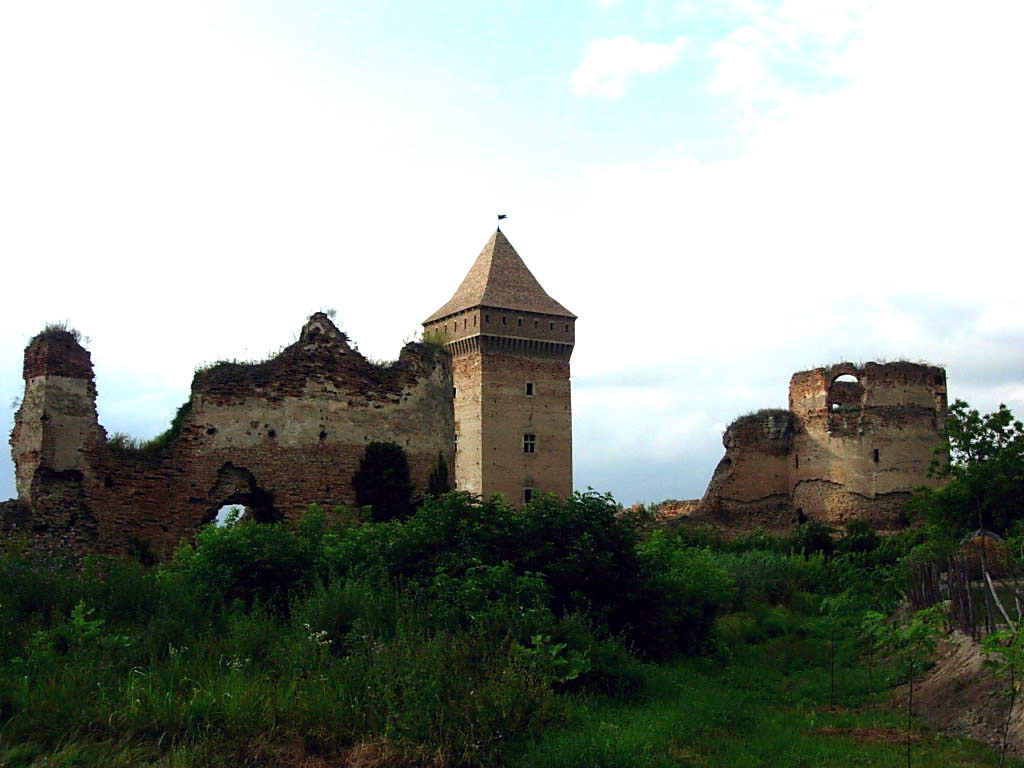
Erdut Castle stands as a significant example of a late medieval hill castle in Croatia, perched on a bluff approximately 70 metres above the Danube River. This strategic location provided commanding views over the surrounding flatlands, making it a vital defensive stronghold against invasions from the east. The castle's origins date back to the 14th century, with the first recorded mention of the settlement and fortress under the name "Ardud" in 1335. Throughout its history, Erdut Castle has witnessed the ebb and flow of regional powers, reflecting the complex political and military landscape of Central Europe.
Historical significance and ownership
The castle's history is closely intertwined with the turbulent events that shaped the region. In the 15th and 16th centuries, Erdut Castle was controlled by various noble families and ecclesiastical authorities, including the Titel provost and the prominent Bánffy family. The castle's strategic importance became even more pronounced following the Battle of Mohács in 1526, when the Ottoman Empire expanded into Central Europe. Erdut fell under Ottoman control and was integrated into their defensive network, serving as a frontier fortress during the prolonged conflicts between the Ottomans and the Habsburgs.
The Ottoman occupation lasted until 1687, a period marked by frequent military engagements as Hungarian and Habsburg forces sought to reclaim the territory. After the Habsburgs retook Erdut, the castle entered a phase of decline. German-commanded troops were stationed there, but parts of the fortress were deliberately dismantled to prevent its use by enemies. Ownership changed hands several times in the 18th century, eventually passing to the Adamovich family and later the Szentkatolnai Cseh Ervin family, who preferred residing in a nearby manor rather than the aging fortress.
Architectural features and construction
Erdut Castle's architecture reflects its dual role as a defensive fortress and noble residence. Its walls, measuring just under one meter thick, are relatively thin compared to other fortifications of the period. This design choice was compensated by numerous large openings for cannons and narrow arrow slits, which enhanced its defensive capabilities against artillery and infantry assaults.
The core of the castle is a tall residential tower that originally contained multiple wooden floors. Over the centuries, modifications and damage have obscured the original interior layout, but remnants such as wide stone staircases, fireplaces, and fragments of wall paintings reveal its residential function. A notable feature was a chapel located on the second floor of the main tower, underscoring the castle's role as a noble household with religious facilities.
Along the northwestern edge, the outer wall of the palace wing remains standing, though it leans due to ground movement. Adjacent to this wall is a corner tower exhibiting Italian Renaissance stylistic influences, highlighting a period of architectural refinement and cultural exchange during the castle's later history.
Below the main castle, approximately 40 meters downhill, there is another tower with similar design elements. Scholars debate whether this lower tower was displaced by an 1860 landslide or was originally constructed as part of the castle's outer defensive ring, illustrating the challenges of interpreting the site's complex topography and history.
Impact of modern conflicts and preservation efforts
In July 1991, during the Croatian War of Independence, Erdut Castle suffered damage from an artillery attack launched by the Yugoslav People's Army (JNA). Recognizing its cultural and historical importance, Croatian authorities promptly notified military leaders of the castle's protected status under the Hague Convention for the Protection of Cultural Property in the Event of Armed Conflict. This international legal protection underscores the castle's significance as part of Croatia's cultural heritage.
Recent decades have seen renewed interest in preserving Erdut Castle. A reconstruction initiative funded by the European Regional Development Fund was announced in 2022, with a budget of approximately 1.3 million kunas dedicated to conservation and restoration efforts. These projects aim to stabilize the ruins, protect remaining architectural elements, and enhance public access and educational opportunities.
Site layout and visitor experience
Today, Erdut Castle remains a substantial ruin that offers visitors a tangible connection to the region's medieval past. Its elevated position provides sweeping views over the Danube River's large bend, the Bácska Plain, and surrounding vineyards, making it a picturesque destination for history enthusiasts and tourists alike.
The castle's footprint, though relatively small, reveals a well-planned combination of defensive and residential spaces. Visitors can explore the remains of the residential tower, the leaning palace wing wall, and the distinctive corner tower with Renaissance features. The lower tower below the bluff adds to the site's intrigue, inviting interpretation and scholarly study.
Interpretive signage and guided tours help contextualize the castle's historical role and architectural evolution. Erdut Castle stands not only as a monument to medieval military architecture but also as a symbol of the region's resilience through centuries of conflict and change.
Frequently asked questions (FAQ)
- How do I get to Erdut Castle?
- Erdut Castle is located in the municipality of Erdut in Osijek-Baranja County, Croatia. Visitors can reach the site by car or local transport from nearby towns such as Osijek. The castle is situated on a bluff overlooking the Danube, with parking available nearby.
- What is the best time to visit Erdut Castle?
- The best time to visit Erdut Castle is during the late spring to early autumn months when the weather is mild and the surrounding landscape is vibrant. This period offers ideal conditions for exploring the ruins and enjoying panoramic views of the Danube and vineyards.
- Is Erdut Castle accessible to visitors with mobility issues?
- Due to its location on a steep bluff and the nature of the ruins, Erdut Castle may present challenges for visitors with mobility impairments. Some areas involve uneven terrain and stairs, so assistance or alternative arrangements may be necessary.
- What architectural styles are visible at Erdut Castle?
- Erdut Castle primarily exhibits characteristics of late medieval military architecture with later Italian Renaissance influences visible in the corner tower. The combination reflects the castle's evolution from a defensive fortress to a noble residence.
- Can I visit the interior of Erdut Castle?
- While Erdut Castle is largely in ruins, visitors can explore accessible parts of the site, including the remains of the residential tower and palace wing. Interior spaces are limited due to preservation concerns and safety, so guided tours may provide the best experience.
Information
Current owner
Croatian authorities
Loading map...
Visitor reviews
No reviews yet. Been here? Write the first review and help other travelers!
Write the first reviewVisited this castle? Share your experience
Your review helps other travelers and adds first-hand knowledge to our encyclopedia.