Dacian Fortresses of the Orăștie Mountains
The Dacian Fortresses of the Orăștie Mountains represent a remarkable ensemble of ancient defensive structures located in present-day Romania. Constructed primarily in the 1st century BC and extending into the early 1st century AD, these fortifications were built using the distinctive murus dacicus technique, a sophisticated construction method unique to the Dacians. This method involved alternating layers of stone blocks and wooden beams, creating walls that were both strong and flexible, capable of withstanding attacks and seismic activity.
These six fortresses—Sarmizegetusa Regia, Costești-Cetățuie, Costești-Blidaru, Piatra Roșie, Bănița, and Căpâlna—formed a strategic defensive system in the Orăștie Mountains. They played a crucial role during the Roman–Dacian wars, particularly under the leadership of King Decebalus, who used these fortresses to resist Roman conquest. Today, they stand as a testament to the military ingenuity and architectural skill of the Dacian civilization.
Architectural features and construction techniques
The fortresses were built on elevated terrain, often atop mountains or rocky outcrops, providing natural defensive advantages. Their walls, constructed in the murus dacicus style, were typically double-faced stone walls filled with rubble and timber, creating a resilient structure. This technique was innovative for its time and is a defining characteristic of Dacian military architecture.
Each fortress included multiple defensive elements such as bastions, towers, and gates designed to control access and provide vantage points for defenders. The fortresses also contained residential quarters, workshops, and sanctuaries, indicating their role not only as military strongholds but also as centers of political and religious activity.
Sarmizegetusa Regia: the Dacian capital
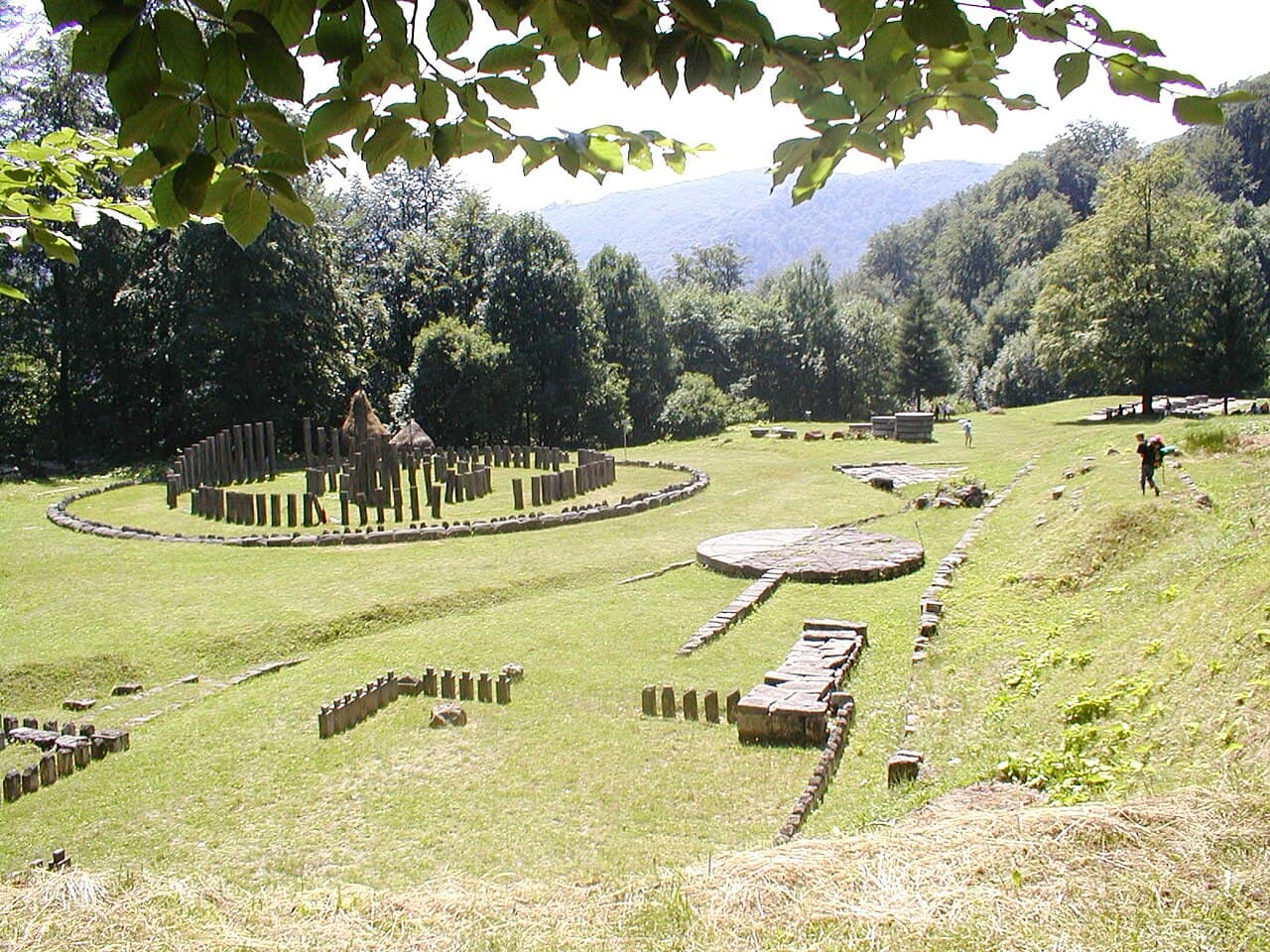
Sarmizegetusa Regia was the largest and most important of these fortresses, serving as the capital and the central hub of Dacian political, military, and religious life. Located at an altitude of approximately 1200 meters, it consisted of six citadels and was the heart of the defensive network in the Orăștie Mountains. The site includes remains of sanctuaries, fortifications, and dwellings, revealing the complexity of Dacian society.
Notably, Sarmizegetusa Regia should not be confused with Ulpia Traiana Sarmizegetusa, the Roman city established about 40 kilometers away after the Roman conquest. This distinction is important for understanding the historical timeline and the evolution of the region during and after the Dacian Wars.
Historical context and significance
The fortresses were constructed during a period when the Dacians faced increasing pressure from the expanding Roman Empire. Their strategic placement and robust construction allowed the Dacians to mount a formidable defense during the two major Roman–Dacian wars (101-102 AD and 105-106 AD). Despite their efforts, the Dacians were ultimately defeated, leading to the Roman annexation of Dacia.
These fortresses provide invaluable insights into the military strategies and architectural capabilities of the Dacians. They also reflect the socio-political organization of the Dacian kingdom under King Decebalus, who coordinated the defense of his realm using this sophisticated network of fortifications.
Preservation and current condition
Today, the Dacian Fortresses of the Orăștie Mountains are in a state of ruins, but their remains are extensive and well-preserved enough to allow for detailed archaeological study. The sites have been designated a UNESCO World Heritage Site since 1999, recognizing their outstanding universal value as cultural monuments.
Despite their protected status, the fortresses face challenges from natural erosion and human activities, including unauthorized treasure hunting due to gaps in local legislation. Conservation efforts continue to focus on stabilizing the ruins and promoting their historical importance to visitors and scholars alike.
Visiting the Dacian fortresses
The six fortresses are accessible to visitors, with Sarmizegetusa Regia being the most prominent and frequently visited site. Located near the village of Grădiștea de Munte in Hunedoara County, it offers panoramic views of the surrounding mountains and a glimpse into the ancient Dacian world.
Each fortress has unique features and varying degrees of accessibility, with some requiring hiking over rugged terrain. Visitors interested in ancient history, archaeology, and military architecture find these sites particularly rewarding.
Location and distribution
All fortresses except Căpâlna are situated within Hunedoara County, while Căpâlna lies in Alba County. Their distribution across the Orăștie Mountains demonstrates a well-planned defensive network covering key strategic points.
Frequently asked questions (FAQ)
- What is the historical significance of the Dacian Fortresses of the Orăștie Mountains?
- The Dacian Fortresses of the Orăștie Mountains are a UNESCO World Heritage Site, representing the remnants of the Dacian civilization that thrived before the Roman conquest. These fortresses illustrate the advanced military architecture of the Dacians and their strategic importance in the defense against invaders.
- When was the Dacian Fortresses of the Orăștie Mountains built?
- The fortresses were constructed during the 1st century BC to the 1st century AD, primarily under the reign of King Decebalus. They served as key defensive structures against Roman expansion and exemplify the military ingenuity of the Dacians.
- How do I get to the Dacian Fortresses of the Orăștie Mountains?
- The Dacian Fortresses are accessible by car and public transport from nearby towns such as Deva and Hunedoara. The nearest major city is Sibiu, which is approximately 70 km away, and offers various transportation options to reach the fortresses.
- What are the opening hours for visiting the Dacian Fortresses?
- The fortresses are generally open for visitors year-round, with specific hours varying by season. It is advisable to check the local tourism website for the most current information regarding opening times and any seasonal adjustments.
- Can I take guided tours of the Dacian Fortresses?
- Yes, guided tours are available, which can enhance your understanding of the historical and architectural significance of the fortresses. Local tour companies often offer packages that include transportation, a knowledgeable guide, and sometimes additional attractions in the area.
- Is it possible to hike around the Dacian Fortresses?
- Absolutely! The fortresses are located in a mountainous region, providing numerous hiking trails that offer stunning views and a chance to explore the surrounding natural beauty. Always ensure you wear appropriate footwear and check trail conditions before embarking on your hike.
- What is the best time to visit the Dacian Fortresses?
- The best time to visit the Dacian Fortresses is during the spring and early autumn months when the weather is mild, making for a pleasant hiking experience. Summer can be hot, while winter may bring snow, which can limit access to some areas.
- Are there any nearby attractions to visit while in the area?
- Yes, nearby attractions include the Corvin Castle in Hunedoara and the Retezat National Park, which offers stunning scenery and diverse wildlife. These sites make for excellent day trips and complement your visit to the Dacian Fortresses.
- What are the ticket prices for visiting the Dacian Fortresses?
- Entry fees to the Dacian Fortresses can vary, typically ranging from a small fee for adults and discounts for students and children. It's best to check the official site or local visitor information for the most accurate pricing and any special events that may offer free admission.
Photo gallery

Information
Loading map...
Visitor reviews
No reviews yet. Been here? Write the first review and help other travelers!
Write the first reviewVisited this castle? Share your experience
Your review helps other travelers and adds first-hand knowledge to our encyclopedia.