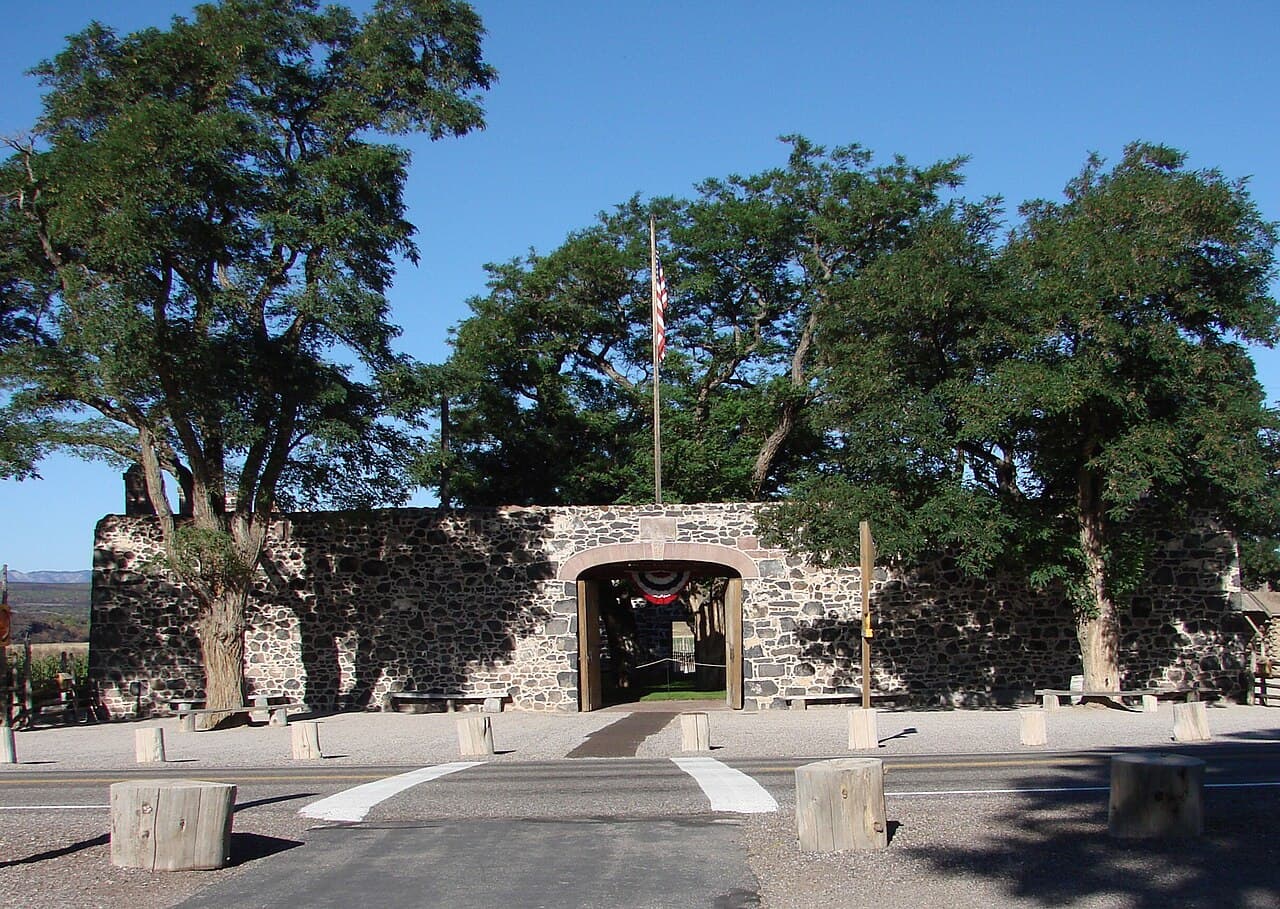
Cove Fort
Cove Fort is a unique example of a 19th-century bastioned fortress located in Millard County, Utah. Established in 1867 by Ira Hinckley under the direction of Brigham Young, the fort served as a critical way station and protective outpost during the westward expansion of the United States. Unlike many contemporary western forts that were primarily constructed from wood, Cove Fort's walls are built from volcanic rock, a choice that has contributed significantly to its remarkable preservation and durability over more than 150 years.
Construction and architectural features
The fort's design reflects practical defensive needs combined with the available local materials. The use of volcanic rock provided a robust and fire-resistant structure, setting it apart from other mid-19th-century frontier forts. Its walls are thick and sturdy, enclosing a rectangular compound that includes essential buildings such as a blacksmith shop, telegraph office, and living quarters. The fort features bastions at its corners, typical of bastioned fortresses, allowing defenders to cover all approaches with overlapping fields of fire.
The compound is surrounded by high stone walls approximately 18 feet tall and 4 feet thick. Entry is controlled through heavy wooden gates reinforced with iron. Inside, the layout is functional, designed to support travelers and settlers with shelter, supplies, and communication services.
Historical significance and role
Cove Fort was strategically positioned along important travel routes to serve as a relay station for stagecoaches, mail, and telegraph lines. It offered safety and rest for travelers crossing the challenging Utah terrain. The fort's establishment was part of a broader effort by the Church of Jesus Christ of Latter-day Saints to secure and develop the western frontier.
The fort remained operational through the late 19th century, playing a role in regional communication and transportation networks. Its well-preserved state today provides valuable insight into the construction techniques and frontier life of the period.
Location and modern context
Situated in a remote area of Utah, Cove Fort is near the western terminus of Interstate 70. Despite having no permanent population, the fort's name appears on freeway signs as a control city, marking it as a notable landmark for travelers. The surrounding area is largely rural, and the fort itself operates as a historical site open to visitors interested in pioneer history and early American fortifications.
Preservation and visitor experience
Thanks to its volcanic stone construction, Cove Fort is one of the few surviving forts from its era in the western United States. It has undergone preservation efforts to maintain its structural integrity and historical character. Visitors can explore the fort's walls, bastions, and interior buildings, gaining a tangible connection to the 19th-century frontier experience.
The site offers interpretive displays and guided tours that explain the fort's construction, historical role, and the daily lives of those who lived and worked there. Its remote location and well-preserved state make it a valuable destination for those interested in military architecture, pioneer history, and the settlement of the American West.
Frequently asked questions (FAQ)
- What is the historical significance of Cove Fort?
- Cove Fort was established in 1867 as a protective way station and relay point for stagecoaches, mail, and telegraph lines during westward expansion. It played a key role in regional communication and transportation in 19th-century Utah.
- Can visitors explore Cove Fort today?
- Yes, Cove Fort is well preserved and open to visitors. The site offers tours and interpretive displays that showcase its unique volcanic stone construction and frontier history.
- Why is Cove Fort constructed from volcanic rock?
- The use of volcanic rock provided a durable and fire-resistant structure, which was uncommon for western forts of the period that typically used wood. This choice has helped Cove Fort survive intact for over 150 years.
- Where is Cove Fort located in relation to major highways?
- Cove Fort is near the western terminus of Interstate 70 in Utah. Although it has no permanent population, the fort's name is used on freeway signs as a control city for navigation.
- What architectural features define Cove Fort?
- Cove Fort features thick volcanic stone walls, bastions at the corners for defense, heavy wooden gates, and an interior layout including a blacksmith shop and telegraph office.
Photo gallery

Information
Loading map...
Visitor reviews
No reviews yet. Been here? Write the first review and help other travelers!
Write the first reviewVisited this castle? Share your experience
Your review helps other travelers and adds first-hand knowledge to our encyclopedia.



