
Ścinawka Średnia Castle
Ścinawka Średnia Castle, also known as Zamek Kapitanowo, stands as a remarkable example of a medieval hill castle in the village of Ścinawka Średnia, Poland. Established in the 14th century, this fortress reflects the architectural and historical evolution typical of Central European castles, combining defensive strength with residential functions over several centuries. Its strategic location on elevated terrain provided natural defense advantages, a hallmark of hill castles designed to oversee and control surrounding lands.
Origins and medieval construction
The castle's earliest construction phase centered around a substantial donjon, a fortified tower that served as the core defensive and residential structure. This tower exemplifies medieval stone and masonry construction characteristic of the 14th century, featuring thick walls and a commanding presence. The donjon's robust design was intended to withstand sieges and provide a secure refuge for the castle's inhabitants.
In the 15th century, the castle underwent significant expansion with the addition of a second tower designed primarily for residential purposes. This development marked a transition from a purely military fortress to a more complex residential and defensive establishment. The creation of a closed inner courtyard within the castle walls further enhanced its defensive capabilities while providing a protected space for daily activities and social functions.
Renaissance and Baroque transformations
During the 16th and early 17th centuries, Ścinawka Średnia Castle experienced architectural modifications influenced by the Renaissance style. These changes introduced softer lines and decorative elements that contrasted with the castle's original medieval austerity while maintaining its defensive integrity. Renaissance features likely included enlarged windows, ornamental stonework, and more comfortable living quarters.
Later, in the Baroque period, the castle received further decorative enhancements reflecting contemporary aesthetic trends. These additions enriched the castle's appearance without compromising its medieval framework, demonstrating the owners' desire to modernize their residence while respecting its historical character. Interior and exterior embellishments from this period would have included stucco work, frescoes, and elegant architectural details.
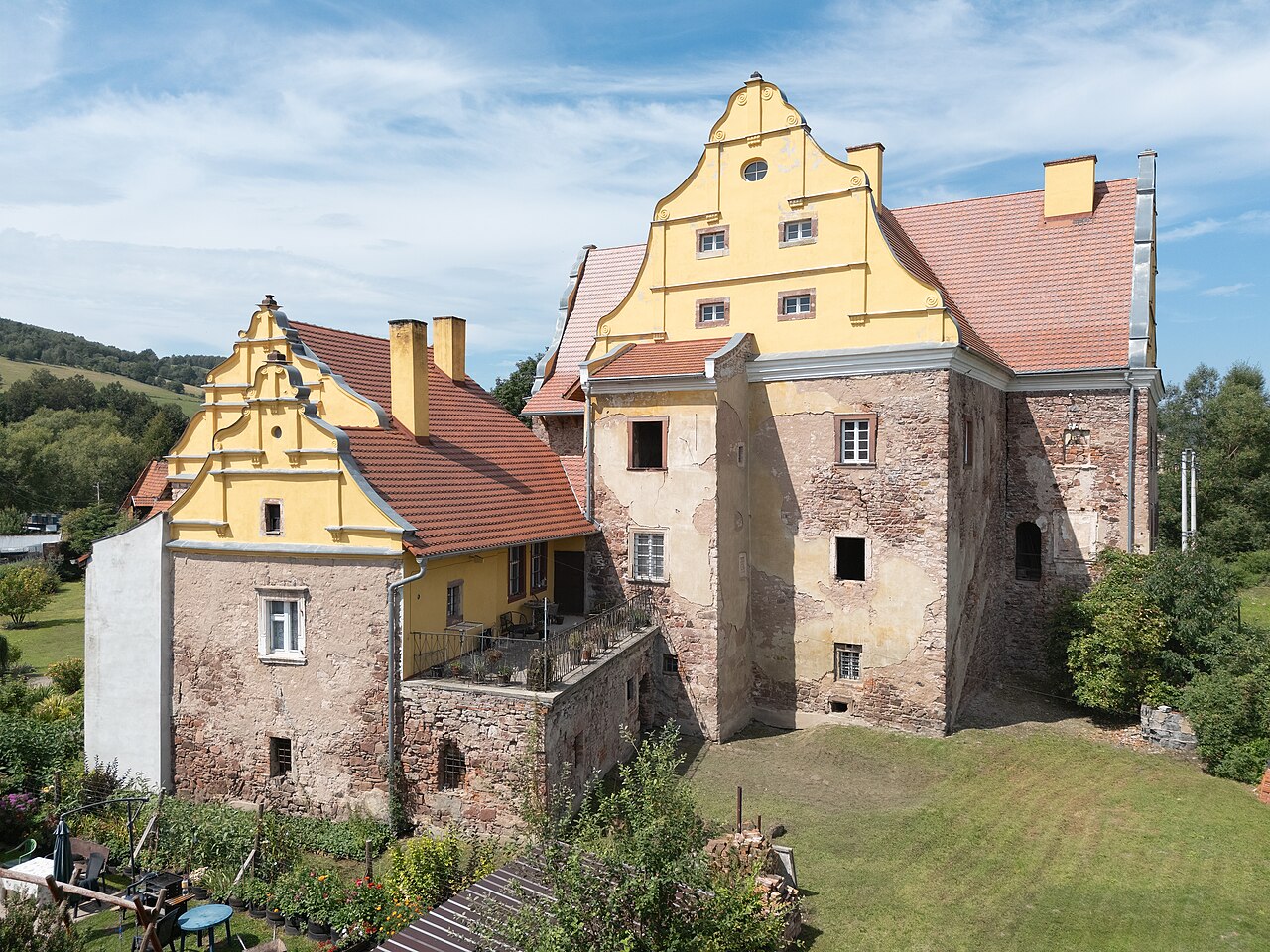
Photo by Jacek Halicki • CC BY-SA 4.0
Historical ownership and significance
The castle's documented history begins with ownership by Tammo II von Czechau in 1353. Over the centuries, it passed through the hands of several noble families, including the von Dohna, von Stillfried, von Ratschin, von Götzen, and von Magnis clans. Each lineage contributed to the castle's development, maintenance, and historical legacy, reflecting the shifting political and social dynamics of the region.
Following World War II, the estate was nationalized in 1946, marking a new chapter in its history. The castle served various practical roles, notably as the office for a state agricultural enterprise until 1982. This period saw limited preservation efforts, and the castle gradually fell into neglect.
A major renovation took place in 1935, shortly before the outbreak of the Second World War, representing the last significant modernization phase before the castle's decline. After decades of abandonment starting in the 1990s, the structure suffered damage, though its distinctive form remained recognizable. Since returning to private ownership in 2002, restoration efforts have aimed to preserve and revive this historic site.
Architectural features and layout
The castle's surviving architecture is dominated by the original 14th-century donjon, a tall fortified tower that served as the nucleus of the complex. Its massive stone walls and elevated position illustrate typical medieval defensive design, combining military utility with residential needs.
The 15th-century addition of a second tower expanded the castle's living accommodations. This tower, together with the formation of a closed inner courtyard, created a cohesive and enclosed layout that balanced security with habitability. The courtyard provided a protected open space essential for daily life, gatherings, and defense.
Later architectural modifications introduced Renaissance and Baroque elements, visible in stylistic details and expansions. These include ornamental stonework, refined window openings, and decorative interior features that softened the fortress's austere medieval character.
Current condition and preservation efforts
Despite damage sustained during its period of abandonment, Ścinawka Średnia Castle retains much of its original form and traditional character. The stone and masonry walls remain largely intact, allowing visitors to appreciate the castle's historic outline and architectural evolution. Restoration work initiated after 2002 under private ownership focuses on preserving these archaeological and architectural features for future generations.
These efforts aim to stabilize the structure, repair damaged elements, and maintain the castle's cultural heritage significance. The castle stands as a testament to the region's medieval history and architectural development through the Renaissance and Baroque periods.
Visiting Ścinawka Średnia Castle
Visitors to Ścinawka Średnia Castle can explore its historic towers, courtyard, and surrounding grounds, gaining insight into the defensive strategies and residential life of medieval and early modern nobility. The castle's hilltop location offers scenic views of the surrounding landscape, enhancing its appeal as a heritage site.
Frequently asked questions (FAQ)
- What is the historical significance of Ścinawka Średnia Castle?
- Ścinawka Średnia Castle dates back to the 14th century and is an important example of Gothic architecture in Poland. It served as a defensive stronghold and reflects the region's tumultuous history, including various sieges and battles throughout the centuries.
- When was Ścinawka Średnia Castle built?
- The construction of Ścinawka Średnia Castle began in the late 14th century, around 1380, and was completed in subsequent decades. The castle has undergone numerous renovations and restorations, preserving its historical essence while adapting to modern times.
- Can I visit Ścinawka Średnia Castle?
- Yes, visitors are welcome to explore Ścinawka Średnia Castle. Guided tours are available, allowing you to learn about its rich history and architectural features while enjoying the picturesque surroundings.
- What are the opening hours for Ścinawka Średnia Castle?
- Ścinawka Średnia Castle is open to the public from April to October, typically from 10 AM to 6 PM. It is advisable to check the official website for any seasonal changes or special events that might affect the hours.
- Is it possible to access Ścinawka Średnia Castle with limited mobility?
- While efforts have been made to make Ścinawka Średnia Castle more accessible, some areas may still pose challenges for visitors with limited mobility due to its historical structure. It is recommended to contact the castle administration in advance to inquire about available accommodations.
- What are the ticket prices for Ścinawka Średnia Castle?
- Ticket prices for Ścinawka Średnia Castle are generally affordable, with discounts available for students and seniors. Admission fees may vary based on guided tour options, so it’s best to check the official website for the latest pricing information.
- When is the best time to visit Ścinawka Średnia Castle?
- The best time to visit Ścinawka Średnia Castle is during the late spring and early autumn months, when the weather is pleasant, and the gardens are in full bloom. Additionally, visiting during weekdays can help you avoid crowds and enjoy a more personal experience.
- Are there any nearby attractions to visit along with the castle?
- Yes, there are several nearby attractions, including the picturesque village of Ścinawka Średnia itself and the stunning natural landscapes of the surrounding area. Visitors can also explore other historical sites and local museums that showcase the region's rich heritage.
Photo gallery

Information
Loading map...
Visitor reviews
No reviews yet. Be the first to share your experience!