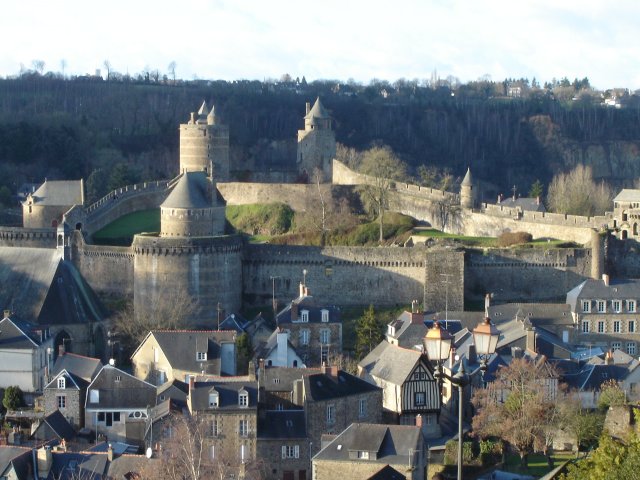
Châteaugiron Castle
Châteaugiron Castle, also known as Château de Châteaugiron, is a remarkable medieval fortress located in the heart of the town of Châteaugiron in the Ille-et-Vilaine department of France. This castle holds significant historical and architectural value, having evolved over several centuries from a simple motte-and-bailey structure into a formidable stone fortress that played a central role in the region's feudal history.
The origins of Châteaugiron Castle date back to the mid-11th century, when it was initially constructed by Anquetil, a Norman knight granted the lands by Alan III, Duke of Brittany. The original castle likely consisted of a wooden keep atop a motte, a common defensive design of the early medieval period. The castle’s name derives from Anquetil’s son, Giron, whose lineage became known as the Lords of Châteaugiron, establishing a powerful barony that eventually encompassed over thirty parishes. Throughout the High Medieval period, the Lords of Châteaugiron maintained close ties with the Dukes of Brittany, securing privileges and influence that shaped the castle's development and the surrounding town.
The architectural evolution of Châteaugiron Castle
Romanesque origins and 13th-century stone reconstruction
The oldest surviving part of the current castle complex is the Romanesque chapel, dating from the 12th century. This chapel reflects the early medieval religious architecture, characterized by robust masonry and rounded arches. During the 13th century, the castle underwent a significant transformation from its initial wooden fortifications to a more durable stone fortress. The imposing keep that still stands today was constructed during this period, serving as the main stronghold and symbol of feudal power.
Late medieval fortifications and expansions
At the turn of the 15th century, Patri de Châteaugiron undertook major renovations, rebuilding the keep and adding three additional towers, a curtain wall, and a large residential wing. These enhancements reflected the need for stronger defenses and more comfortable living quarters during a time of increasing regional conflicts. Following the extinction of the Châteaugiron family line in the early 15th century, the castle passed to the related Malestroit family.
Between 1450 and 1480, Jean de Derval further adapted the castle to the evolving demands of warfare, particularly the advent of artillery. He reinforced the keep and expanded the fortress to include a gatehouse and six towers, making Châteaugiron one of the most formidable fortresses in Brittany. Of these six original towers, four remain today: the 38-meter-high keep, the 14th-15th century clock tower, the watchtower, and the Cardinal’s tower. The latter two retain their machicolations—projecting parapets with openings used for dropping defensive materials on attackers—highlighting the castle's military significance.
Châteaugiron Castle's role in regional history and ownership changes
Over the centuries, the castle changed hands through inheritance among prominent noble families, including the Rieux, Laval, Acigné, and Cossé-Brissac lineages. By the early 18th century, the castle had been abandoned by the Cossé-Brissac family and sold in 1701 to the Le Prestre de Lazonnet family. This family undertook important restorations that saved the castle from ruin. They remodeled and extended the residential wing, demolished one corner tower to build a pavilion with a wooden gallery, laid out extensive gardens, and renovated the gatehouse, blending medieval fortifications with early modern residential comfort.
During the French Revolution, much of the castle was sold to a merchant, while the keep and the clock tower were retained by the town. In 1936, ownership passed to the local council, which has since maintained and repurposed the site.
Current use and cultural significance
Today, Châteaugiron Castle serves multiple civic functions. The main body of the castle houses the town hall, while other sections accommodate offices. The freestanding keep is dedicated to exhibitions, providing visitors with access to the castle's rich history and architectural heritage. The castle is a prominent landmark and a testament to the region’s medieval past, attracting tourists interested in feudal architecture and Brittany’s history.
The historic town centre and medieval heritage
The town of Châteaugiron itself developed around the castle from the 13th century onwards. It flourished particularly in the late Middle Ages due to the expansion of the canvas sail industry, which brought prosperity to the area. The town's historic centre remains exceptionally well-preserved, featuring significant medieval structures and the castle’s defensive works.
The surviving towers of the castle—including the keep, clock tower, watchtower, and Cardinal’s tower—offer a vivid glimpse into medieval military architecture. The elevated patrol paths with machicolation projections on the towers are especially notable, illustrating the defensive strategies employed during the castle’s active use.
Architectural highlights and defensive features
Châteaugiron Castle exemplifies the transition from early medieval wooden fortifications to stone castles designed to withstand artillery and prolonged sieges. The keep stands as a dominant feature, independent of the main castle structure, rising 38 meters high. This height provided extensive visibility over the surrounding landscape, crucial for early warning against invaders.
The clock tower served not only as a timekeeping structure but also functioned as a belfry during the Ancien Régime, marking the passage of time for the town’s inhabitants and signaling important events. The curtain walls and towers were arranged to create overlapping fields of defense, with machicolations and arrow slits allowing defenders to repel attackers effectively.
The residential wing added during the late medieval period and remodeled in the early modern era reflects the evolving role of castles from purely military fortresses to noble residences. The incorporation of gardens and pavilions in the 18th century further demonstrates this shift towards comfort and aesthetic appeal.
Visiting Châteaugiron Castle
Visitors to Châteaugiron Castle can explore the castle’s rich history through exhibitions in the keep and enjoy the architectural grandeur of the medieval towers and curtain walls. The castle’s integration into the town hall and offices means that it remains a living part of the community, blending heritage with contemporary use.
The well-preserved medieval town centre surrounding the castle offers additional attractions, including traditional streets and historic buildings that complement the castle’s imposing presence. The site is ideal for those interested in medieval architecture, Brittany’s feudal history, and the evolution of castle design over several centuries.
Frequently asked questions (FAQ)
- When was Châteaugiron Castle originally built?
- Châteaugiron Castle was originally built in the mid-11th century by the Norman knight Anquetil, who received the lands from Alan III, Duke of Brittany.
- What architectural styles are present in Châteaugiron Castle?
- The castle features Romanesque elements, especially in the 12th-century chapel, alongside later medieval fortifications including Gothic military architecture from the 13th to 15th centuries.
- Can visitors tour the entire castle?
- Visitors can explore the freestanding keep, which hosts exhibitions, and view the exterior medieval towers and curtain walls. Parts of the castle are used as the town hall and offices, so access to some areas may be limited.
- What is the significance of the castle’s machicolations?
- Machicolations are defensive architectural features that allowed defenders to drop objects or pour substances on attackers at the base of the walls, enhancing the castle's fortifications during sieges.
- How did the castle’s role change over time?
- Originally a military fortress, Châteaugiron Castle evolved into a noble residence with expanded residential wings and gardens, reflecting changing needs from defense to comfort and status.
Information
Current owner
Local council
Loading map...
Visitor reviews
No reviews yet. Been here? Write the first review and help other travelers!
Write the first reviewVisited this castle? Share your experience
Your review helps other travelers and adds first-hand knowledge to our encyclopedia.