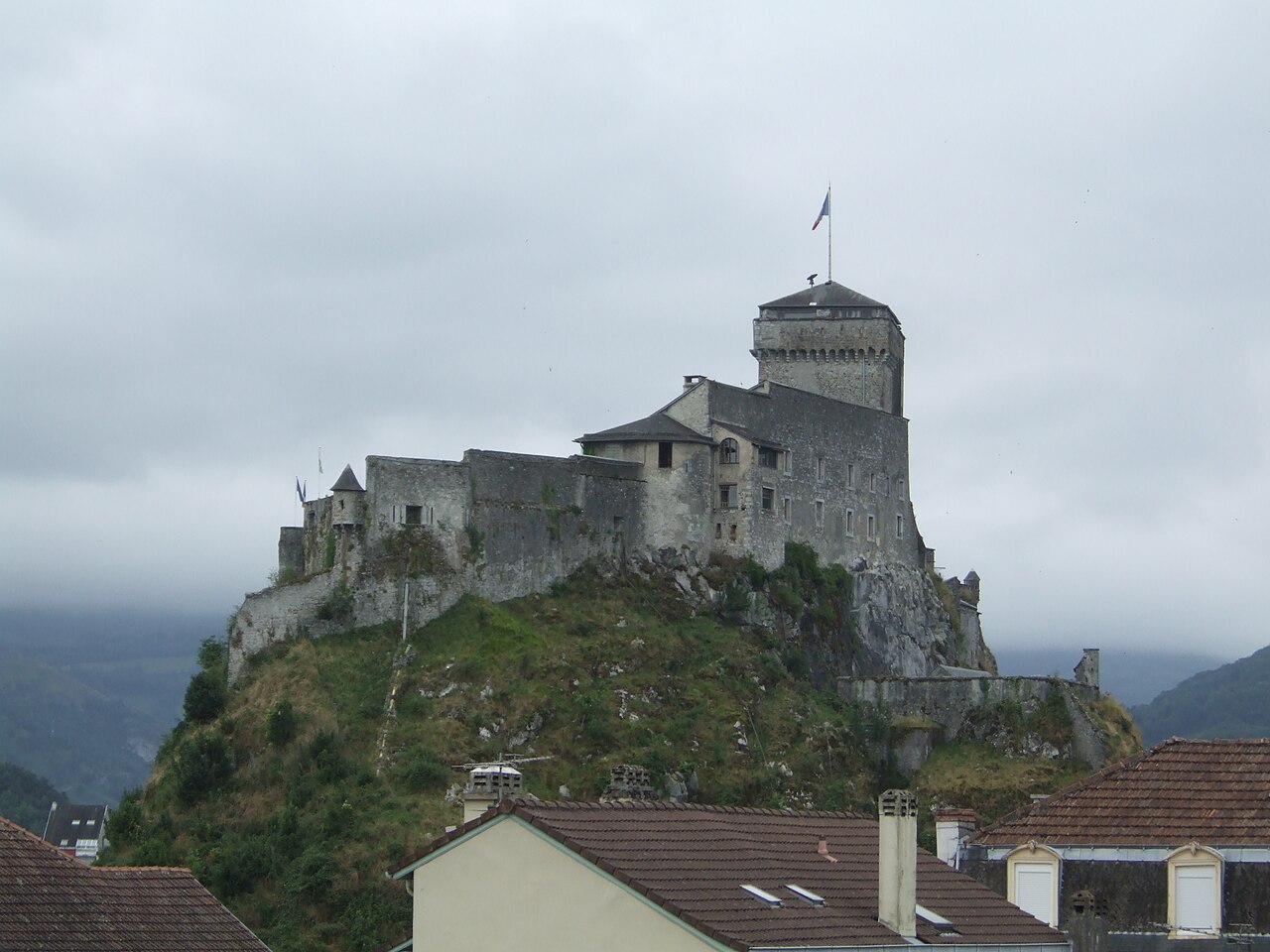
Château du Prince Noir

Château du Prince Noir in Arcizans-Avant, France
Arcizans-Avant, France
Renaissance (15th–17th c.)
Restored

Château du Prince Noir is a notable example of a Renaissance castle located in Arcizans-Avant, France. Constructed around the year 1500, it incorporates architectural elements from earlier periods, most notably a 14th-century dungeon that predates the main structure. This blend of medieval and Renaissance features reflects the transitional nature of castle construction during this time in southwestern France.

Historical background and significance

The castle's name, Prince Noir (Black Prince), is traditionally associated with Edward of Woodstock, the eldest son of King Edward III of England, known as the Black Prince. While direct ownership or residence by the Black Prince is not documented, the name suggests a historical connection or homage to this figure, who played a significant role in the Hundred Years' War, which deeply affected the region.

The original dungeon, dating from the 14th century, indicates that the site was fortified well before the Renaissance period. This earlier structure served as a defensive stronghold during a time of frequent conflict and territorial disputes in the Pyrenean region.

Architectural features and layout

The castle exhibits typical Renaissance architectural characteristics, such as more refined stonework and symmetrical design compared to purely medieval fortresses. However, the preservation of the medieval dungeon adds a layer of defensive architecture uncommon in later Renaissance châteaux.

The dungeon itself is a robust stone tower, originally designed for defense and imprisonment. Its thick walls and narrow windows reflect the military necessities of the 14th century. The rest of the castle, built circa 1500, features elements like large windows, decorative stone carvings, and more comfortable living quarters that mark the shift from fortress to residence.

Restoration and current use

Today, Château du Prince Noir is restored and privately owned. The restoration efforts have focused on preserving both the medieval and Renaissance aspects of the castle, maintaining its historical integrity while adapting it for modern use. The castle is not generally open to the public, but its well-maintained condition makes it a significant architectural landmark in the region.

The castle in its regional context

Located in the Pyrenean foothills, Château du Prince Noir occupies a strategic position that historically allowed control over local routes and territories. Its setting in Arcizans-Avant places it within the cultural and historical landscape of the Hautes-Pyrénées department, an area rich in medieval fortifications and Renaissance châteaux.

The castle's blend of medieval and Renaissance architecture exemplifies the evolution of defensive structures into more comfortable noble residences during the late Middle Ages and early modern period in France.

Architectural style and classification

Château du Prince Noir is classified as a hill castle due to its elevated position overlooking the surrounding terrain. Its primary architectural style is Renaissance, with preserved elements from the medieval period, particularly the dungeon, which is a rare surviving feature from the 14th century.

Visiting information and accessibility

As a privately owned property, Château du Prince Noir is not regularly open to the public. Visitors interested in the castle's history and architecture can view it from nearby public roads and paths. The surrounding region offers various opportunities for exploring other historical sites and enjoying the natural beauty of the Pyrenees.

Nearby attractions

The Hautes-Pyrénées region is home to numerous other castles, churches, and historical landmarks, making it a rich destination for those interested in medieval and Renaissance heritage. Visitors can combine a visit to Château du Prince Noir with excursions to nearby towns and natural parks.

Frequently asked questions (FAQ)

What is the historical significance of Château du Prince Noir?
Château du Prince Noir, located in Arcizans-Avant, is known for its rich history dating back to the 13th century. It played a crucial role during the medieval period as a stronghold in the region and is linked to various historical figures, enhancing its cultural importance.
When is the best time to visit Château du Prince Noir?
The best time to visit Château du Prince Noir is during the spring and early autumn months when the weather is pleasant, and the gardens are in full bloom. This period also sees fewer tourists, allowing for a more tranquil experience while exploring the castle and its surroundings.
Can I take guided tours of Château du Prince Noir?
Yes, guided tours are available at Château du Prince Noir, providing visitors with in-depth knowledge about its architecture and history. These tours typically last about an hour and can be booked in advance for larger groups.
What are the opening hours for Château du Prince Noir?
Château du Prince Noir is generally open to visitors from 10 AM to 6 PM, with extended hours during the summer months. It's advisable to check the official website for any seasonal changes or special events that may affect visiting hours.
Is it possible to access Château du Prince Noir with mobility aids?
Yes, efforts have been made to enhance accessibility at Château du Prince Noir for visitors with mobility aids. However, some areas may still pose challenges due to historic architecture, so it's best to contact the site in advance for specific accessibility information.
What are the ticket prices for Château du Prince Noir?
Ticket prices for Château du Prince Noir are relatively affordable, with discounts available for students and seniors. Children under a certain age may enter for free, making it a great option for family visits.
Are there any nearby attractions to visit while at Château du Prince Noir?
Yes, visitors can explore several nearby attractions, including beautiful hiking trails and local vineyards that offer wine tasting experiences. The charming village of Arcizans-Avant itself is also worth a stroll, showcasing the picturesque architecture of the region.

Information

Hill Castle

Loading map...

Visitor reviews

No reviews yet. Been here? Write the first review and help other travelers!

Write the first review

Visited this castle? Share your experience

Your review helps other travelers and adds first-hand knowledge to our encyclopedia.

Write a review

(5/5)

0/2000 characters

Your review will be visible after admin approval

Nearby castles

4.4 km

Château de Beaucens

Beaucens, France

Château de Beaucens is a historic castle located in the commune of Beaucens in the Hautes-Pyrénées department of southwestern France. This castle, primarily dating back to the 14th century, served as the stronghold of the Viscounts of Lavedan, a noble family influential in the region during the late medieval period. The castle's strategic position overlooks the scenic Gaves valley, offering commanding views that were essential for defense and surveillance.Historical background and significanceThe Château de Beaucens was constructed during the late medieval era, a time marked by frequent territorial conflicts and feudal power struggles in the Pyrenean region. The castle functioned as a fortified residence and military bastion for the Viscounts of Lavedan, who played a crucial role in regional governance and defense. Over the centuries, the castle witnessed various phases of occupation, siege, and decline, reflecting the turbulent history of southwestern France in the Middle Ages.Architectural features and layoutThe castle's architecture is characteristic of late medieval fortifications with robust stone walls and defensive structures designed to withstand attacks. Central to the complex is the keep, a fortified tower that served both as a last refuge during sieges and as the residence of the lord. The castle ruins include remnants of curtain walls, battlements, and defensive towers that once formed a formidable perimeter.The site is perched on a rocky outcrop, which classifies it as a hill castle, utilizing the natural elevation for defense. The layout likely included a courtyard surrounded by walls and buildings for storage, living quarters, and garrison facilities.The keep of eagles: a unique transformationIn recent years, the Château de Beaucens has been repurposed to host the Keep of Eagles (Donjon des Aigles), a zoological attraction specializing in birds of prey. This innovative adaptation allows visitors to experience falconry displays and observe various raptors flying freely around the castle ruins, combining natural heritage with cultural history.The Keep of Eagles offers educational programs about the ecology and conservation of birds of prey, enhancing the cultural value of the site. The juxtaposition of living wildlife with medieval stonework creates a unique visitor experience that highlights both the castle's historical importance and its modern-day role in wildlife preservation.Visiting the château and surroundingsVisitors to Château de Beaucens can explore the ruins, enjoy panoramic views of the Gaves valley, and attend the bird of prey demonstrations. The site provides insight into medieval military architecture and regional history, enriched by the living displays of raptors.The castle is accessible to the public, with facilities designed to accommodate tourists interested in history, nature, and wildlife. Its location in the Pyrenees makes it a notable destination for those exploring the cultural heritage and natural beauty of southwestern France.Preservation and current conditionToday, the Château de Beaucens remains in a state of ruins, with significant portions of its walls and towers still standing. The preservation of these ruins allows for ongoing archaeological study and public appreciation of medieval fortification techniques. The integration of the Keep of Eagles has contributed to the site's maintenance and increased its visibility as a cultural landmark.

Late Medieval (14th–15th c.)
Details
12.7 km

Castle of Lourdes

Lourdes, France

The Castle of Lourdes, located in Lourdes, France, is a remarkable example of a hill castle with a profound historical legacy that spans from Roman times through the High Medieval period and beyond. Strategically perched on a rocky plateau at the entrance to the seven valleys of the Lavedan in the Pyrenees, this fortress has played a pivotal role in regional defense and governance for centuries. Since 1933, it has been officially recognized as a monument historique by the French Ministry of Culture, underscoring its cultural and architectural significance. Ancient origins and early medieval significance The site of the castle reveals deep historical roots, with archaeological finds including Roman sculptures and votive altars that attest to its initial establishment during Roman occupation. The earliest surviving structural remains date from the 11th and 12th centuries, marking the beginnings of the castle's medieval fortifications. During the early medieval period, the fortress was a vital stronghold in the region. A notable historical event occurred in 778 when Charlemagne laid siege to the castle, confronting the Saracen chieftain Mirat. According to legend, Mirat converted to Christianity following the siege, adopting the name Lorus, which is believed to be the origin of the town's name, Lourdes. Medieval expansion and political transitions Throughout the 12th century, the castle served as the residence of the Counts of Bigorre, emphasizing its role as a center of regional power. Control of the fortress shifted over time, passing to the Counts of Champagne, who also ruled the Kingdom of Navarre. Eventually, the castle became part of the French crown under King Philip IV (Philippe le Bel). During the Hundred Years’ War, the Treaty of Brétigny (1360) transferred the castle to English control, which lasted until the early 15th century when it was reclaimed by the French after two sieges. Architectural developments in the 13th and 14th centuries The castle underwent significant fortification during the 13th and 14th centuries, including the construction of its imposing central tower, or keep (donjon), around 1314. This keep, standing approximately 26 meters high, was later heightened following a siege in 1406 to enhance its defensive capabilities. The keep features a narrow spiral staircase with 104 steps leading to the summit, and includes a dungeon area known as the segreta, illustrating its multifunctional use for defense and incarceration. Later modifications and changing functions In the 17th and 18th centuries, the castle saw further modifications to adapt to evolving military technologies and needs. Under King Henry IV in 1590, the fortress was transformed into a royal residence, reflecting its prestige and strategic importance. Subsequently, the castle was repurposed as a prison, a function it maintained into the early 20th century. 19th-century military engineering and museum conversion The 19th century brought extensive military engineering works, including the addition of a powder magazine for storing gunpowder and the conversion of parts of the castle into barracks. A reconstructed horned drawbridge from this period spans the outer gate, which is fortified with a portcullis and machicolations—defensive features designed to repel attackers. The Chausenque bastion, a 15th-century artillery tower attached to the castle, contains embrasures for firing weapons, while the southern platform called the cavalier served as an artillery emplacement with a lookout turret. In 1921, the castle's role shifted from military use to cultural preservation when it was converted into the Pyrenean Museum. Founded by Louis and Margalide Le Bondidier, the museum showcases artifacts documenting the history and culture of the Pyrenean region from the late 18th to early 20th centuries. This transformation highlights the castle's enduring significance beyond its military origins. Architectural features and defensive design The castle's layout reflects centuries of military architectural evolution. The core structure, dating from the 11th and 12th centuries, is built on a rocky plateau, providing a commanding view of the surrounding valleys. The keep remains the dominant feature, supported by robust defensive works including the fortified entryway with its drawbridge, portcullis, and machicolations. These features allowed defenders to control access and repel attackers effectively. The fortress was designed for sustained occupation, featuring a large cistern capable of holding approximately 130 cubic meters of rainwater, ensuring a reliable water supply during sieges. Sanitary facilities such as latrines were integrated within the living quarters. Nearby, a small Pyrenean cemetery with funerary steles and stone sarcophagi indicates the site's broader cultural and historical importance. Religious heritage within the castle The Notre-Dame-du-Château chapel within the castle grounds was constructed using materials salvaged from the demolished Saint-Pierre parish church in 1904. The chapel preserves Baroque-style furnishings originally belonging to the old church and the private chapel of the Counts of Bigorre, linking the castle's religious and noble heritage. Visitor experience and cultural significance Today, the Castle of Lourdes serves as a museum and cultural site, offering visitors insight into the rich history of the Pyrenees region. The castle's blend of medieval fortifications and later military adaptations provides a tangible narrative of evolving defensive architecture. Its museum collections include Roman artifacts uncovered on site, enriching the visitor experience with tangible links to the ancient past. As a protected monument historique and French Museum, the castle attracts historians, architecture enthusiasts, and tourists interested in the deep historical layers embedded within its walls. The site exemplifies the strategic importance of fortresses in medieval France and their transformation over time from military bastions to cultural landmarks.

High Medieval (11th–13th c.)
Details
12.8 km
Château Fort de Lourdes — France castle

Château Fort de Lourdes

Lourdes, France

The Château Fort de Lourdes stands as a monumental testament to centuries of history, blending its Roman origins with medieval fortifications and modern cultural significance. Located in the town of Lourdes, France, this hill castle commands a strategic position at the entrance to the seven valleys of the Lavedan in the Pyrenees. Its site, perched on a rocky promontory, has been valued since ancient times for its natural defensive advantages, making it a key military and administrative center through the ages.The castle's earliest known history dates back to the Roman period, with archaeological excavations uncovering fragments of sculptures, votive offerings, and wall foundations beneath the medieval structures. These Roman remains provide an important glimpse into the site's long-standing significance, although much of the ancient walls were destroyed during 19th-century military engineering works. Today, these artifacts are preserved and displayed on site, illustrating the castle's deep historical roots.During the High medieval period, the castle emerged as a formidable fortress and residence for regional rulers. It was besieged in 778 by Charlemagne during his campaign against Saracen forces. A local legend recounts that the Saracen leader Mirat converted to Christianity at this siege, adopting the name Lorus, which later inspired the name of the town of Lourdes.Medieval history and ownershipIn the 11th and 12th centuries, the castle served as the residence of the Counts of Bigorre, who fortified it extensively, making it a stronghold reputed to be nearly impregnable. The castle's control shifted in the 13th century when it passed to the Counts of Champagne, who were also kings of Navarre. This transition marked the castle's integration into a wider political landscape that connected the Pyrenees region with the broader European feudal network.Later, under the reign of Philip IV of France, known as Philippe le Bel, the castle became part of the French royal domain. The Treaty of Brétigny in 1360 ceded the fortress to English control during the Hundred Years' War, but it was reclaimed by the French in the early 15th century after two successful sieges. These events underscore the castle's strategic importance in medieval military conflicts.Architectural evolution and fortificationsThe castle's architecture reflects its evolving defensive needs and the technological advances over several centuries. The oldest surviving structures date from the 11th and 12th centuries, consisting mainly of foundational fortifications. Significant enhancements were made in the 13th and 14th centuries, notably the construction of the imposing keep (donjon), which remains a dominant feature of the fortress. This tower, commissioned by Gaston Fébus, Count of Foix-Béarn, was originally built around 1314 and heightened after a siege in 1406, reaching a height of 26 meters.The castle is surrounded by a series of defensive walls completed by the 14th century, which once enclosed multiple towers. While some towers have been lost over time, the surviving residential tower continues to symbolize the castle's medieval strength. The fortress also includes a gate equipped with a portcullis and murder holes, defensive features designed to repel attackers.A notable addition is the Chausenque bastion, a 15th-century artillery tower with two levels and narrow firing slits called loopholes. This bastion represents the adaptation of the castle's defenses to the introduction of firearms and artillery, highlighting the transition from medieval to early modern military architecture.Internal features and facilitiesInside the castle, a spiral staircase of 104 steps ascends to the top of the dungeon, which houses a secret chamber. Water supply was ensured by a large rainwater cistern capable of holding 130 cubic meters, essential during sieges. The entrance features a reconstructed drawbridge with distinctive horned elements, built in 1842 to replace earlier medieval mechanisms.The castle also contains latrines, a courtyard of honor, and gardens, which supported the daily life and defensive functions of the fortress. A Pyrenean cemetery on site preserves funerary steles and stone coffins from various periods, attesting to the long human presence at the location.Later uses and cultural significanceFrom the 17th century, the château transitioned from a military fortress to a royal residence under Henry IV. It subsequently served as a prison, first under royal authority and later as a state prison following the French Revolution. This penal function continued until the early 20th century.In 1921, the castle was transformed into the Musée Pyrénéen (Pyrenean Museum), dedicated to preserving and showcasing the arts, traditions, and history of the Pyrenees region. This cultural role continues today, making the castle a vital center for regional heritage.The Notre-Dame-du-Château chapel within the fortress houses furniture from the former parish church of Saint-Pierre de Lourdes, which was demolished in 1904. The chapel itself was constructed using recycled materials from the old church, preserving an important element of local religious heritage.Preservation and visitor experienceThe Château Fort de Lourdes has undergone several restoration campaigns, particularly in the 19th and 20th centuries, to preserve its structural integrity and historical features. It is currently classified as a restored castle and is open to the public as a museum and cultural site.Visitors can explore the castle's extensive fortifications, climb the donjon for panoramic views of the surrounding valleys, and view the archaeological exhibits that illustrate the site's long history. The castle is illuminated at night, enhancing its dramatic silhouette and emphasizing its status as a landmark of the Pyrenees.As a monument historique listed since 1933 and further recognized in 1995 and 2002, the château fort de Lourdes remains a significant heritage site that encapsulates the military, political, and cultural history of southwestern France.

High Medieval (11th–13th c.)
Details