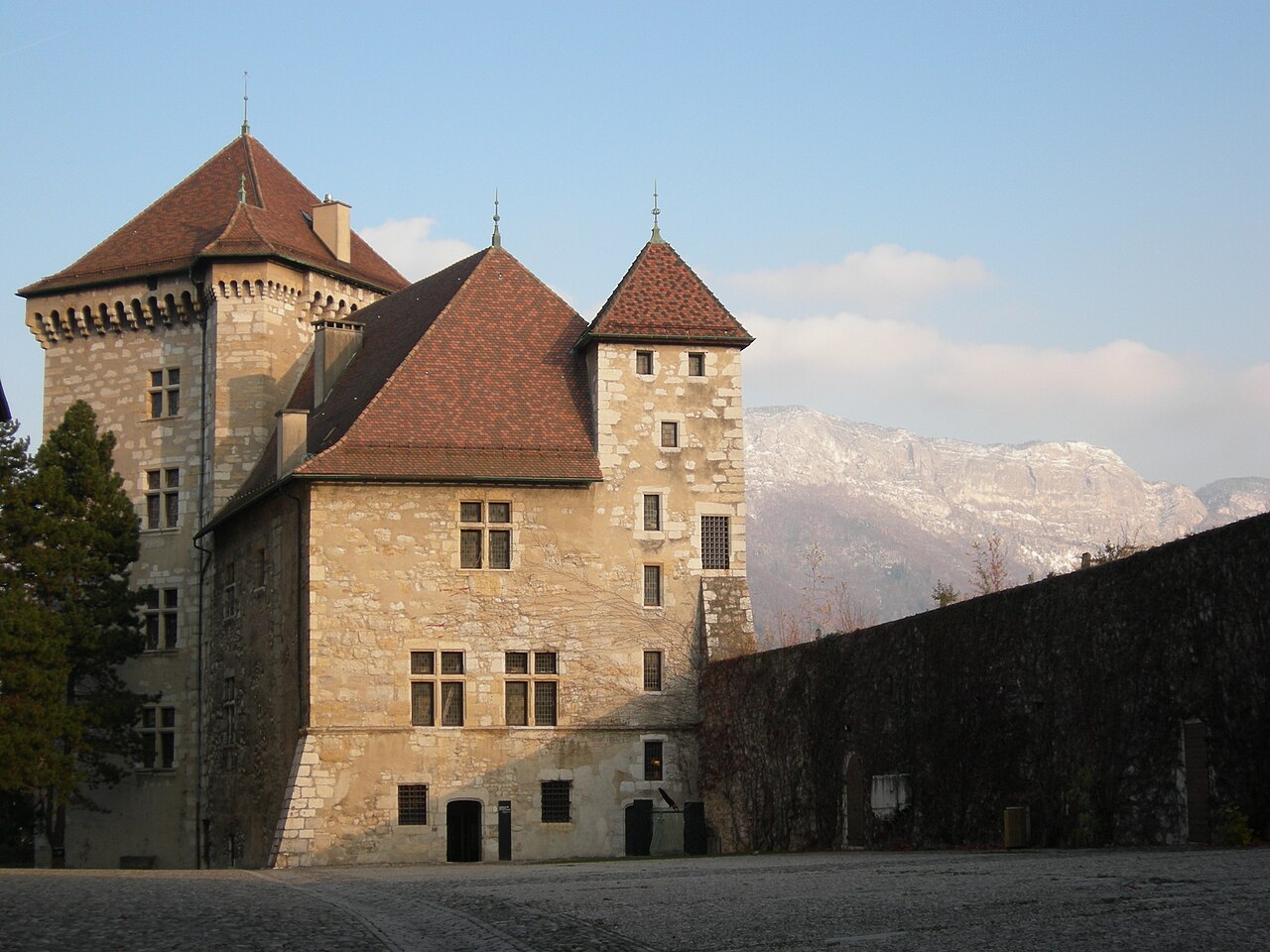
Château de Thorens
The Château de Thorens stands prominently in the municipality of Thorens-Glières in southeastern France, within the historical region of Savoy. This hill castle traces its origins back to the 11th century, with its earliest fortification established in 1060 by Count Gérold de Genève. Entrusted to his companion Odon de Compey, the initial defensive stronghold laid the foundation for what would become a significant medieval fortress and noble residence. The castle's location on elevated terrain provided strategic oversight of the surrounding valleys, a typical feature of hill castles designed for defense and control.
Medieval origins and early history
The fortified site of Château de Thorens reflects the military architecture of the High Medieval period, with surviving vaulted chambers dating to the 12th century that showcase the austere stone construction typical of early fortifications. These chambers likely served as quarters for soldiers and storage, emphasizing the castle's initial martial function. The keep (donjon), a central fortified tower, symbolized feudal authority and was integral to the castle's defensive system.
Throughout the 15th century, ownership of the castle shifted due to political and familial conflicts. After the confiscation by the Duke of Savoy in 1479, the castle passed from the lords of Compey to Hélène de Luxembourg-Saint-Pol, wife of Prince Janus of Savoy, Count of Geneva. This transition marked the beginning of the castle's association with the Luxembourg family, who maintained the property into the 16th century.
Renaissance transformation and the sales family
The castle entered a new chapter in 1559 when Sébastien de Luxembourg sold it to François de Sales, father of the future Saint François de Sales. François de Sales formally took possession in 1602, representing his siblings. The Sales family, rising in prominence within the Duchy of Savoy, transformed the castle from a purely defensive fortress into a noble residence reflecting the tastes and social aspirations of the Renaissance and Baroque periods.
The vaulted kitchen dated to 1632 remains a well-preserved example of early 17th-century domestic architecture within the château, illustrating the functional aspects of noble life. Interiors evolved to include richly decorated salons and bedrooms, adorned with Flemish tapestries and masterful paintings, blending artistic trends from the Renaissance through the Baroque to the Second Empire period.
Religious significance and saint françois de sales
The château holds deep religious connections through Saint François de Sales (1567–1622), who served as the prince-bishop of Geneva. His legacy is preserved within the castle, which houses liturgical objects, episcopal garments, and rare books associated with his ecclesiastical career. This religious heritage adds a unique dimension to the château's historical narrative, intertwining spiritual and noble histories.
19th-century restoration and political importance
During the French invasion of Savoy in 1792, the castle suffered damage, reflecting the turbulent political climate of the era. Restoration efforts in the 19th century were led by Marquise Alexandrine de Sales and her grandson Count Eugène de Roussy de Sales, who preserved and enhanced the château's architectural and artistic heritage.
The château also gained prominence as a residence of Camille Benso de Cavour, the influential prime minister instrumental in the unification of Italy. His presence is commemorated by personal effects, including a Boulle-style desk of Napoleon III design, upon which the 1860 Treaty of Turin was signed, transferring Savoy and Nice to France. This event marked a significant geopolitical shift in European history, linking the château to broader continental developments.
Modern preservation and public access
Since 1960, parts of the château have been opened to the public by Count Jean-François de Roussy de Sales, allowing visitors to explore the medieval ground floor and other historically significant rooms. The ongoing stewardship by the family ensures the château remains a well-preserved monument reflecting centuries of architectural evolution, noble lineage, and cultural heritage.
Architectural features and layout
The château's layout retains elements from its original 11th-century fortress, including stone vaulted chambers that evoke the defensive character of the medieval period. The keep stands as a testament to feudal authority and military architecture, while later additions showcase the transition to a more comfortable noble residence.
The preservation of the vaulted kitchen and richly decorated interiors demonstrates the château's adaptation over time, blending functionality with aristocratic refinement. The presence of Flemish tapestries and period paintings enriches the cultural ambiance, highlighting the château's role as a repository of art and history.
Cultural and historical significance
Château de Thorens embodies the layered history of the Savoy region, reflecting its strategic importance, religious heritage, and noble patronage. Its connections to figures such as Saint François de Sales and Camille Benso de Cavour elevate its status beyond a mere fortress to a site of religious and political significance.
The château's role in the signing of the Treaty of Turin links it directly to the reshaping of European borders in the 19th century, underscoring its importance in modern history. Today, it stands as a well-preserved monument that offers insights into medieval fortification, Renaissance and Baroque aristocratic life, and 19th-century political history.
Visiting the château
Visitors to Château de Thorens can explore its medieval vaulted chambers, historic kitchen, and elegant salons, gaining a comprehensive understanding of its architectural evolution and historical context. The château's ongoing maintenance by the family ensures a rich and authentic experience, with access to original furnishings and artifacts that tell the story of its noble inhabitants.
The site provides educational opportunities for those interested in medieval military architecture, religious history, and European political developments, making it a valuable destination for cultural tourism in the Savoy region.
Frequently asked questions (FAQ)
- How do I get to Château de Thorens?
- Château de Thorens is located in Thorens-Glières, France, easily accessible by car. The nearest major city is Annecy, approximately 30 kilometers away, and there are public transportation options available, including buses that connect to the surrounding areas.
- What is the historical significance of Château de Thorens?
- Château de Thorens dates back to the 13th century and has played a crucial role in the region's history, serving as a stronghold during various conflicts. It is also notable for its association with the Counts of Geneva and has been a site of significant political and social activities over the centuries.
- When was Château de Thorens built?
- Construction of Château de Thorens began in the early 13th century, around 1230, and it was expanded and fortified over the following centuries. The castle's architecture reflects the evolution of medieval defensive structures and is a testament to the historical periods it has witnessed.
- Can I visit Château de Thorens?
- Yes, Château de Thorens is open to visitors, allowing you to explore its rich history and stunning architecture. Guided tours are available, providing insights into the castle’s past and the surrounding area.
- Why is Château de Thorens considered an architectural gem?
- Château de Thorens is renowned for its impressive medieval architecture, featuring robust stone walls and intricate design elements. The castle's strategic location and panoramic views of the surrounding landscape further enhance its architectural significance.
- Is it possible to access Château de Thorens with mobility concerns?
- Yes, the castle has made efforts to improve accessibility for visitors with mobility concerns. While some areas may be challenging due to historical constraints, staff are available to assist and provide information on the best routes for easier access.
- What are the opening hours for Château de Thorens?
- Château de Thorens typically opens to visitors from 10 AM to 6 PM during the tourist season, which runs from spring to autumn. It is advisable to check the official website for any seasonal changes or special events that may affect opening hours.
- What are the ticket prices for visiting Château de Thorens?
- Ticket prices for Château de Thorens are generally affordable, with discounts available for students and seniors. Children under a certain age may enter for free, and family packages are often offered to encourage group visits.
- When is the best time to visit Château de Thorens?
- The best time to visit Château de Thorens is during the spring and early autumn months when the weather is pleasant and the surrounding scenery is vibrant. Additionally, visiting during the week may help you avoid larger crowds typically seen on weekends and holidays.
- What nearby attractions can I explore while visiting Château de Thorens?
- While visiting Château de Thorens, you can explore the beautiful Glières Plateau, known for its stunning landscapes and hiking trails. Additionally, the charming town of Annecy, with its picturesque canals and Old Town, is just a short drive away and offers a delightful day trip experience.
Information
Website
Visit websiteSources & official resources
Verify the information above using these authoritative references.
Loading map...
Visitor reviews
No reviews yet. Been here? Write the first review and help other travelers!
Write the first reviewVisited this castle? Share your experience
Your review helps other travelers and adds first-hand knowledge to our encyclopedia.