Château de Lacoste

Château de Lacoste: historic hill castle and marquis de Sade's refuge
Lacoste, France
High Medieval (11th–13th c.)
Partially Preserved

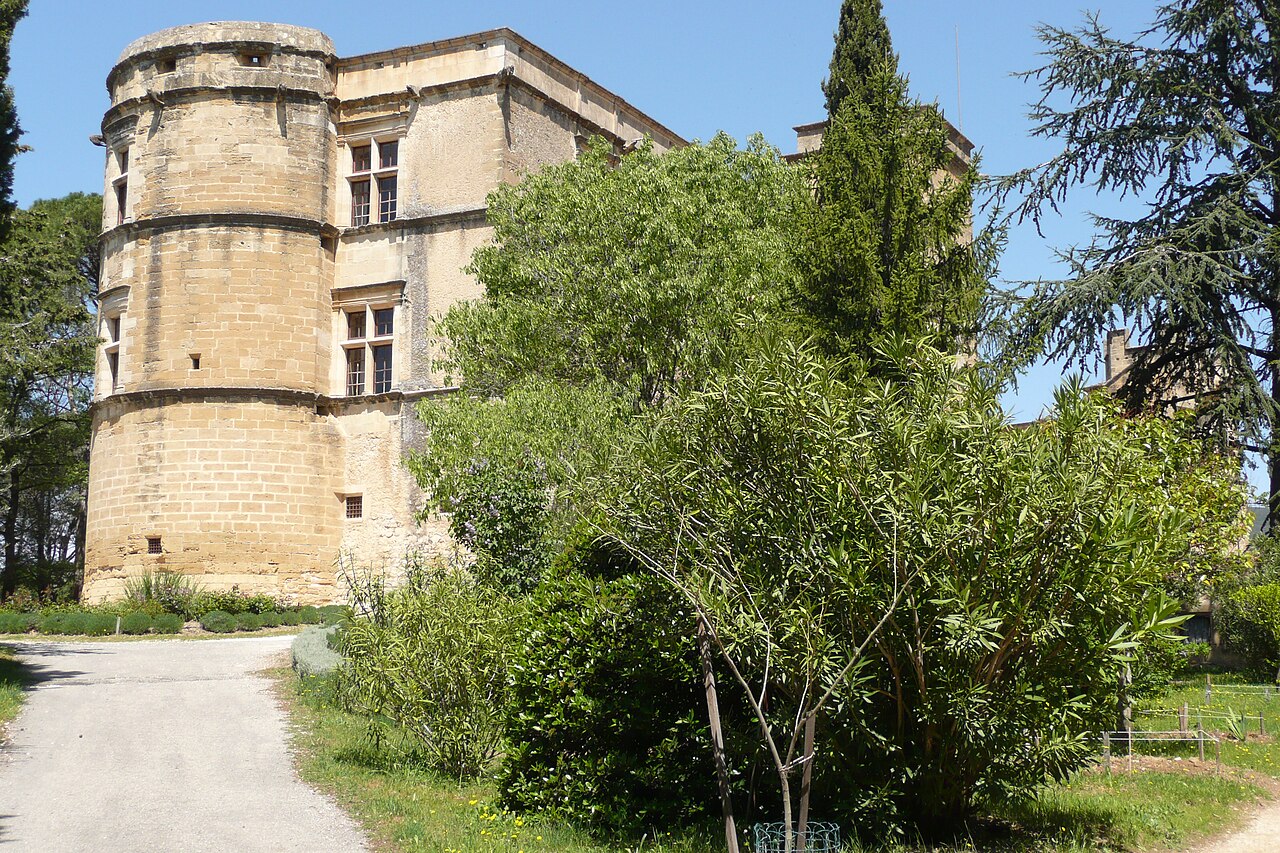
The Château de Lacoste stands as a remarkable example of a medieval fortress with a rich and turbulent history, located in the village of Lacoste, France. Built originally in the 11th century, this hill castle occupies a commanding rocky outcrop overlooking the Calavon valley and the surrounding Monts de Vaucluse, Mont Ventoux, and the Alps. Its strategic position was chosen to control key routes connecting major cities such as Arles, Marseille, Aix-en-Provence, and Lyon, making it a vital stronghold in the region during the high medieval period.

Throughout its history, the castle was primarily owned by the noble Simiane family, descendants of the house of Agoult, who maintained the estate for several centuries. Ownership passed to the de Sade family in the early 17th century, notably through the 1627 marriage of Diane Simiane to Jean-Baptiste de Sade. This connection would later bring infamy to the château as the residence of the notorious Marquis de Sade in the late 18th century.

The marquis de Sade's residence and artistic legacy

Donatien Alphonse François, Marquis de Sade, infamous for his libertine lifestyle and controversial writings, made Château de Lacoste his refuge during periods of scandal and imprisonment. He first took up residence in 1769 and stayed intermittently until 1778, using the castle as a base between his various incarcerations and escapes.

During his longest stay from 1772 to 1773, the marquis constructed an outdoor theatre within the castle grounds, designed to seat approximately 120 spectators. This theatre was a venue for his own plays and artistic pursuits, reflecting his interest in drama and private performances. The castle thus became not only a place of personal refuge but also a cultural hub for his creative expression.

De Sade's attachment to the château was profound; he described it under the fictional name Château de Silling in his literary works such as La Marquise de Ganges and The 120 Days of Sodom. His repeated returns to Lacoste, even after escapes from custody, underscore the castle's significance in his life and legacy.

Architectural evolution and historical transformations

While originating in the 11th century, Château de Lacoste underwent numerous modifications over the centuries, adapting to changing defensive and residential needs. The castle's construction primarily utilized local soft pale limestone from nearby quarries, a material that shaped its aesthetic but also posed challenges for long-term preservation due to weathering.

The fortress was characterized by its dry moats, courtyards, and defensive walls, which remain partially preserved today. The castle's elevated position on a rocky spur provided natural fortification and extensive views for surveillance, key for a medieval stronghold.

The castle's fortunes declined dramatically during the French Revolution when it was vandalized and largely destroyed. Stones and building materials were sold off, and by the early 19th century, the château was described as missing doors, windows, and ironwork, with parts of its walls obscured by farm buildings. This period marked a significant loss in the castle's structural integrity.

Restoration and modern significance

In 1952, André Bouer acquired the ruins and initiated restoration efforts to preserve what remained of the château. These efforts aimed to stabilize the ruins while respecting the site's historical fabric and significance.

The castle gained official recognition in 1992 when the French Ministry of Culture designated it as a historic monument, including its courtyards and dry moats. This status underscores its cultural importance and ensures ongoing preservation efforts.

Since 2001, the château has been owned by the renowned fashion designer Pierre Cardin, who further committed to its restoration and promoted the site as a cultural venue. Cardin organized annual artistic festivals in the region, revitalizing the castle's role as a center for arts and heritage. Following Cardin's death in 2020, the estate has been subject to legal disputes, but the château remains a symbol of historical and cultural significance.

Archaeological and cultural heritage

Archaeological findings at the site reveal a long continuum of human activity predating the castle itself. Flint tools from prehistoric times and Roman pottery shards testify to the strategic importance of the rocky spur as a watch post and crossroads throughout history.

The castle's location offers spectacular panoramic views of the surrounding landscape, including the village of Lacoste, the Calavon valley, the Monts de Vaucluse, Mont Ventoux, the Alps, and the nearby village of Bonnieux. This vantage point was crucial for both defense and control of the region's trade and travel routes.

Although much of the castle remains in partial ruin, the preservation of its courtyards, dry moats, and remnants of the theatre provide valuable insights into its architectural evolution and the lifestyle of its notable inhabitants.

Legacy in literature and popular culture

The Château de Lacoste is immortalized in literature through the works of the Marquis de Sade, who fictionalized the castle as the Château de Silling. His writings, particularly The 120 Days of Sodom, have contributed to the castle's dark and controversial legacy, attracting visitors interested in both history and the infamous marquis's life.

Today, the château serves as a cultural landmark, blending its medieval origins with its associations to the Enlightenment-era libertine aristocracy. Its ongoing restoration and use as a festival venue continue to celebrate this complex heritage, making the Château de Lacoste a unique destination for history enthusiasts, literary scholars, and tourists alike.

Frequently asked questions (FAQ)

What are the opening hours of Château de Lacoste?
Château de Lacoste is open to visitors from April to October, typically from 10 AM to 6 PM. During the off-peak months, hours may vary, so it's advisable to check the official website before your visit.
How do I get to Château de Lacoste?
The castle is located in the picturesque village of Lacoste, France, and can be reached by car or public transport. The nearest major city is Avignon, from where you can take a train or bus to reach Lacoste, followed by a short walk to the castle.
What is the historical significance of Château de Lacoste?
Château de Lacoste is a 16th-century fortress that was once owned by the famous philosopher and writer, Marquis de Sade. The castle is notable for its role in the history of the region and its influence on literature, as well as its striking architecture.
Can I take guided tours of Château de Lacoste?
Yes, guided tours are available and provide an in-depth look at the castle's history, architecture, and the life of Marquis de Sade. These tours are a great way to enhance your understanding of the site and its significance.
Is it possible to access Château de Lacoste for those with mobility issues?
Château de Lacoste has some accessibility options, but due to its historical nature and terrain, it may not be fully wheelchair-friendly. Visitors with specific accessibility needs are encouraged to contact the castle in advance to inquire about available accommodations.
What is the best time to visit Château de Lacoste?
The best time to visit Château de Lacoste is during the spring and fall months when the weather is mild and the tourist crowds are smaller. Visiting in these seasons allows for a more enjoyable experience while exploring the castle and its surrounding landscape.
What are the ticket prices for Château de Lacoste?
Ticket prices for Château de Lacoste vary depending on age and group size, with discounts available for students and seniors. It's recommended to check the official website for the most current pricing and any special offers.
Are there any nearby attractions to explore after visiting Château de Lacoste?
Yes, after exploring Château de Lacoste, visitors can enjoy nearby attractions such as the picturesque village of Gordes and the stunning Sénanque Abbey. Both locations offer beautiful scenery and rich history, making them perfect complements to your visit.

Information

Hill Castle

Sources & official resources

Verify the information above using these authoritative references.

Loading map...

Visitor reviews

No reviews yet. Been here? Write the first review and help other travelers!

Write the first review

Visited this castle? Share your experience

Your review helps other travelers and adds first-hand knowledge to our encyclopedia.
Write a review

(5/5)

0/2000 characters

Your review will be visible after admin approval

Nearby castles

10.3 km
Château de Lourmarin — France castle

Château de Lourmarin

Lourmarin, France

Château de Lourmarin stands as a remarkable example of a late medieval fortress transformed into a Renaissance residence in the heart of the Provence-Alpes-Côte d'Azur region of France. Located in the charming town of Lourmarin in the Vaucluse département, this castle embodies centuries of architectural evolution and historical significance. The site originally hosted a 12th-century fortress designed for defense during a turbulent period marked by feudal conflicts and regional power struggles. This early medieval stronghold was substantially transformed in the 15th century by Foulques d'Agoult, who served as chamberlain to King René I of Anjou. Under d'Agoult's direction, the castle was rebuilt with enhanced fortifications and residential quarters, reflecting the transition from purely military architecture to a more comfortable noble residence. Architectural evolution and renaissance influence Following the initial 15th-century transformation, the castle underwent significant expansion after 1526 when it came under the ownership of Louis d’Agoult-Montauban and his wife, Blanche de Lévis-Ventadour. Their additions introduced Renaissance architectural elements, making Château de Lourmarin the first building in the Provence region to showcase this innovative style. The new annexes featured symmetrical façades, classical pilasters, and large windows that allowed abundant natural light, a departure from the defensive austerity of medieval castles. The Renaissance influence is evident in the castle's ornamental stonework, arched doorways, and the integration of residential comfort alongside defensive structures. This blend of styles marks Château de Lourmarin as a transitional monument, bridging the medieval and early modern periods in French castle architecture. Ownership and historical significance After the d’Agoult family, the castle passed to the Créqui-Lesdiguières family, notable lords of the nearby Château de La Tour d'Aigues. Despite their ownership, the Créqui-Lesdiguières never took up residence at Lourmarin, which contributed to the castle's gradual decline in prominence. This absentee ownership persisted until the upheavals of the French Revolution, during which many noble estates were confiscated or abandoned. Following the Revolution, the castle changed hands twice more but was largely neglected, leading to its deterioration and eventual ruin. The once-proud fortress and Renaissance residence fell into disrepair, reflecting the broader decline of aristocratic estates in post-revolutionary France. 20th-century restoration and cultural legacy The revival of Château de Lourmarin began in 1920 when Robert Laurent-Vibert, a cosmetics producer with a passion for heritage preservation, acquired the dilapidated castle. He commissioned the architect Henri Pacon to undertake a comprehensive restoration that respected the castle's historical integrity while making it suitable for modern use. Laurent-Vibert's restoration work focused on stabilizing the structure, repairing the stone masonry, restoring the Renaissance façades, and refurbishing the interiors to reflect their historical character. His untimely death in a car accident in 1925 did not halt the project, as he bequeathed the castle to the Académie des Sciences, Agriculture, Arts et Belles Lettres. This transfer came with the stipulation that the castle be preserved as a trust to support young artists, ensuring its role as a cultural beacon. Architectural features and visitor experience Today, Château de Lourmarin is celebrated for its well-preserved Renaissance architecture set upon a hilltop site that offers panoramic views of the surrounding Provencal landscape. Visitors can explore its courtyards, towers, and ornate chambers that showcase period details such as stone fireplaces, wooden beams, and decorative plasterwork. The castle's layout reflects its dual purpose as a defensive stronghold and noble residence, with thick curtain walls and battlements juxtaposed against elegant living spaces. The restoration has preserved key elements such as the gatehouse, moat remnants, and the main keep, providing insight into medieval military architecture alongside Renaissance domestic design. Château de Lourmarin also hosts cultural events and exhibitions, continuing its legacy as a center for the arts. Its combination of historical authenticity and artistic patronage makes it a unique destination for those interested in French history, architecture, and culture. Location and regional context Situated in the Provence-Alpes-Côte d'Azur region, the castle benefits from the area's rich historical tapestry and scenic beauty. The town of Lourmarin itself is renowned for its picturesque streets, vibrant markets, and as a hub of Provencal culture, making a visit to the castle a comprehensive cultural experience. Preservation status and management Classified as restored, Château de Lourmarin is maintained by the trust established by Laurent-Vibert's will, ensuring ongoing conservation efforts. The castle is open to the public, offering guided tours that highlight its architectural evolution and historical narratives.

Late Medieval (14th–15th c.)
Details
10.5 km

Château de Gordes

Gordes, France

Château de Gordes stands prominently over the village of Gordes in southeastern France, commanding views of the Luberon valley. For over a millennium, this medieval fortress has shaped the village’s character as an imposing stronghold. The castle’s origins trace back to at least 1031, marking it as a significant defensive structure during the Middle Ages. Its strategic location atop a rocky outcrop allowed it to serve as a formidable citadel, protecting the surrounding lands and controlling access routes through the region. Medieval origins and 14th-century expansion The castle's most substantial development occurred in the 14th century, a turbulent period marked by regional conflicts and frequent raids. During this time, the castle was extensively redesigned and fortified to withstand attacks, notably from the troops of Raymond de Turenne, a powerful nobleman known for his military campaigns in Provence. These enhancements included thickening of the defensive walls, reinforcement of towers, and the addition of battlements designed to repel invaders. The architectural style of this phase reflects typical late medieval military design, focusing on functionality and defense. The castle's robust stone construction and elevated position made it an impregnable fortress, a symbol of feudal power in the region. Renaissance transformation under bertrand rambaud de simiane By the early 16th century, the advent of the Renaissance brought new cultural and architectural influences to the castle. Beginning in 1525, Bertrand Rambaud de Simiane, a nobleman whose family held sway over much of the Luberon area, initiated a transformation of the fortress into a more comfortable and elegant residence. This shift reflected broader changes in European aristocratic life, moving away from purely defensive structures toward homes that also expressed status and taste. The renovations introduced Renaissance architectural elements, including larger windows, more refined interior spaces, and decorative features. One of the castle’s most remarkable Renaissance additions is the monumental chimney, notable not only for its impressive size but also for the exquisite quality of its sculptural details. This chimney exemplifies the blend of functionality and artistry characteristic of Renaissance architecture. Varied uses and role in village life Despite these enhancements, the lords of Gordes never took up permanent residence in the castle, preferring instead to collect revenues from their seigneury. Over the centuries, the castle’s function evolved to meet the needs of the community. It served as a prison, a warehouse for agricultural produce, and quarters for military garrisons. This practical use ensured the castle remained a vital part of the village infrastructure. By the late 19th and early 20th centuries, the castle had become a hub of village life. It housed a variety of public services, including a bar, a boys’ school, a school cafeteria, the post office, a pharmacy, and the town hall. This period highlights the castle’s adaptability and its integration into the social fabric of Gordes. Architectural features and preservation The castle’s architecture is characterized by its massive stone walls, towers, and fortified gatehouses typical of late medieval fortifications. The Renaissance modifications introduced a more refined aesthetic, balancing defense with residential comfort. The monumental chimney remains a key highlight, showcasing the artistic skill of the period’s craftsmen. Today, the castle is well preserved and serves as a cultural center dedicated to exhibitions and events. Its preservation allows visitors to explore the layers of history embedded in its walls, from medieval fortress to Renaissance residence and community hub. Cultural significance and tourism Château de Gordes is an important heritage site in the Provence-Alpes-Côte d'Azur region, attracting tourists interested in medieval architecture, Renaissance art, and Provençal history. Its commanding presence over the village and surrounding landscape makes it a popular destination for cultural tourism. The castle’s role as a cultural center ensures ongoing engagement with the arts and history, hosting exhibitions that highlight regional traditions and contemporary creativity. Visitors can appreciate not only the architecture but also the castle’s evolving role in the life of Gordes.

Late Medieval (14th–15th c.)
Details
13.6 km

Château de Murs

Murs, France

The Château de Murs stands prominently on the heights of Murs, a village near the Vaucluse mountains in the Provence region of France. Its strategic location offered commanding views of the surrounding landscape, making it an ideal site for a defensive stronghold during the High Medieval period. The castle's origins date back to the 12th century, when the powerful d'Agoult family established it as a fortified garrison. The earliest surviving structures include robust ramparts and a defensive tower situated in the western section of the castle grounds, reflecting typical medieval military architecture designed to withstand sieges and protect the local populace. Medieval origins and defensive architecture Constructed initially as a military fortress, the Château de Murs featured strong curtain walls and a keep that served as the last line of defense. The castle's layout was typical of hill castles of the era, utilizing the natural topography to enhance its fortifications. Alongside the castle, a village church was erected in the 12th century, serving dual functions as a chapel for the castle inhabitants and as a parish church for the local community. This church included a small cloister, indicating an ecclesiastical presence integrated within the castle complex. Expansion and residential development in the 13th and 15th centuries In the 13th century, the castle complex was expanded with the construction of the Maison Crillon, a residence designed to accommodate visiting lords and dignitaries. This addition signified a shift from purely military functions toward more residential and administrative uses. Later, in 1462, ownership passed to the Astouaud family, who undertook significant enlargement and refinement of the castle. They added a central keep that included a dedicated chapel and a justice hall, reflecting the castle's role as a center of local governance and judicial authority. Renaissance enhancements and landscaping During the Renaissance period, the Astouaud family further enhanced the castle by constructing a new residential house adjacent to the Maison Crillon. This period saw the introduction of more refined architectural elements, blending defensive features with comfort and aesthetic appeal. In the 18th century, Jean-Baptiste François d’Astouaud, the Marquis of Murs, added formal gardens and a grand iron gate emblazoned with the family coat of arms, signifying the castle's transformation from a fortress to a noble residence with landscaped grounds. Decline, restoration, and current status By the time of the French Revolution, the Château de Murs had fallen into neglect, reflecting the broader decline of feudal strongholds during this tumultuous period. The castle's fortifications and residential buildings suffered from disrepair. Restoration efforts began in the mid-19th century under the stewardship of the Vayson family. Notably, the poet and artist Paul Vayson, a descendant, captured the castle's evocative atmosphere in his writings, describing its ivy-covered walls, crumbling battlements, and the presence of nesting swallows that had made the ruins their home. Comprehensive restoration was completed in the mid-20th century, preserving the castle's architectural heritage and stabilizing its structures. Today, the Château de Murs remains a private property and is not open to the public, maintaining its status as a historic monument within the Provence region. Architectural significance and heritage The castle represents a layered architectural history spanning from the High Medieval period through the Renaissance and into the 18th century. Its combination of military fortifications, residential buildings, and ecclesiastical structures exemplifies the multifunctional nature of medieval castles in southern France. The preservation of elements such as the original ramparts, central keep, chapel, and Renaissance additions provides valuable insight into the evolution of castle design and noble life over several centuries.

High Medieval (11th–13th c.)
Details

