Château de Fontaine-Henry

Château de Fontaine-Henry: a late medieval castle in Normandy
Fontaine-Henry, Normandie, France
Late Medieval (14th–15th c.)
Well Preserved

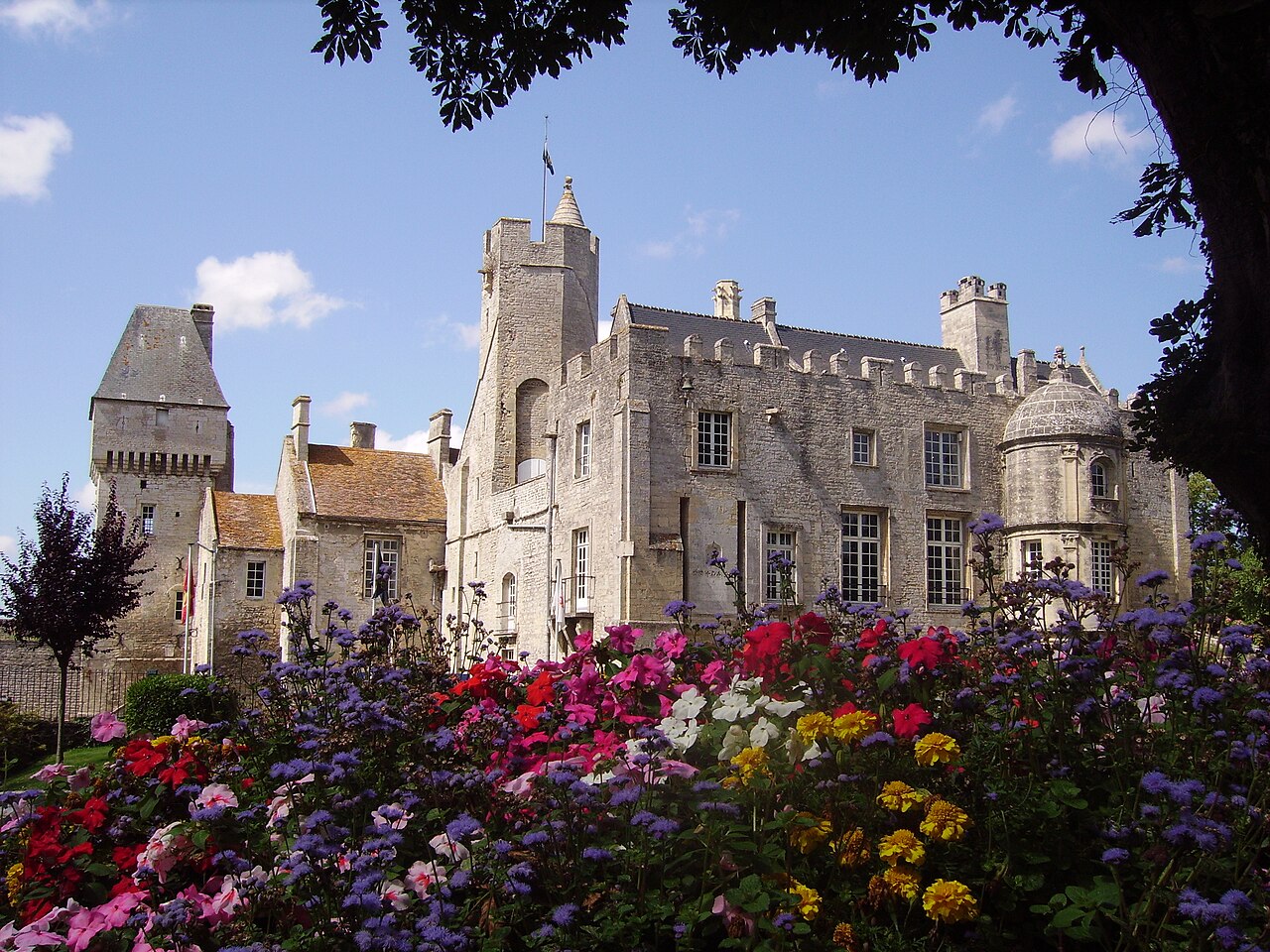
Château de Fontaine-Henry is an exceptional example of a late medieval castle located in the heart of Calvados, Normandy. This historic fortress has gracefully endured the passage of centuries, preserving its architectural grandeur and familial legacy. The castle is a living testimony to the evolution of French noble residences from the Middle Ages through the Renaissance and beyond.

The origins and early history of Château de Fontaine-Henry

The castle owes its name to Henry de Tilly, son of a prominent seneschal of Normandy who participated in the eighth crusade. Originally, the site was home to a fortress dating back to the 9th century, a strategic location that was later developed into a more substantial castle during the 13th century. From this early period, parts of the castle remain, notably the Gothic chapel and the vaulted ground floor rooms, which offer a glimpse into medieval construction techniques and religious architecture.

Medieval foundations and early structures

The initial castle was built on the remains of the ancient fortress by Guillaume de Tilly, sieur de Fontaine-Henry. This medieval stronghold was named in honour of his cousin, Henry II of England. The surviving chapel, with elements dating from the 13th century, highlights the castle's religious and cultural importance during the Middle Ages.

Reconstruction and Renaissance transformation

Following the devastation of the Hundred Years' War, the castle underwent a significant reconstruction in the 15th century, transforming it into a prestigious residence. This phase introduced an elegant blend of Louis XII style and Renaissance architectural elements. The castle's distinctive features include its extremely high and steep roofs, which are among the tallest in France, and its richly sculpted facade that displays intricate stonework and ornamental details typical of the period.

Architectural highlights

The castle's facade is notable for its delicate lace-like stone carvings, a hallmark of the Renaissance aesthetic. Inside, the ground floor reception rooms are adorned with fine period furniture and paintings, preserving the ambiance of a noble residence from centuries past. The chapel was also enhanced during this period, with additions from the 16th century that blend Gothic and Renaissance styles.

18th and 19th-century modifications and gardens

In the 18th century, the castle saw the addition of elegant facades and further refinements to its roofing. The 19th century brought a transformation of the surrounding gardens into an English landscape style, reflecting contemporary tastes for naturalistic garden design. During this time, a new building was constructed to house the Gallery and dining room, expanding the castle's residential and social functions.

Historic gardens and landscape design

The castle grounds feature three distinct historic gardens: the medieval garden, the Hortus Conclusus, and the Gerbe du Parnasse. The latter is inspired by classical Greek and Roman mythology, showcasing themed groves and artistic landscaping that enrich the cultural experience of visitors.

Current status and public access

Today, Château de Fontaine-Henry remains a private family residence, still inhabited by descendants of the original owners, including the Oilliamson family. The castle is open to the public, offering visitors the opportunity to explore its Gothic chapel, the historic Old Logis, and the richly decorated internal rooms.

Visitor experience and cultural events

The castle hosts a variety of cultural events and exhibitions throughout the year, including family gatherings, candlelit tours, labyrinth games, and themed murder mystery parties. These activities provide an engaging way to experience the castle's history and architecture while enjoying its beautiful setting.

Architectural significance and heritage

Château de Fontaine-Henry is distinguished by its combination of medieval and Renaissance architectural styles, its impressive roofing, and its well-preserved decorative stonework. The castle exemplifies the transition from fortified medieval stronghold to elegant noble residence, reflecting broader historical and cultural shifts in Normandy and France.

Its preservation and continued habitation by the founding family add to its historical authenticity and cultural value, making it a significant heritage site in the Normandy region.

Frequently asked questions (FAQ)

How do I get to Château de Fontaine-Henry?
Château de Fontaine-Henry is easily accessible by car and is located approximately 15 kilometers from Caen. There are also public transport options available, including local buses that connect to nearby towns.
What is the historical significance of Château de Fontaine-Henry?
Château de Fontaine-Henry dates back to the 13th century and is renowned for its stunning Renaissance architecture. It played a crucial role in the region's history, serving as a fortress during various conflicts and showcasing the feudal power of its former lords.
When was Château de Fontaine-Henry built?
The original structure of Château de Fontaine-Henry was constructed in the 13th century, with significant renovations made in the 16th century. This blend of architectural styles reflects the castle's long and storied past.
Can I visit Château de Fontaine-Henry year-round?
Yes, Château de Fontaine-Henry is open to visitors throughout the year, though specific opening hours may vary by season. It's advisable to check the official website for the most current visiting information before planning your trip.
Why is the architecture of Château de Fontaine-Henry notable?
The architecture of Château de Fontaine-Henry is notable for its unique blend of medieval and Renaissance styles, featuring elegant towers and intricate stonework. The castle's design reflects the artistic trends of its time, making it a fascinating study for architecture enthusiasts.
Is it possible to take guided tours of the castle?
Yes, guided tours are available at Château de Fontaine-Henry, providing visitors with in-depth insights into its history and architecture. These tours are often led by knowledgeable guides who can share fascinating stories about the castle's past.
What are the ticket prices for visiting Château de Fontaine-Henry?
Ticket prices for Château de Fontaine-Henry vary, with discounts available for students and children. It's a good idea to check their official website for the latest pricing information and any special promotions.
When is the best time to visit Château de Fontaine-Henry?
The best time to visit Château de Fontaine-Henry is during the spring and early fall when the weather is mild and the gardens are in full bloom. Additionally, visiting during these seasons often means fewer crowds, allowing for a more enjoyable experience.
Are there nearby attractions to visit while at Château de Fontaine-Henry?
Yes, there are several attractions near Château de Fontaine-Henry, including the historic town of Caen and the beautiful coastal beaches of Normandy. Visitors can also explore other nearby castles and historical sites that showcase the rich heritage of the region.

Information

Hill Castle

Sources & official resources

Verify the information above using these authoritative references.

Loading map...

Visitor reviews

No reviews yet. Been here? Write the first review and help other travelers!

Write the first review

Visited this castle? Share your experience

Your review helps other travelers and adds first-hand knowledge to our encyclopedia.
Write a review

(5/5)

0/2000 characters

Your review will be visible after admin approval

Nearby castles

6.6 km
Castle of Creully — France castle

Castle of Creully

Creully, France

The Castle of Creully, located in the town of Creully in Normandy, France, is a remarkable example of a high medieval fortress that has evolved significantly over nearly a millennium. Originally founded in the 11th century, this castle stands on a strategic plateau overlooking the Seulles valley. Its history is deeply intertwined with the feudal lords of Normandy, the Hundred Years' War, and even World War II, reflecting the shifting tides of French and English power as well as architectural trends from defensive stronghold to Renaissance residence. Initially, around 1050, the site was not a fortress but a large agricultural domain. The early castle was established by the Creully family, reputedly related to Rollo, the Viking founder of Normandy. The first significant construction efforts were undertaken by the Gloucester family through marriage ties in the late 11th and early 12th centuries, laying the foundations for the castle's medieval fortifications. Medieval origins and feudal significance The castle's early history is marked by its role as a feudal seat for the 22 successive barons of the Creully family from 1035 to 1682. One notable figure was Hamon le Dentu, lord of Creully, who participated in a conspiracy against Duke William the Bastard in 1046. After his death in battle and the castle's destruction, it was rebuilt by his descendants, including his grandson Robert Fitz Haimon, who retained the domain after the Norman Conquest of England in 1066. Construction and architectural features The castle was originally constructed with a quadrangular layout typical of hill castles, featuring a large square donjon (keep) and defensive walls. The donjon, rebuilt after 1358 by Richard de Creully, is a dominant feature measuring approximately 13 by 18 meters and topped with machicolations—openings in the battlements designed to drop projectiles on attackers. A Romanesque window arch embedded in the donjon’s west facade hints at earlier phases of construction, while a circular stair turret was added during the Renaissance period between 1578 and 1641 to provide access to upper floors. Additional defensive structures include an octagonal polygonal tower with a 15th-century watch turret and the remains of a drawbridge and barbican that once protected the donjon entrance, though these were removed in the 16th or 17th century. The castle’s medieval walls remain particularly well-preserved on the slope side facing the Seulles river. The hundred years' war and transformations The Hundred Years' War was a pivotal period for the Castle of Creully. Around 1360, the site was transformed from a primarily agricultural estate into a fortified stronghold due to the ongoing conflict between England and France. The castle changed hands multiple times, with the English capturing it under the Duke of Lancaster in 1356 and the French retaking it shortly after. Each occupation led to modifications and partial demolitions, reflecting the turbulent military history of the region. After the French victory at the Battle of Formigny in 1450, the castle returned to the Creully barons. However, King Louis XI ordered its partial demolition in 1461, reportedly out of jealousy. Local legend states that when Louis XI passed through Creully in 1471, he authorized the castle's reconstruction as a token of gratitude for the hospitality he received from the local people. Renaissance modifications and residential use In the 16th and 17th centuries, the castle underwent significant renovations to transform it from a military fortress into a more comfortable residence. Antoine de Sillans, the last baron of Creully, added Renaissance architectural elements such as large windows, a turret with Renaissance styling, and filled in the inner moat to enhance comfort and livability. The castle’s facade was remodeled with decorative pilasters and garlands, reflecting the Renaissance aesthetic. Outbuildings including stables and warehouses were constructed in the 17th century but were later removed to improve defense during sieges. The castle’s large halls, including the Knights’ Hall with its late 12th-century Romanesque barrel vaults, remain prominent features showcasing the blend of medieval and Renaissance architecture. Ownership changes and modern history After centuries under the Creully family, the castle was sold in 1682 by Antoine V de Sillans to Jean-Baptiste Colbert, the famous minister of King Louis XIV. Colbert died shortly after acquiring the property and never resided there. The castle remained in the hands of Colbert's descendants until the French Revolution, when it was confiscated and sold to various wealthy landowners. In the 20th century, the Castle of Creully gained renewed historical significance during World War II. Following the D-Day landings in June 1944, the castle’s square tower housed BBC war correspondents and their radio studio, broadcasting the first news of the Battle of Normandy. For several weeks in August 1944, Field Marshal Bernard Montgomery used the castle as his tactical headquarters, and British Prime Minister Winston Churchill visited during this time. In 1946, the commune of Creully acquired part of the castle site. Today, the castle is classified as a monument historique and serves as a cultural venue hosting weddings, concerts, exhibitions, and conferences, preserving its legacy as a landmark of Norman history and architecture. Architectural layout and surviving features The Castle of Creully is characterized by its quadrangular plan with strong defensive walls and towers, particularly on the north side overlooking the Seulles river. The square donjon is the castle’s focal point, rebuilt in the 14th century with robust defensive features such as machicolations. The donjon’s west face retains a Romanesque window arch, a rare survival of earlier architectural phases. The castle includes a horseshoe-shaped outer bailey or forburg, approximately 100 by 100 meters, surrounded by a moat crossed by two bridges. The original drawbridge and barbican have not survived, but the castle’s defensive perimeter remains impressive. The main residential building, dating from the 16th century, features crenellations and large Renaissance windows, while the attached circular stair tower provides access to upper floors. Inside, the Knights’ Hall stands as a testament to the castle’s medieval origins with its Romanesque barrel vaults. Other interior spaces have been adapted for modern use, including large halls for public events. The castle’s evolution from a defensive stronghold to a Renaissance residence and finally a cultural monument is clearly visible in its diverse architectural elements. Cultural and historical significance The Castle of Creully is a significant cultural landmark in Normandy, embodying centuries of French history from the Viking era through medieval feudalism, Renaissance refinement, and 20th-century military strategy. Its role in the Hundred Years' War, its association with important historical figures like Louis XI and Jean-Baptiste Colbert, and its strategic use during World War II highlight its enduring importance. Today, the castle’s preservation as a monument historique ensures that visitors can experience a tangible connection to Normandy’s past. The site offers a unique blend of architectural styles and historical layers, making it a valuable destination for those interested in medieval fortifications, Renaissance architecture, and modern history.

High Medieval (11th–13th c.)
Details
9.1 km

Château de Brécy

Saint-Gabriel-Brécy, France

Château de Brécy is a notable example of a 17th-century Renaissance castle located in Saint-Gabriel-Brécy, France. Constructed primarily in the 1600s, this castle exemplifies the elegant architectural transitions of the Renaissance period in Normandy. It is particularly renowned for its balcony gardens, which are enclosed by stone balustrades and adorned with classical statues, reflecting the period's aesthetic values and the aristocratic taste for integrating nature and art.Architectural features and garden designThe castle's most striking feature is its balcony gardens, which represent a harmonious blend of architecture and landscaping. These gardens are elevated and bordered by finely carved stone balustrades that provide both safety and ornamentation. The presence of statues within the garden space adds a sculptural dimension, typical of Renaissance gardens that sought to evoke classical antiquity and humanist ideals.Another remarkable architectural element is the castle's high and finely decorated gate. This entrance serves as a grand threshold, showcasing intricate stonework and ornamental detailing that emphasize the castle's status and the craftsmanship of the era. The gate likely functions both as a defensive feature and a statement of prestige.Historical context and later additionsWhile the main château was built in the 17th century, additional buildings were constructed approximately a century later, indicating the estate's continued development and adaptation over time. These later structures may reflect evolving architectural styles and the changing needs of its inhabitants during the 18th century.The castle's location in Normandy situates it within a region rich in history and architectural heritage, influenced by both French Renaissance and traditional Norman styles. The château would have served as a residence for local nobility, embodying the social and cultural aspirations of its owners.Preservation and current statusToday, Château de Brécy remains an important cultural landmark within the Normandy region. Its well-preserved Renaissance architectural features and gardens offer insight into 17th-century aristocratic life and garden design. The castle's condition allows visitors and scholars alike to appreciate its historical significance and the artistry of its construction.Although not as widely known as some larger French châteaux, Château de Brécy's distinctive elements such as its balcony gardens and decorated gate make it a valuable example of regional Renaissance architecture.

Renaissance (15th–17th c.)
Details
11.7 km

Caen Castle

Caen, France

Caen Castle, known locally as Château de Caen, stands prominently in the heart of the city of Caen in the Calvados department of Normandy, France. Constructed around 1060 by William the Conqueror, this castle is among the largest medieval fortresses in Western Europe, encompassing an impressive area of 5.5 hectares. Its strategic location on a hillock overlooking the city made it a vital stronghold in Norman and French history. Founding and early construction The initial construction of Caen Castle was commissioned by William the Conqueror shortly before his famous conquest of England in 1066. The castle was designed as a formidable defensive structure with two main entrance gates: the Town Gate (porte sur la ville) and the Land Gate (porte des champs), both fortified with barbicans to enhance protection against attackers. The castle was surrounded by a dry moat, a defensive feature that added an extra layer of security. William's son, Henry I, significantly expanded the castle’s facilities in the early 12th century. Around 1123, he commissioned the construction of a large rectangular keep with rounded towers at each corner, also surrounded by a moat. This keep was one of the castle’s most imposing features until its demolition during the French Revolution. Henry I also built the Saint George's Church within the castle grounds, as well as a large hall known as the Exchequer of Normandy, which served as the seat of the ducal court and a place for administrative and judicial functions. Medieval significance and royal events Caen Castle was a center of Norman power and governance. A notable historical event took place on Christmas Day in 1182, when Henry II hosted a grand royal court celebration in the castle’s aula (great hall). This gathering included his sons, the famed Richard the Lionheart and John Lackland, and was attended by over a thousand knights, underscoring the castle’s importance as a political and military hub. In 1204, following the reconquest of Normandy by the French Crown, Philip II took control of Caen Castle and reinforced its fortifications to secure the region against English claims. The castle subsequently played a strategic role during the Hundred Years' War, enduring several sieges and battles in 1346, 1417, and 1450. Its fortifications were updated during this period, with many curtain walls dating from the 15th century, reflecting evolving military architecture. Destruction, restoration, and modern use During the French Revolution in 1793, the castle’s keep was deliberately demolished by order of the National Convention, symbolizing the rejection of feudal power. Despite this loss, much of the castle’s walls and other structures remained intact. In the 20th century, Caen Castle suffered significant damage during World War II, when it was used as a German barracks and subsequently bombed in 1944. Post-war restoration efforts began under the guidance of archaeologist Michel de Boüard in 1946, who conducted excavations that uncovered medieval remains and helped preserve the site’s heritage. Today, the castle has been restored and serves as a cultural complex housing several museums, including the Musée des Beaux-Arts de Caen (Museum of Fine Arts) and the Musée de Normandie (Museum of Normandy). The Saint George's Church and the Exchequer of Normandy are used for temporary exhibitions and cultural events, maintaining the castle’s historical function as a place of assembly and governance. Visitors can explore the castle’s extensive ramparts, which offer panoramic views of Caen and its surroundings. The dry moat remains accessible, providing a scenic walking circuit around the fortress. Additionally, a medieval garden displays plants cultivated during the Middle Ages, enriching the historical experience. Architectural features and layout The castle’s design reflects its evolution from a Norman fortress to a fortified medieval stronghold. The original 11th-century construction included robust stone walls, two fortified gates with barbicans, and a dry moat. The 12th-century additions by Henry I introduced the massive rectangular keep with rounded towers, a hallmark of Norman military architecture. The castle’s curtain walls were reinforced and expanded during the 15th century, adapting to new defensive needs amid the conflicts of the Hundred Years' War. The walls feature arrow slits and battlements, designed for archers and defenders to repel attackers effectively. Noteworthy recent restoration projects have focused on consolidating the ramparts, reopening arrow slits that had been filled in during the 19th century, and excavating historical structures such as a 15th-century cellar, a powder magazine, and remnants of a 14th-century forge. These efforts have enhanced public understanding of the castle’s complex history and architecture. Cultural and historical significance Caen Castle stands as a testament to Norman power and medieval military architecture. Its construction by William the Conqueror symbolizes the consolidation of Norman rule in both Normandy and England. The castle’s role as a royal residence, administrative center, and military fortress highlights its multifaceted importance throughout the Middle Ages. As one of the largest castles in Western Europe, it embodies the scale and ambition of Norman fortifications. The castle’s survival through centuries of warfare, revolution, and modern conflict, followed by dedicated restoration, underscores its enduring cultural value. Today, it serves not only as a historical monument but also as a vibrant cultural venue, connecting visitors with the rich heritage of Normandy. Visitor experience and accessibility Visitors to Caen Castle can enjoy free access to the castle grounds and ramparts, with panoramic views over the city. The museums within the castle offer a range of exhibitions on fine arts and regional history, although some spaces such as the Saint George's Church and the Exchequer of Normandy may occasionally be closed for temporary exhibits or events. The castle is accessible year-round, with ongoing restoration and archaeological work enhancing the visitor experience. The medieval garden and walking circuits around the moat provide engaging outdoor activities. The site is a must-visit for enthusiasts of medieval history, Norman architecture, and French heritage.

High Medieval (11th–13th c.)
Details

