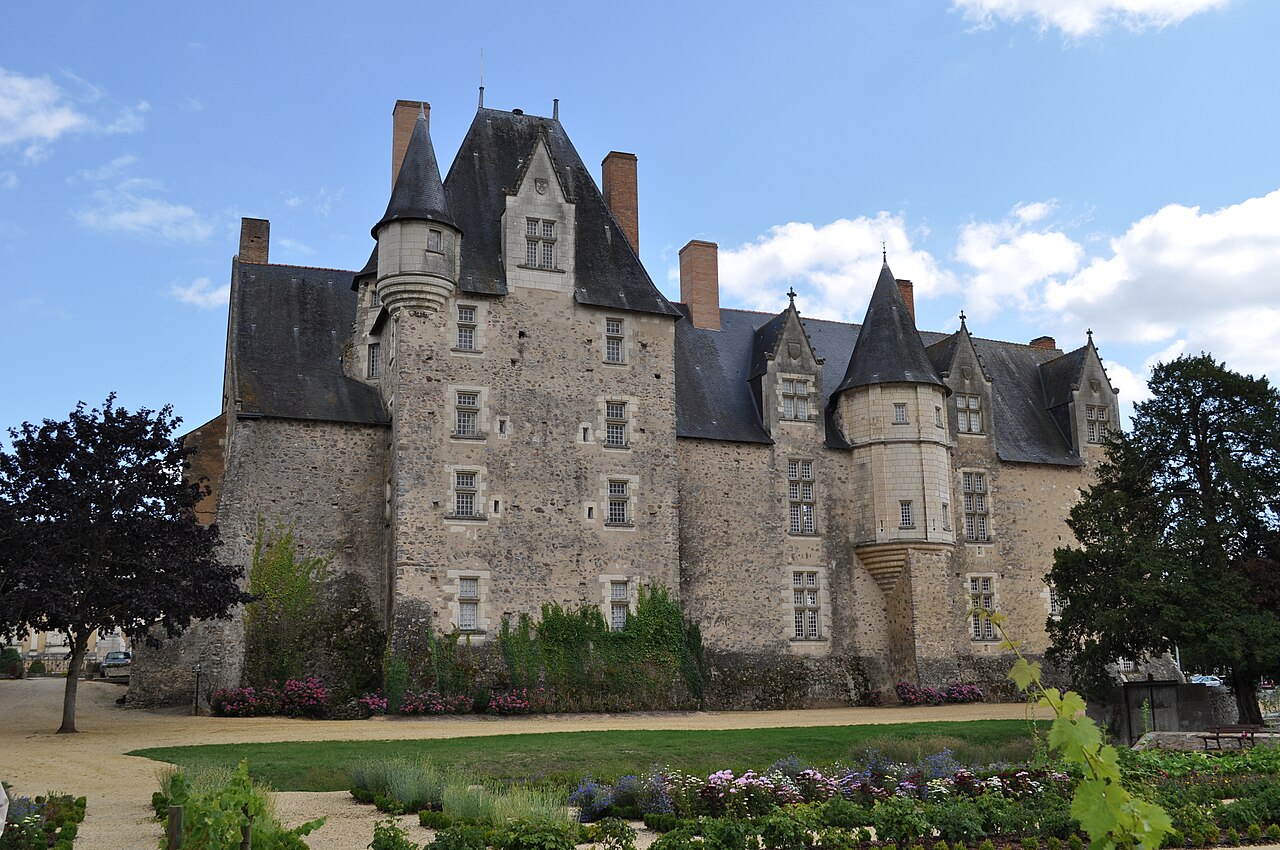
Château de Durtal
Château de Durtal stands as a remarkable example of French medieval and Renaissance architecture, located in the town of Durtal, France, nestled between Angers and Le Mans. Perched on a rocky promontory overlooking the picturesque Loir Valley, this castle embodies centuries of history, strategic military importance, and noble residence evolution. Its origins trace back to the early 11th century, with the initial construction initiated by Foulque Nerra, Count of Anjou, around 1040. This early fortress was built amid territorial conflicts with the neighboring county of Maine, serving as a vital defensive stronghold to secure Anjou's borders.
The castle's foundation was further consolidated in the mid-11th century by Foulque Nerra's son, Geoffroy de Martel, who completed the initial construction phase. The original medieval fortress was characterized by robust defensive features typical of the era, including thick walls and strategically placed towers, designed to withstand sieges and assert control over the region.
Medieval origins and strategic importance
Château de Durtal's location on a hillock provided commanding views of the surrounding landscape, crucial for early warning and defense. The castle's role as a military bastion was significant during the turbulent periods of the 11th and 12th centuries, reflecting the power struggles between Anjou and Maine. Its fortifications were enhanced over time, adapting to evolving military technologies and threats.
Construction phases and architectural evolution
The present-day structure largely dates from the 15th century, following the devastation of the Hundred Years' War. The La Jaille family undertook extensive rebuilding efforts that transformed the medieval fortress into a more refined noble residence while retaining its defensive character. This period saw the addition of two prominent round towers—one from the 13th century on the southeast façade and a larger 14th-century tower on the northeast façade—both emblematic of the castle's military heritage.
The castle's walls are primarily constructed from yellow ochre stone quarried at Les Rairies and tuffeau limestone, materials prized for their durability and aesthetic appeal. The slate roofing complements these materials, while practical elements such as clay chimney flues and terracotta floor tiles, known as tomettes, add functional and decorative touches. The facades feature large windows with double mullions in the flamboyant Gothic style, showcasing the castle's architectural transition from fortress to stately home.
Renaissance transformation and noble residence
The 16th century marked a significant shift in the château's function and appearance, driven by increased commercial activity along the Loir River. This economic prosperity fueled the castle's evolution from a defensive stronghold into an elegant palace. The addition of a Renaissance gallery in the southern wing, decorated with painted works, exemplifies this transformation toward comfort and artistic expression.
During this era, the château hosted numerous notable figures, including Marshal François de Scépaux and Henri de Schomberg, reflecting its status as a residence of high-ranking nobility. Royal visits by King René of Anjou, Charles IX, Henri II, Louis XIII, and Marie de Médicis further attest to its importance within the French aristocracy and royal circles.
Architectural details and interior features
The castle's defensive features include machicolations, uniquely positioned under the tops of the towers rather than at their summits. This rare design is shared only with a few other French castles such as Langeais, Plessis-Bourré, and Brissac. The eastern wing rebuilt in the 15th century includes round towers with conical roofs and machicolations, while the tallest donjon offers panoramic views over the Loir valley, serving historically as a lookout and stronghold.
Inside, the château preserves five oratories, four of which remain intact, providing spaces for private worship. A 17th-century frescoed gallery adds an artistic dimension to the interior, alongside a former prison that recalls the castle's judicial and defensive roles. One of the most remarkable interior elements is a vast hearth, among the largest in Europe, which historically heated grand banquets held within the halls.
The 17th-century Schomberg pavilion exemplifies the French classical style with decorative bands, rope motifs, and rusticated stonework, illustrating the château's stylistic evolution bridging medieval fortification and early modern domestic comfort.
Later history and modern era
In the 17th century, the château became one of the residences of the Duke of La Rochefoucauld, underscoring its continued noble significance. By the 19th century, its function shifted dramatically when it was converted into a town hospital in 1859, operated by the Sisters of Sainte-Marie d'Angers. This conversion led to significant interior alterations, some of which damaged original rooms and decorations.
The château's associated neo-Romanesque church, rebuilt in 1847, likely rests on foundations dating back to the 11th century, highlighting the enduring religious presence linked to the site. Throughout its history, the château has inspired artists such as Alexis Axilette, Raoul Dufy, Lucien Jonas, and Joël Baudouin, who have captured its architectural beauty and atmosphere.
In 2007, the château returned to private ownership when acquired by politician Alain Suguenot and his family, marking a new chapter in its preservation and use.
Architectural significance and cultural heritage
Château de Durtal represents a layered architectural history, combining medieval military fortification with Renaissance elegance and classical French style. Its strategic location, robust defensive features, and refined residential elements illustrate the evolution of castle architecture in western France. The castle's preservation of original materials and distinctive features such as machicolations and large hearths contribute to its cultural and historical importance.
Today, the château stands as a testament to the region's rich heritage, attracting historians, architects, and visitors interested in medieval and Renaissance architecture, noble history, and French cultural legacy.
Information
Website
Visit websiteSources & official resources
Verify the information above using these authoritative references.
Loading map...
Visitor reviews
No reviews yet. Been here? Write the first review and help other travelers!
Write the first reviewVisited this castle? Share your experience
Your review helps other travelers and adds first-hand knowledge to our encyclopedia.