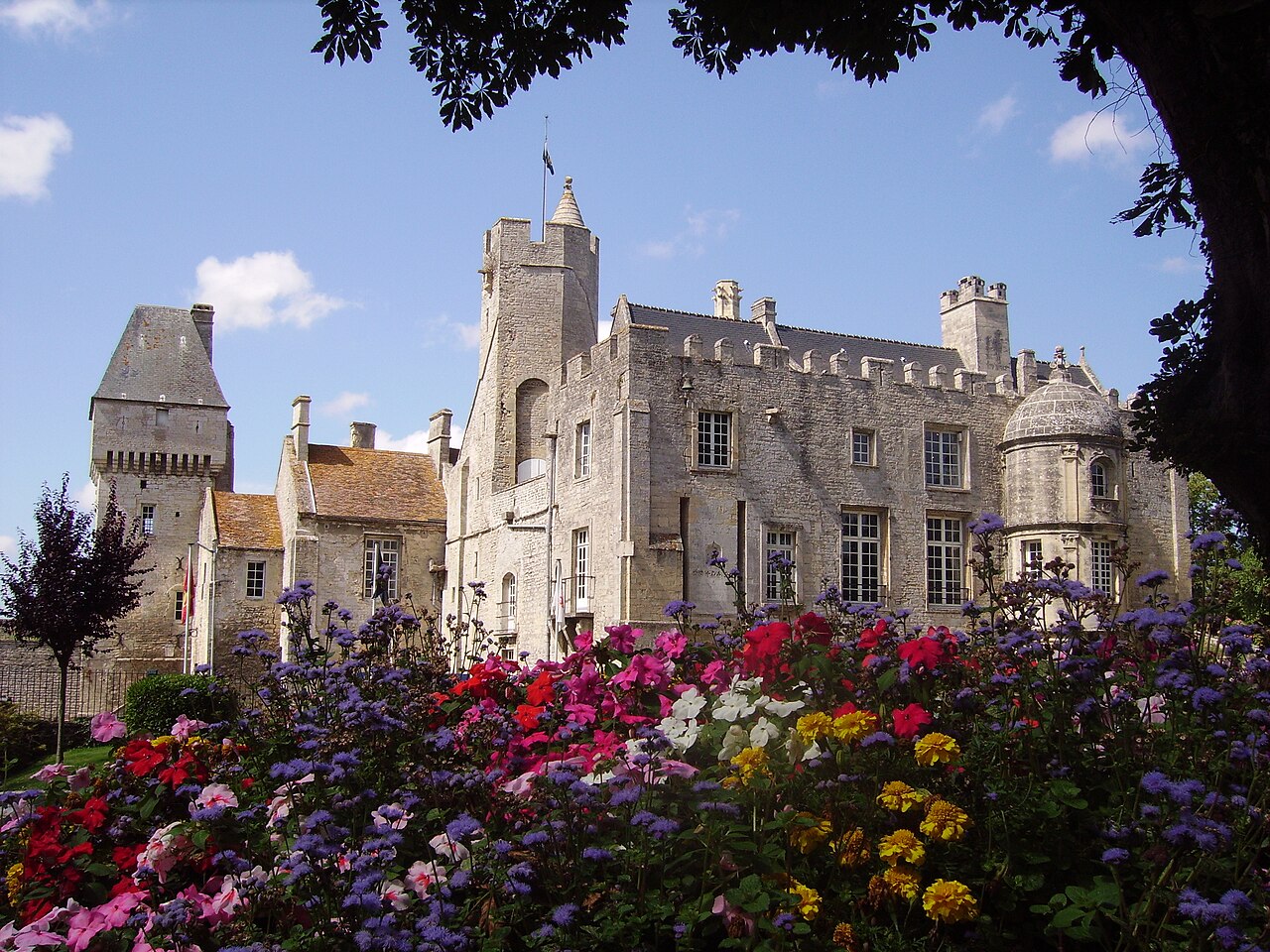
Château de Bayeux
Château de Bayeux stands as a significant historical monument in Bayeux, France, embodying the region's rich medieval heritage. Originally constructed in the 10th century by the Normans, the castle was strategically positioned on a site with military importance dating back to Roman times. This location highlights its enduring role in regional defense and governance over many centuries.
The castle was built under the leadership of Richard I, Duke of Normandy, serving as the primary residence for the Dukes of Normandy within the fortified walls of Bayeux until around 1066. This period marks the castle's prominence before the ducal seat shifted to Caen. The fortress's military and political significance is further underscored by its involvement in dynastic conflicts during the late 11th century, notably when Henry I Beauclerc was imprisoned there by his uncle, Bishop Odon, acting under the orders of Robert Curthose, Duke of Normandy.
Architectural design and defensive features
The Château de Bayeux was designed as a motte-and-bailey fortress, a common medieval castle type featuring a raised earth mound (motte) topped with a keep, and an enclosed courtyard (bailey). Situated at the southwest corner of Bayeux's defensive walls, the castle was protected by ditches on its west and south sides. Its fortifications included multiple towers, with the Tour Renaulde at the southwest corner being particularly notable.
Access to the castle was carefully controlled through two main gates. The eastern gate, equipped with a drawbridge, faced inward toward the city, while a fortified western gate provided an additional defensive layer. Within the enclosure, the castle housed the castellan's residence and a chapel dedicated to Saint Ouen, alongside quarters for the garrison. The northern yard contained stables and barns, essential for maintaining the castle's daily operations.
Near the eastern entrance, a large manor house and a separate kitchen building supported the castle's household functions and hospitality needs. The centerpiece of the fortress was the donjon or keep, a large stone tower situated atop the motte. This keep is famously depicted on the Bayeux Tapestry, emphasizing its importance within the castle complex.
Historical significance and military role
Throughout its history, Château de Bayeux played a vital role in several key historical conflicts. During the Hundred Years' War (1337–1453), the castle was besieged multiple times, changing hands between English and French forces before finally returning to French control on 16 May 1450. Its strategic position made it a focal point in the prolonged struggle for Normandy.
In the 16th century, the fortress endured damage during the French Wars of Religion, reflecting the turbulent religious and political upheavals of the period. By the late 18th century, the castle had lost its military importance and was deliberately dismantled starting in 1773 by order of King Louis XVI. This dismantling process revealed a wealth of Gallo-Roman artifacts beneath the foundations, underscoring the site's long-standing strategic significance.
Later transformations and current state
Following its dismantling, the castle grounds were transformed in the early 19th century into a public square known as Place Charles-de-Gaulle. In 1888, a fountain topped with a statue of Poppa, traditionally believed to be the wife of Rollo, Normandy's first Duke, was installed. This statue symbolically connects the site to the foundational legends of Normandy.
Today, Château de Bayeux no longer stands as a complete structure, but archaeological excavations and demolition records have preserved its layout and foundations. These remains offer valuable insights into the castle's complex design and the layers of occupation spanning from Roman times through the medieval period.
Notable architectural elements
- The Tour Renaulde at the southwest corner, a key defensive tower.
- The donjon or keep, a large stone tower atop the motte, prominently featured on the Bayeux Tapestry.
- Two main gates: an eastern drawbridge gate facing the city and a fortified western gate.
- The castellan's residence and Saint Ouen chapel within the bailey.
- Stables, barns, and a manor house with a separate kitchen supporting the castle's daily life.
- A 15th-century timber-framed butchery protected by a wooden palisade.
- Wooden guard posts (guérites), historically destroyed by a windstorm in 1439.
Archaeological and cultural importance
Excavations have revealed the castle's foundations resting on a site with a rich military past, including Roman-era fortifications. The discovery of Gallo-Roman artifacts during the 18th-century dismantling highlights the site's continuous use for defense and governance. The castle's connection to Normandy's early rulers and its depiction in the Bayeux Tapestry further enhance its cultural significance.
The transformation of the castle grounds into a public square and the installation of the Poppa statue reflect the enduring legacy of the site in Normandy's historical memory and identity.
Frequently asked questions (FAQ)
- When was Château de Bayeux originally built?
- Château de Bayeux was originally constructed in the 10th century by the Normans under Richard I, Duke of Normandy.
- What architectural style characterizes Château de Bayeux?
- The castle is a motte-and-bailey fortress featuring a stone keep atop a raised earth mound, with a mix of medieval architectural elements.
- Is Château de Bayeux open to visitors?
- The castle grounds are now an archaeological site open to the public, with no entrance fee. Visiting hours vary, so it is best to check local information before planning a visit.
- What historical events took place at Château de Bayeux?
- The castle was involved in dynastic conflicts in the 11th century, the Hundred Years' War, and suffered damage during the French Wars of Religion.
- Are there any visible remains of the castle today?
- Only the foundations and layout uncovered during excavations remain visible today, as the castle was dismantled in the 18th century.
Information
Opening hours
Variable, check local listings
Ticket prices
Free
Current owner
Municipality of Bayeux
Website
Visit websiteSources & official resources
Verify the information above using these authoritative references.
Loading map...
Visitor reviews
No reviews yet. Been here? Write the first review and help other travelers!
Write the first reviewVisited this castle? Share your experience
Your review helps other travelers and adds first-hand knowledge to our encyclopedia.