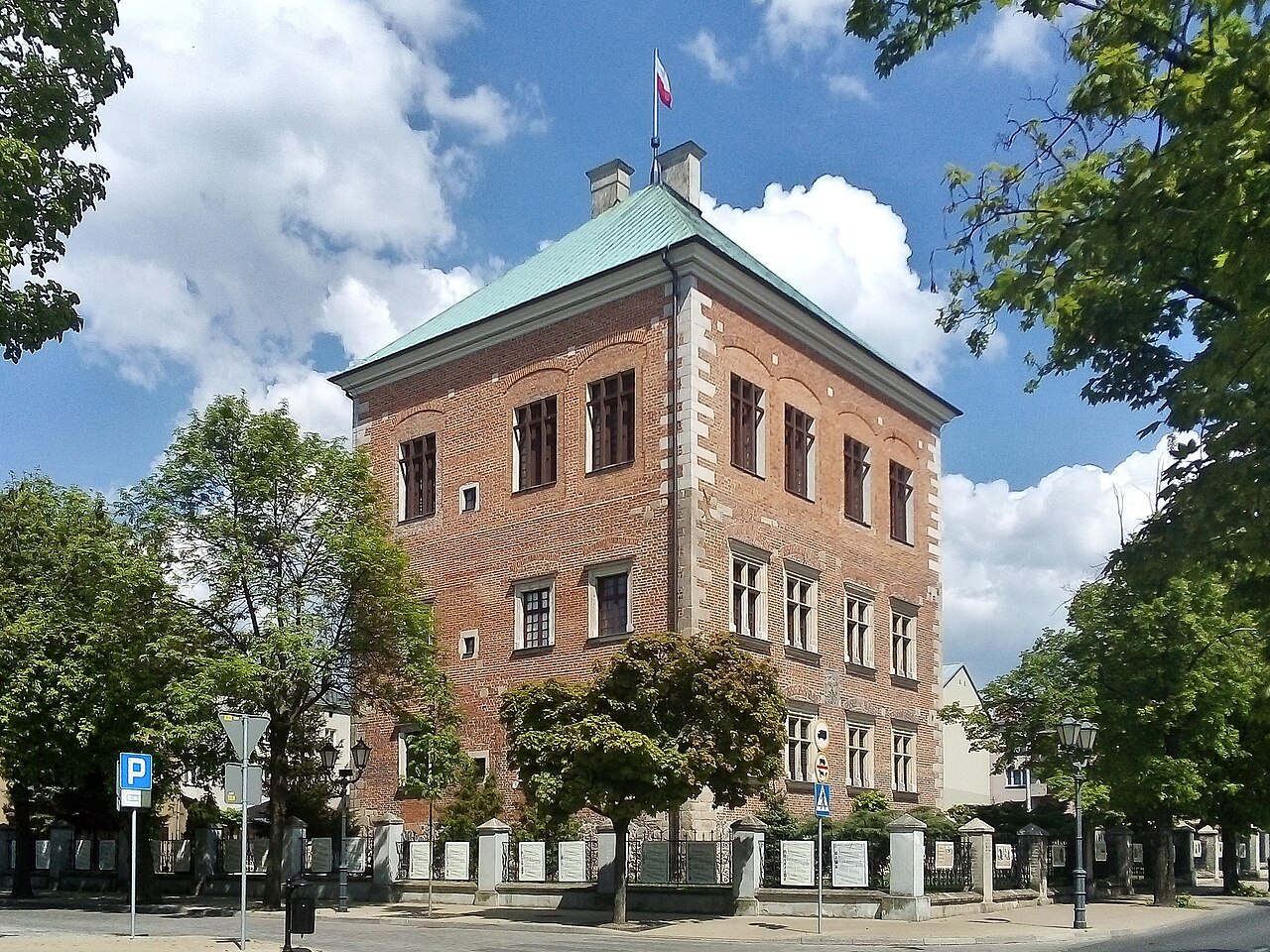
Castle in Gorzkowice
The Castle in Gorzkowice stands as a remarkable example of an unfinished early modern fortress in central Poland. Constructed in the first half of the 17th century by the Polish nobility, it reflects the military and residential architectural ambitions of the period. Although never completed, the site preserves significant earthworks and foundational remains that reveal the palazzo in fortezza design—a style combining a noble residence with defensive fortifications.
Located in the town of Gorzkowice, the castle's history is closely tied to prominent noble families, especially the Koniecpolski family, who owned the land during its construction phase. The fortress was likely initiated under the direction of Jan Koniecpolski, a notable magnate and official in the Polish–Lithuanian Commonwealth during the early 1600s. The castle's incomplete state is attributed to the turmoil of the Swedish Deluge in the mid-17th century, which disrupted construction and led to the abandonment of the project.
Despite its unfinished nature, the castle site remains a valuable cultural and archaeological landmark. It preserves the distinctive layout of a rectangular fortress with four bastions and a surrounding water-filled moat, embodying the military architectural trends of its era. The castle's story is enriched by local legends, including the dramatic defense by a widow from the Sadowski family, who is said to have destroyed the fortress rather than surrender it to invaders.
Historical context and noble ownership
The lands around Gorzkowice were historically owned by influential Polish noble families such as the Kurozwęccy, Myszkowscy (bearing the Jastrzębiec coat of arms), and Łascy in the late 15th century. By the early 17th century, the property passed to the Koniecpolski family, one of the most powerful magnate families in the region.
Stanisław Koniecpolski, a renowned military commander and starosta of Wieluń, played a significant role in the area's governance from 1606 to 1628. His relative, Jan Koniecpolski, served as castellan and later governor of Sieradz during the 1630s to 1660s. It is believed that Jan was the principal figure behind the castle's construction, aiming to establish a fortified residence that would serve both defensive and administrative functions.
The castle's construction coincided with a period of heightened military threats and architectural innovation in Poland, where noble families fortified their estates against invasions and internal conflicts. The design reflects contemporary European influences, particularly the Italianate palazzo in fortezza model, which integrated a stately home within a bastioned fortress.
Architectural design and fortification features
The Castle in Gorzkowice was planned as a rectangular fortress with dimensions approximately 95 by 125 meters at its base. The main defensive feature was a large earth mound, rising about 4.5 meters above the surrounding terrain, with a plateau measuring roughly 65 by 75 meters. This plateau was encircled by a water-filled moat, which provided a formidable obstacle to attackers and enhanced the site's defensibility.
At the corners of the fortress, four bastions were designed to strengthen the defensive perimeter. Although these bastions remained incomplete, their planned positions are evident from the surviving earthworks. Along the northern edge of the plateau, elongated earth mounds measuring about 10 by 30 meters likely served as bastions or extensions of the defensive walls, offering strategic vantage points for defenders.
The fortress's main entrance was controlled by a substantial stone gatehouse situated within the northern section between the elongated mounds. The gatehouse foundations reveal a rectangular building approximately 12.5 to 13 meters wide and 27 meters long, with walls between 1.5 and 1.7 meters thick. Its architectural layout included two wings, each containing four rooms, indicating a complex designed for both defense and accommodation.
This gatehouse was integrated with the adjacent earthworks, with side mounds connecting to its gable walls, likely functioning as bastions to protect the entrance. The combination of stone construction and earth fortifications exemplifies the hybrid defensive strategy characteristic of the palazzo in fortezza style.
Construction history and abandonment
Archaeological evidence suggests that the castle's earthworks and moat were shaped during the first half of the 17th century, with construction ceasing around the mid-century mark. The abrupt halt in building activities is attributed to the Swedish Deluge (Potop szwedzki), a devastating series of invasions and wars that ravaged much of Poland between 1655 and 1660.
The conflict caused widespread destruction, economic hardship, and political instability, which likely prevented the completion of the fortress. The site never entered active use or occupation as a defensive stronghold or noble residence. Instead, it remained an unfinished project, gradually falling into ruin over the following centuries.
The castle changed hands several times, passing through noble families such as the Walewscy and Zarębowie, but none completed or fully utilized the fortress. Its incomplete state and lack of habitation distinguish it from many other Polish castles that evolved into fully functional residences or military installations.
Cultural significance and local legends
The Castle in Gorzkowice holds a unique place in local cultural memory, partly due to its incomplete status and the dramatic stories associated with it. One enduring legend recounts how a widow from the Sadowski family valiantly defended the fortress during the Swedish Deluge. According to oral tradition, when defeat was imminent, she chose to detonate gunpowder and destroy the castle rather than surrender it to the invaders.
Although this story lacks historical documentation, it remains a powerful symbol of resistance and sacrifice in the region. The castle's ruins and earthworks serve as a tangible link to this past, fostering a sense of identity and continuity for the local community.
Archaeological preservation and modern use
Recognizing its historical and archaeological importance, the site was officially registered as a historic monument in 1967, classified under earth fortifications. Archaeological surveys and studies have helped to document the layout and construction techniques of the fortress, contributing valuable knowledge about early modern military architecture in Poland.
In recent years, efforts have been made to conserve and enhance the site. In 2011, a recreational complex was established around the castle remains, integrating educational and leisure functions. This development underscores the ongoing local interest in preserving and promoting the castle as a heritage site.
Today, visitors to the Castle in Gorzkowice can explore the extensive earthworks, moat, and foundational structures, gaining insight into the ambitious architectural vision that was never fully realized. The site stands as a rare example of the palazzo in fortezza style in central Poland and offers a unique glimpse into the region's turbulent history and noble culture.
Frequently asked questions (FAQ)
- What is the historical significance of Castle in Gorzkowice?
- Castle in Gorzkowice dates back to the 14th century and played a crucial role in the defense against various invasions throughout its history. Its strategic location made it an important stronghold in the region, showcasing the architectural styles of the time and offering insights into Poland's medieval past.
- When was Castle in Gorzkowice built?
- The construction of Castle in Gorzkowice began in the mid-14th century, with significant modifications made in subsequent centuries. The castle reflects the evolution of military architecture from its original design to its later adaptations, representing various historical periods.
- Can I visit Castle in Gorzkowice?
- Yes, the castle is open to visitors year-round, offering guided tours that provide an in-depth look at its history and architecture. It’s advisable to check the official website for any updates on visiting hours or special events before planning your trip.
- What are the opening hours for Castle in Gorzkowice?
- Castle in Gorzkowice typically opens from 10 AM to 5 PM, with extended hours during the summer months. Be sure to verify the exact hours on the day of your visit, as they may vary depending on the season or special occasions.
- Is it possible to access Castle in Gorzkowice with a wheelchair?
- While efforts have been made to improve accessibility, certain areas of Castle in Gorzkowice may present challenges for wheelchair users due to its historical architecture. It is recommended to contact the castle’s management in advance to inquire about specific accessibility options available during your visit.
- When is the best time to visit Castle in Gorzkowice?
- The best time to visit Castle in Gorzkowice is during the spring and early autumn months when the weather is mild, and the surrounding landscapes are particularly beautiful. Additionally, visiting during these periods often means fewer crowds, allowing for a more enjoyable experience.
- What are the ticket prices for Castle in Gorzkowice?
- Ticket prices for Castle in Gorzkowice are generally affordable, with discounts available for students and seniors. It's recommended to check the official website for the most current pricing and any available promotions or family packages.
- Are there any nearby attractions to Castle in Gorzkowice?
- Yes, the area surrounding Castle in Gorzkowice is rich with attractions, including beautiful parks, museums, and other historical sites. Visitors can explore the charming town of Gorzkowice or take short trips to nearby cities for a fuller experience of the region's culture and history.
Information
Loading map...
Visitor reviews
No reviews yet. Been here? Write the first review and help other travelers!
Write the first reviewVisited this castle? Share your experience
Your review helps other travelers and adds first-hand knowledge to our encyclopedia.