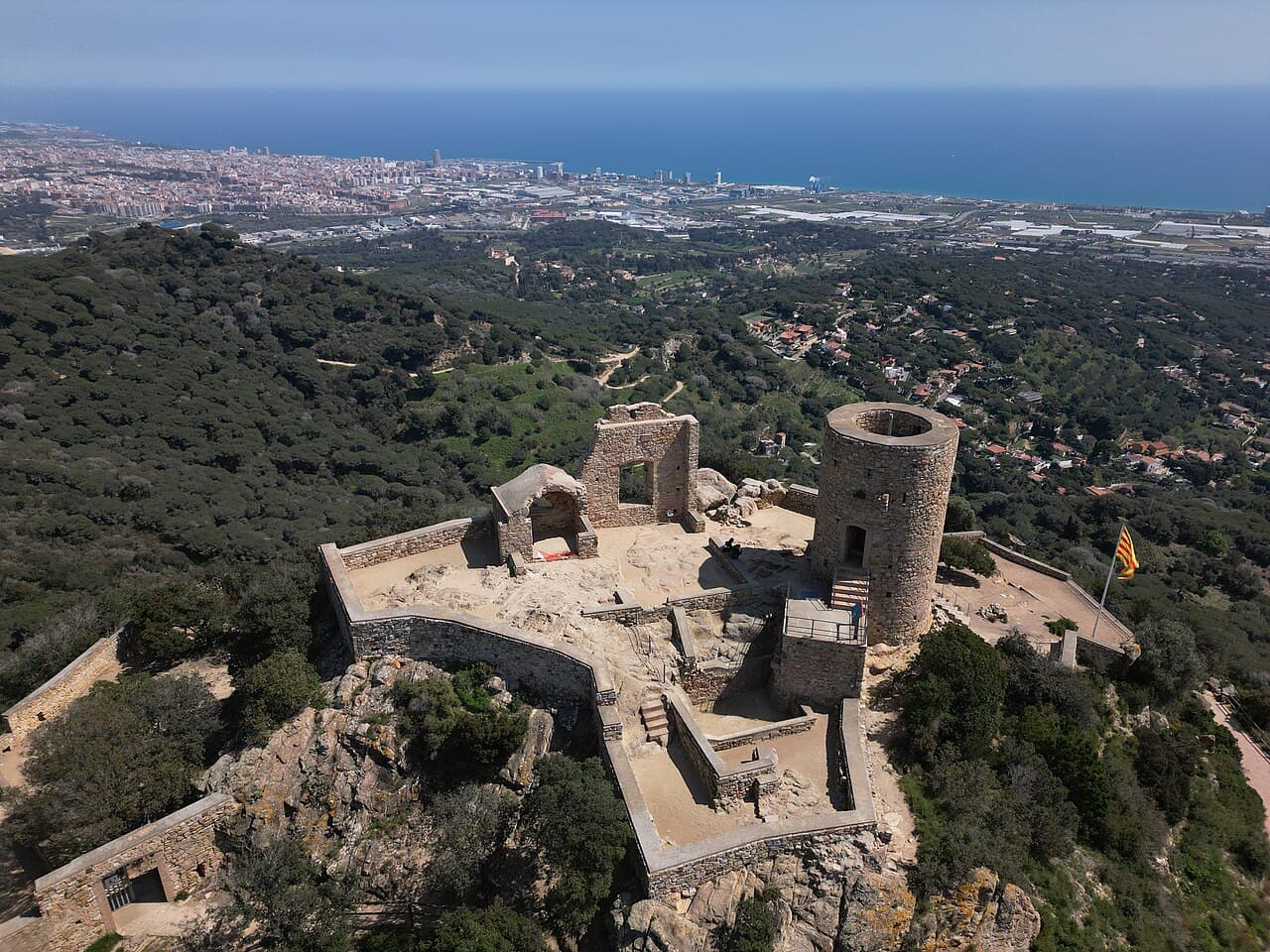
Castell de Burriac is a historic castle ruin located in Spain, perched on a prominent hill that offers commanding views of the surrounding landscape and coastline. This hill castle was originally constructed during the medieval period, serving as a strategic fortification overseeing important land and sea routes. Although now in a state of ruins, Castell de Burriac retains significant archaeological value and reflects the defensive architecture typical of its era.
Historical background and significance
The origins of Castell de Burriac date back to the early medieval centuries, with the castle playing a key role in regional defense and control. Its elevated position allowed for early detection of approaching enemies and facilitated communication with other nearby fortifications. Over the centuries, the castle witnessed various occupations and modifications, adapting to evolving military needs. Despite its decline and eventual abandonment, the site remains an important cultural landmark that offers insights into medieval military architecture and feudal power structures in Spain.
Architectural features and layout
The castle was built primarily as a hill castle, utilizing the natural topography to enhance its defensive capabilities. The remains include sections of thick stone walls, foundations of towers, and traces of a fortified gate. The layout was likely compact, designed to maximize protection while accommodating the garrison and essential facilities. The walls would have been equipped with battlements and possibly arrow slits to defend against attackers. The elevated site also suggests the presence of cisterns or water storage systems to sustain inhabitants during sieges.
Defensive structures
Castell de Burriac's defenses were typical of medieval fortifications, with robust curtain walls and strategically placed towers providing vantage points for surveillance and defense. The ruins indicate that the castle may have had a keep or donjon as the last line of defense, although this is not fully preserved. The entrance would have been fortified with a gatehouse, possibly including a portcullis and murder holes to repel invaders.
Location and strategic importance
Situated on a hill overlooking the Mediterranean coast, Castell de Burriac commanded views of surrounding territories and maritime routes. This location was crucial for monitoring naval movements and protecting nearby settlements. The castle's position also allowed control over trade routes and served as a refuge during times of conflict. Its proximity to the coastline added to its strategic value, linking it to broader defense networks along the Spanish coast.
Current state and preservation
Today, Castell de Burriac stands as an archaeological ruin, with only fragments of its original structure remaining. The site is accessible to visitors interested in medieval history and castle architecture. Efforts to preserve the ruins focus on stabilizing existing walls and preventing further deterioration. Interpretive signage and guided tours help contextualize the site's historical importance and architectural features. The castle's ruinous state provides a tangible connection to Spain's medieval past and offers opportunities for archaeological research.
Visiting Castell de Burriac
Visitors to Castell de Burriac can explore the hilltop ruins and enjoy panoramic views of the surrounding landscape and sea. The site is open to the public, often attracting history enthusiasts, hikers, and photographers. While the castle is in ruins, the remaining structures evoke the atmosphere of medieval fortifications and provide a glimpse into the defensive strategies of the time. The location also offers natural beauty and a peaceful environment for visitors.
Practical information
- Access is typically via hiking trails leading up the hill, requiring a moderate level of fitness.
- There are no extensive visitor facilities on-site, so visitors should prepare accordingly.
- Best times to visit are during spring and autumn when the weather is mild.
- Guided tours may be available through local tourism offices or heritage organizations.
Architectural and cultural legacy
Although Castell de Burriac is largely in ruins, it remains a valuable example of medieval hill castle architecture in Spain. Its location and design reflect the military and political realities of the medieval period, illustrating how castles functioned as both defensive structures and symbols of feudal authority. The site contributes to the understanding of regional history and the evolution of fortification techniques. Preservation of the ruins ensures that future generations can study and appreciate this heritage.
Frequently asked questions (FAQ)
- How do I get to Castell de Burriac?
- You can reach Castell de Burriac by taking public transport to Mataró and then hiking approximately 30 minutes to the castle. There are also local taxi services available for a more direct route. Be sure to wear comfortable shoes as the path can be uneven.
- What is the historical significance of Castell de Burriac?
- Castell de Burriac dates back to the 10th century and served as a strategic military fortress during the feudal period. It played a key role in the defense against invaders and has witnessed various historical events throughout its existence. Today, it stands as a symbol of the region's medieval heritage.
- When was Castell de Burriac last restored?
- The last major restoration of Castell de Burriac took place in the late 20th century, where efforts were made to preserve its structure and historical elements. Ongoing maintenance is conducted to ensure the castle remains safe for visitors while honoring its historical integrity. Check local sources for updates on any future restoration efforts.
- Can I visit Castell de Burriac year-round?
- Yes, Castell de Burriac is open to visitors throughout the year, although access may be affected by weather conditions, especially during the winter months. It's advisable to check the official website for any seasonal closures or specific visiting guidelines. Planning your visit during spring or autumn can provide a more pleasant experience.
- Why is Castell de Burriac popular among tourists?
- Castell de Burriac is popular for its stunning panoramic views of the surrounding landscape and the Mediterranean Sea. Visitors are drawn to its rich history, scenic hiking trails, and the opportunity to explore its ancient ruins. The castle's accessibility from nearby towns also makes it a favorite for day trips.
- Is it possible to have guided tours at Castell de Burriac?
- Yes, guided tours are available for those interested in a more in-depth understanding of the castle’s history and architecture. These tours are typically conducted in multiple languages and can enhance your visit by providing valuable insights. It's recommended to book in advance during peak tourist seasons.
- What are the opening hours for Castell de Burriac?
- Castell de Burriac generally opens at 10 AM and closes at sunset, but hours may vary depending on the season. Always check the official website or local tourist information for the most accurate and up-to-date opening times. Arriving early can give you the chance to enjoy the site with fewer crowds.
- Are there any nearby attractions to visit?
- Yes, there are several attractions near Castell de Burriac, including the beautiful beaches of Mataró and the charming town of Argentona, known for its pottery and historical sites. Additionally, the Montnegre-Corredor Natural Park offers hiking opportunities and stunning natural scenery. Combining these attractions can make for a delightful day of exploration.
- What are the ticket prices for visiting Castell de Burriac?
- Entry to Castell de Burriac is typically free, allowing visitors to explore its grounds and enjoy the views without any cost. However, guided tours or special events may have associated fees. Always check the official site for any updates regarding prices and special offers.
Photo gallery

Information
Loading map...
Visitor reviews
No reviews yet. Been here? Write the first review and help other travelers!
Write the first reviewVisited this castle? Share your experience
Your review helps other travelers and adds first-hand knowledge to our encyclopedia.



