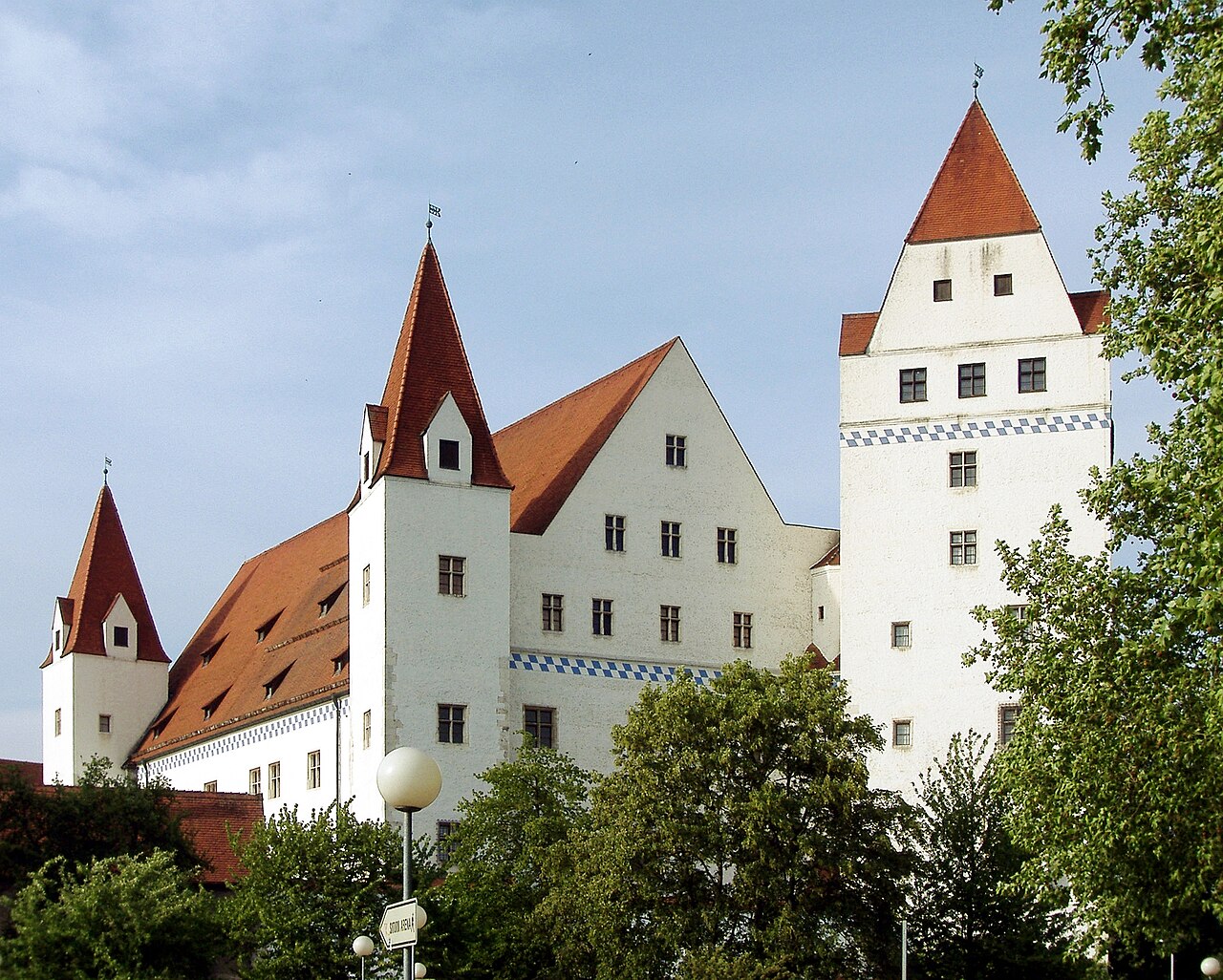
Burg Vohburg
Burg Vohburg is a prominent hill castle located above the town of Vohburg an der Donau in Bavaria, Germany. Its strategic position atop a rocky outcrop has made it a site of continuous human occupation since prehistoric times, with archaeological evidence dating back to the Early Bronze Age. The castle's location was also significant during the Celtic La Tène period and under Roman rule, highlighting its longstanding importance as a defensive and administrative center.
Early history and medieval foundations
By the late 10th century, the hilltop was fortified as a defensive estate, serving the needs of local nobility. From around 1040, the Counts of Rott-Vohburg, later known as the Palatine Counts, established their residence here, marking the castle's rise as a noble stronghold. In 1081, control passed to Count Rapoto V. of Cham, who ruled until 1099. By the early 12th century, the powerful Diepoldinger family took over, using Burg Vohburg as a key seat of their influence. Their decline after 1153 led to the castle's transfer to the Dukes of Bavaria following Berthold II's death in 1204, who made it the administrative center of the district.
Expansion and political significance in the high and late middle ages
During the 13th century, the Wittelsbach dukes expanded their regional power, particularly in nearby Ingolstadt, but continued to invest in Burg Vohburg, enhancing its role as a local administrative hub. The surrounding market settlement of Vohburg flourished during this time, growing in tandem with the castle's importance. A notable historical event was the 1246 wedding of Conrad IV of Hohenstaufen to Elisabeth of Wittelsbach, celebrated within the castle walls, underscoring its status as a noble venue.
In 1316, the castle suffered significant damage when it was attacked by forces loyal to Louis IV. Subsequently, it was pledged to the Burgraves of Nuremberg, and major rebuilding efforts began under Duke Ernst in 1414, reflecting the castle's continued strategic and administrative value.
Destruction, restoration, and adaptive reuse
The Thirty Years’ War brought further devastation when Swedish troops destroyed much of the castle in 1641. Despite this, an engraving from 1648 depicts Burg Vohburg still standing, indicating partial survival of the structure. In 1721, the addition of the Pflegerschloss, a caretaker's residence built in Baroque style, marked a new phase in the castle's history. This building, with its distinctive mansard roof and facade featuring a statue of the Virgin Mary Immaculate, replaced earlier medieval residential buildings and served various social functions including a hospital, nursery, and retirement home.
Notably, the castle hosted Napoleon Bonaparte for a night in 1809, reflecting its continued relevance into the modern era. The castle's bergfried (central tower) was reconstructed in 1959 and adapted as a water tower until 2009, illustrating the site's evolving utility while preserving its historical silhouette.
Between 1971 and 1990, extensive restoration work on the castle walls revitalized much of the structure, blending preservation with modern use. Today, the castle grounds function as a cemetery and remain accessible to the public, maintaining a connection between past and present.
Architectural features and castle layout
Defensive walls and gatehouse
Burg Vohburg is characterized by an irregular oval ring wall that closely follows the natural contours of the rocky hill. Constructed primarily from Jurassic limestone and dolomite, the wall exemplifies medieval masonry techniques using locally sourced materials. Though much of the visible wall today results from late 20th-century restoration, it preserves the original defensive layout and offers panoramic views of the surrounding landscape, including distant hills and floodplains.
The main gatehouse served as the castle's principal entrance during the Middle Ages. This structure features a rectangular forebuilding projecting from the ring wall, with a large pointed arch for vehicles and a smaller pedestrian gate. Its roof, rebuilt after an 1891 fire, retains a traditional gable form. Inside the gatehouse is the oldest surviving image of Bavaria's coat of arms, dating to 1477, underscoring the castle's regional significance.
Towers and bergfried
Adjacent to the gatehouse is a semicircular tower that guarded the approach, providing both defense and observation capabilities. The bergfried, or central keep, occupies the northwest corner of the enclosure and was reconstructed in 1959. Its later use as a water tower until 2009 demonstrates the adaptive reuse of medieval structures for modern needs.
Pflegerschloss and ecclesiastical buildings
The Pflegerschloss, a two-story Baroque building added in 1721 on the eastern side, replaced earlier medieval residential buildings. Its mansard roof and the facade's statue of the Virgin Mary Immaculate are distinctive features. This building has served multiple social roles and currently houses the local museum, preserving the castle and town's heritage.
Within the castle's old fortifications lies the church of St. Peter, built in Baroque style on the site of a former Romanesque basilica. This church reflects the site's enduring religious importance from the High Middle Ages to the present.
Courtyard and cemetery
The interior courtyard, once the heart of castle life, has long been used as a cemetery and remains accessible today. Restoration efforts included the construction of a modern mortuary chapel on the site of a medieval tithe barn, blending contemporary architecture with the historic environment while providing functional facilities.
Cultural and historical significance
Burg Vohburg encapsulates a rich tapestry of European history, from prehistoric settlement through medieval nobility to modern adaptive reuse. Its layered architecture and evolving functions reflect broader regional developments in Bavaria and the Holy Roman Empire. The castle's survival through wars, political shifts, and changing social needs underscores its resilience and importance as a cultural landmark.
Visitors today can explore the castle's walls, towers, and museum to gain insight into its multifaceted past. The combination of medieval fortifications, Baroque additions, and modern restorations offers a comprehensive narrative of architectural evolution and historical continuity in southern Germany.
Frequently asked questions (FAQ)
- How do I visit Burg Vohburg and what can I expect?
- Burg Vohburg is open to the public with accessible castle grounds including the defensive walls, towers, and cemetery. Visitors can explore the local museum housed in the Pflegerschloss to learn about the castle's history and architecture.
- What is the historical significance of Burg Vohburg?
- Burg Vohburg has a rich history dating back to the Early Bronze Age, serving as a noble residence, administrative center, and military stronghold through the medieval period and beyond. It reflects the political and social changes in Bavaria over centuries.
- What architectural styles are present at Burg Vohburg?
- The castle features a blend of medieval defensive architecture with later Baroque additions, particularly the Pflegerschloss and the church of St. Peter, illustrating its evolution over time.
- Is Burg Vohburg accessible for visitors with mobility issues?
- Due to its hilltop location and historic structures, some areas of Burg Vohburg may be challenging for visitors with mobility issues. However, the museum and certain parts of the castle grounds are more accessible.
- When is the best time to visit Burg Vohburg?
- The castle grounds are best visited during spring to early autumn when weather conditions are favorable for exploring the outdoor fortifications and enjoying panoramic views.
Information
Current owner
Municipality
Loading map...
Visitor reviews
No reviews yet. Been here? Write the first review and help other travelers!
Write the first reviewVisited this castle? Share your experience
Your review helps other travelers and adds first-hand knowledge to our encyclopedia.