Blatobulgium
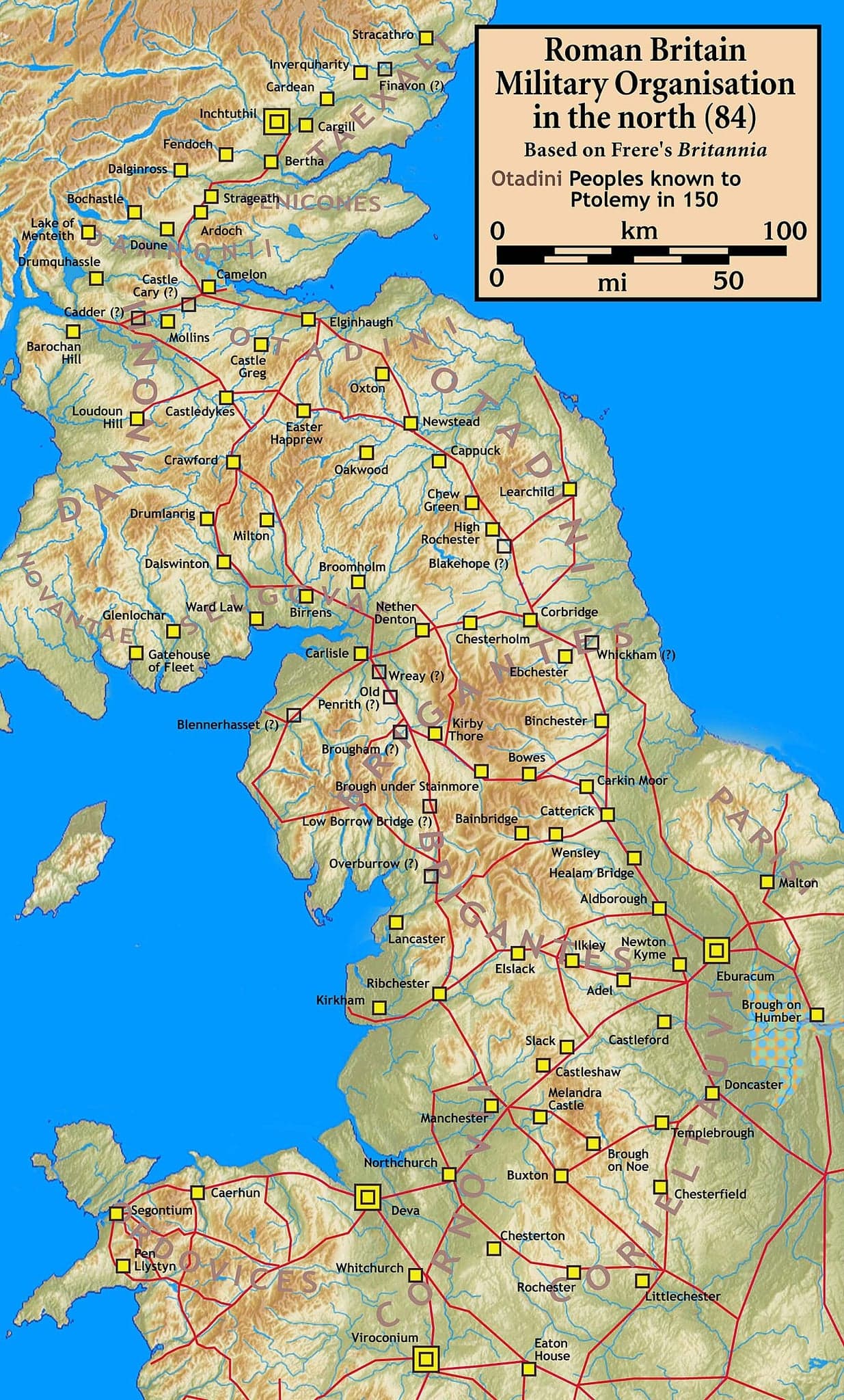
Blatobulgium was a Roman fort strategically located at the site of modern-day Birrens in Dumfriesshire, Scotland. This fort played a crucial role in the Roman military network as a defensive outpost protecting the main western road into Scotland during the Roman occupation of Britain. Its position was significant as it lay beyond the established frontier marked by Hadrian's Wall, serving as one of the advanced outposts during the Roman efforts to control and monitor the northern territories.
Historical context and strategic importance
Constructed during the Roman occupation of Britain, Blatobulgium was part of a series of forts established to secure the empire's northern frontier. The fort was situated approximately 11 miles from the Castra Exploratorum at Netherby in Cumbria, indicating its role in a network of military installations designed to provide surveillance and defense beyond the limits of Hadrian's Wall. This fortification helped control movement along the western route into Scotland, a vital corridor for both military and trade purposes.
Architectural features and layout
As a Roman fort, Blatobulgium would have featured the typical layout of a Roman military installation, including a rectangular plan with rounded corners. The fort was likely surrounded by defensive walls and ditches, with a gate complex controlling access. Inside, it would have contained barracks, a principia (headquarters building), granaries, workshops, and possibly a bathhouse. The fort's design reflected Roman military engineering principles aimed at both defense and the efficient accommodation of troops.
Fortifications and bastions
The fort's classification as a bastioned fortress suggests the presence of projecting bastions or towers integrated into its defensive walls. These bastions provided enhanced fields of fire and improved defensive capabilities against attackers, a feature that was increasingly adopted in Roman military architecture during the later periods of occupation.
Archaeological significance and remains
The site of Blatobulgium has been subject to archaeological investigations that have uncovered remnants of the fort's walls, ditches, and internal structures. These findings have contributed valuable insights into Roman military strategy and frontier management in northern Britain. Although the fort is now in a state of archaeological ruins, the remains provide a tangible connection to the Roman presence in Scotland and the broader history of Roman Britain.
Role within the Roman frontier system
Blatobulgium was one of several outpost forts that extended Roman control beyond the primary defensive barrier of Hadrian's Wall. These forts were essential for reconnaissance, controlling local populations, and securing supply routes. The fort's location on the western approach allowed the Romans to monitor movements and respond to threats from the tribes of northern Britain.
Relationship to Hadrian's Wall and other forts
While Hadrian's Wall marked the official northern boundary of the Roman Empire for much of its history, forts like Blatobulgium represented a forward line of defense and influence. The proximity to Castra Exploratorum at Netherby illustrates a coordinated defensive network that extended into what was then considered hostile territory.
Legacy and cultural importance
Today, the site of Blatobulgium is recognized for its historical and archaeological importance. It provides evidence of the Roman military's reach into Scotland and their efforts to maintain control over the frontier regions. The fort's remains contribute to the understanding of Roman military architecture and frontier policy in Britain.
Frequently asked questions (FAQ)
- What is Blatobulgium and where is it located?
- Blatobulgium is a Roman fort located at the site of modern Birrens in Dumfriesshire, Scotland. It served as a military outpost beyond Hadrian's Wall.
- When was Blatobulgium built?
- Blatobulgium was constructed during the Roman occupation of Britain, likely in the 2nd century AD, as part of the northern frontier defenses.
- What was the purpose of Blatobulgium?
- The fort protected the main western road into Scotland and acted as an outpost fort to monitor and control movement beyond Hadrian's Wall.
- Can visitors see remains of Blatobulgium today?
- Yes, visitors can view archaeological remains at the site in Birrens, which include fort walls and ditches, though the site is mostly ruins.
- How does Blatobulgium relate to Hadrian's Wall?
- Blatobulgium was one of the outpost forts beyond Hadrian's Wall, extending Roman military presence into northern Britain.
Photo gallery

Information
Loading map...
Visitor reviews
No reviews yet. Been here? Write the first review and help other travelers!
Write the first reviewVisited this castle? Share your experience
Your review helps other travelers and adds first-hand knowledge to our encyclopedia.



