Beck Castle

Beck castle: baroque pleasure palace and amusement park in bottrop
Bottrop, Germany
Post-Renaissance (17th–18th c.)
Restored

Beck Castle, known locally as Schloss Beck, is a Baroque castle situated in Bottrop, Germany. Constructed between 1766 and 1777, it was designed by the prominent architect Johann Conrad Schlaun as a maison de plaisance, or pleasure palace, reflecting the tastes and social aspirations of the late Post-Renaissance period. The castle's elegant design and layout embody the refined architectural ideals of the Baroque era, combining aesthetic appeal with functional residential spaces.

Architectural design and baroque features

The castle was planned as a palatial residence, showcasing typical Baroque architectural elements such as symmetrical façades, ornate stucco work, and grand reception rooms. The structure's layout includes formal gardens and carefully arranged grounds that complement the building's refined style. Its ornamental details and balanced proportions emphasize harmony and grandeur, hallmarks of the Baroque movement in German aristocratic architecture.

Historical uses and transformations

Although originally intended as a noble residence, Beck Castle underwent significant functional changes by the end of the 18th century, when it was converted into a distillery for schnaps. This shift reflects broader economic and social changes in the region during that period. Around 1850, the castle entered the possession of the Metternich family, a notable aristocratic lineage, which maintained ownership through the 19th century.

Survival through war and industrial interest

Remarkably, the castle survived the devastation of the Second World War intact, preserving its architectural integrity. In 1958, the property was acquired by the Hibernia Mining Society, an industrial enterprise interested primarily in the extensive grounds rather than the building itself. The society offered the castle building free of charge due to the high maintenance costs and responsibilities associated with it, but it remained unclaimed for several years.

Restoration and public opening

In 1966, Karl Kuchenbäcker purchased the castle despite its neglected condition. He undertook comprehensive restoration efforts to return the castle to its former glory. To finance these costly restorations, Kuchenbäcker opened the castle to the public, transforming it into an amusement park venue. This innovative reuse has allowed the castle to remain a vibrant cultural and recreational site, attracting visitors interested in both its history and leisure offerings.

Current status and cultural significance

Today, Beck Castle is recognized as a protected historical monument, preserving its architectural and cultural heritage for future generations. The castle and its grounds serve as a unique blend of historical architecture and entertainment, making it a notable destination in the North Rhine-Westphalia region. Following the death of Karl Kuchenbäcker in 2004, the castle and amusement park were placed on the market, continuing its legacy as a site of public interest and historical preservation.

Visitor experience and attractions

Visitors to Beck Castle can explore the restored Baroque architecture alongside amusement park attractions, offering a diverse experience that combines education, history, and leisure. The castle's grounds provide scenic walks and insight into 18th-century aristocratic life, while the amusement park adds a contemporary recreational dimension.

Frequently asked questions (FAQ)

What is the historical significance of Beck Castle?
Beck Castle, located in Bottrop, Germany, is a remarkable example of medieval architecture, dating back to the 14th century. It has played a crucial role in the region's history, serving as both a defensive stronghold and a noble residence throughout the years.
When was Beck Castle built?
The construction of Beck Castle began in the early 14th century, around 1380, and it has undergone various renovations over the centuries. Its enduring structure showcases the architectural styles of different periods, making it a fascinating site for history enthusiasts.
How do I get to Beck Castle?
Beck Castle is easily accessible by public transportation, with several bus routes serving the area. If you are driving, there is parking available nearby, making it convenient for visitors traveling by car.
What are the opening hours for Beck Castle?
Beck Castle is open to visitors from Tuesday to Sunday, from 10 AM to 5 PM. It's advisable to check the castle's official website for any seasonal changes in opening hours or special events.
Is it possible to take guided tours of Beck Castle?
Yes, guided tours are available at Beck Castle, providing visitors with in-depth information about its history and architecture. These tours are led by knowledgeable guides who can answer questions and enhance your experience.
Can I take photos inside Beck Castle?
Photography is generally allowed in the public areas of Beck Castle, but it's recommended to check for any specific restrictions during your visit. Capturing the stunning architecture and scenic views is a great way to remember your experience.
What is the best time to visit Beck Castle?
The best time to visit Beck Castle is during the warmer months, from late spring to early autumn, when the gardens and surrounding landscapes are in full bloom. Additionally, special events and festivals are often held during this period, adding to the experience.
Are there any nearby attractions to visit?
Yes, there are several nearby attractions to explore after your visit to Beck Castle, including the Bottrop City Park and the Tetraeder, an iconic pyramid-shaped viewing platform. These sites offer beautiful scenery and additional opportunities for outdoor activities.
What are the ticket prices for visiting Beck Castle?
Ticket prices for visiting Beck Castle are typically around €8 for adults, with discounts available for students and seniors. Children under a certain age may enter for free, making it an affordable outing for families.

Information

Palace Castle

Loading map...

Visitor reviews

No reviews yet. Been here? Write the first review and help other travelers!

Write the first review

Visited this castle? Share your experience

Your review helps other travelers and adds first-hand knowledge to our encyclopedia.
Write a review

(5/5)

0/2000 characters

Your review will be visible after admin approval

Nearby castles

5.9 km
Schloss Wittringen — Germany castle

Schloss Wittringen

Gladbeck, Germany

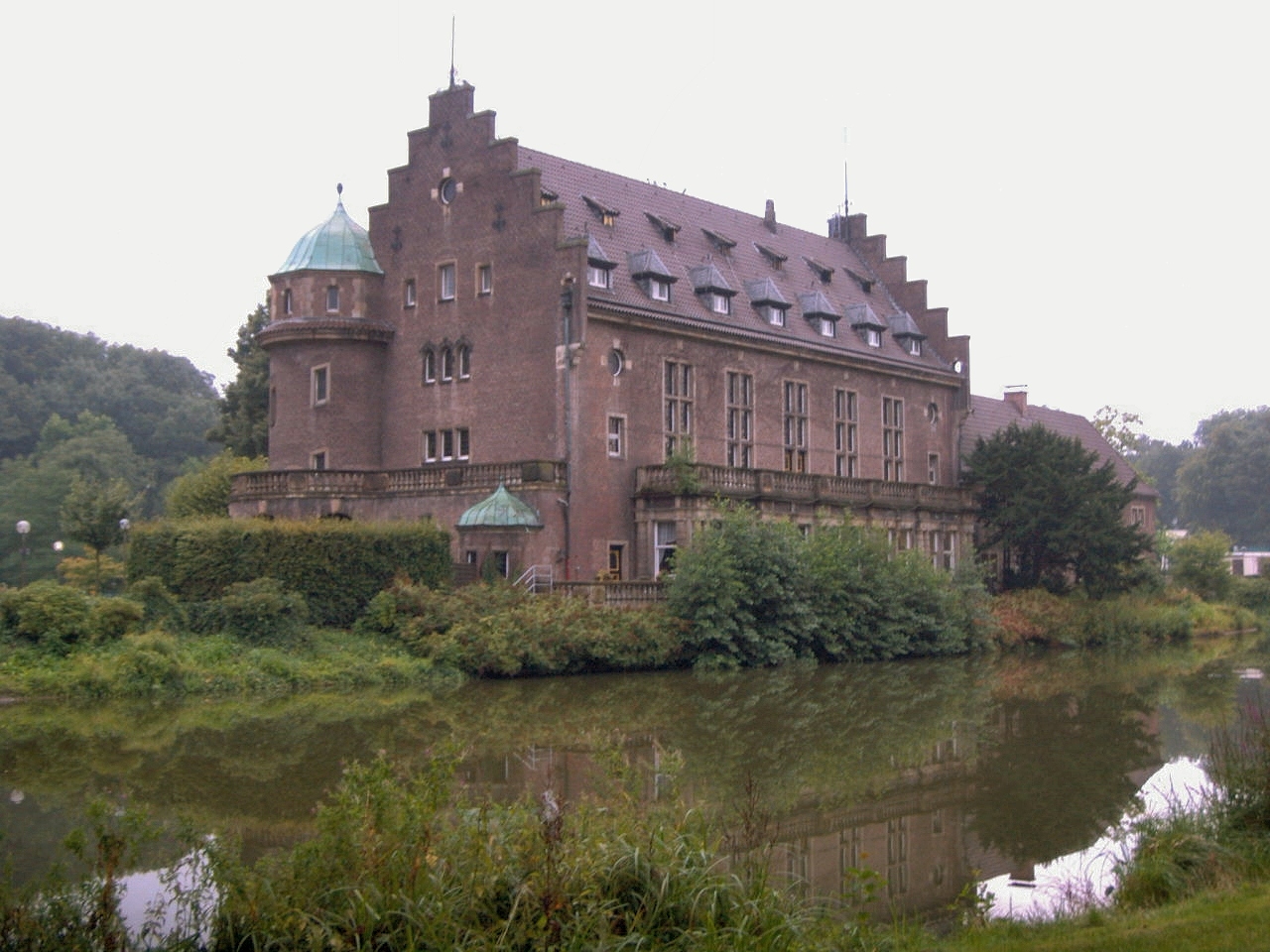
Schloss Wittringen, also known as Haus Wittringen, is a notable moated castle located in the town of Gladbeck in North Rhine-Westphalia, Germany. Situated on the southwestern edge of the Wittringen leisure centre, this castle has a rich history dating back to the 13th century, placing its origins firmly in the High Medieval period. Originally established as a knight's seat for the Vest Recklinghausen, it played a significant role in the region's medieval feudal structure. Architectural features and layout Schloss Wittringen is characterized by its moat, which is a defining feature of many medieval castles designed for defense. The castle's structure includes a combination of fortified walls and residential buildings, typical of a hill castle adapted to the local terrain. Over the centuries, the castle has undergone various modifications, but it retains key elements of its medieval architecture. The presence of a moat suggests strategic defensive planning, while the castle's layout reflects its dual role as a noble residence and a fortified stronghold. Construction and style The original construction in the 13th century reflects the High Medieval architectural style, which often featured robust stone walls, narrow windows for defense, and a compact, functional design. While the castle has seen renovations, the core medieval elements remain visible, offering insight into castle-building techniques of the era. Historical significance and ownership Throughout its history, Schloss Wittringen has passed through the hands of several noble families. Initially, it was the seat of knights serving the Vest Recklinghausen, a historic territorial entity in the region. Later owners included the prominent families of von Brabeck, von Oeffte, and von Vittinghoff-Schell. These families contributed to the castle's maintenance and adaptations over the centuries, reflecting shifts in ownership common to many European noble estates. Role in regional history The castle's location and ownership connect it to the broader political and social developments in the North Rhine-Westphalia region during the medieval and early modern periods. As a knight's seat, it was part of the feudal network that shaped local governance and defense. Its endurance through centuries highlights its importance as a local landmark and symbol of noble presence. Modern use and preservation Today, Schloss Wittringen is owned by the town of Gladbeck and serves a cultural role as a museum and restaurant. The museum showcases the castle's history and the heritage of the region, offering visitors a glimpse into medieval life and architecture. The restaurant provides a setting that combines historical ambiance with contemporary hospitality. Protection and status The castle has been a listed building since 1984, ensuring its preservation as a protected cultural monument. This status helps maintain the castle's structural integrity and historical authenticity, allowing it to remain a significant cultural and tourist attraction in Gladbeck. Visiting Schloss Wittringen Visitors to Schloss Wittringen can explore the castle grounds, enjoy exhibits in the museum, and dine in the on-site restaurant. The castle's setting within the Wittringen leisure centre makes it accessible for leisure activities and historical exploration alike. Its combination of medieval architecture and modern amenities provides a unique experience for tourists and locals. Accessibility and facilities The castle is open to the public during specified hours, and guided tours may be available to enhance the visitor experience. Facilities accommodate a range of visitors, including families and history enthusiasts, making Schloss Wittringen a versatile destination.

High Medieval (11th–13th c.)
Details
8 km
Schloss Berge — Germany castle

Schloss Berge

Gelsenkirchen, Germany

Schloss Berge is a historic hill castle located in Gelsenkirchen, Germany, with origins dating back to the 13th century. Although first mentioned in medieval records, the castle's present architectural form was established between 1785 and 1788, reflecting the Late Baroque and Classicism styles popular in that era. This transformation replaced earlier medieval structures, giving Schloss Berge its distinctive appearance characterized by elegant symmetry and restrained decorative elements typical of late 18th-century architecture. Historical background and evolution The site of Schloss Berge has a long history, with its first recorded mention in the 13th century. Initially, it likely served as a fortified manor or small castle typical of the medieval period in the region. Over the centuries, the castle underwent several modifications, reflecting changing tastes and functions. The significant reconstruction in the late 18th century marked a shift from a defensive fortress to a stately residence, aligning with the aristocratic lifestyle of the time. During the Post-Renaissance period, Schloss Berge was redesigned to emphasize comfort and aesthetic appeal rather than military utility. This was a common trend among European noble residences as the need for fortifications diminished. The castle's transformation incorporated Baroque elements such as grand facades and decorative details, combined with the balanced proportions and classical motifs of Classicism. Architectural features and style Late Baroque and Classicism influences The castle exhibits a harmonious blend of Late Baroque exuberance and Classical restraint. Its symmetrical layout, orderly window arrangements, and use of pilasters and columns reflect classical ideals. Meanwhile, Baroque influences appear in the ornate entrance, sculptural decorations, and the overall grandeur of the structure. Structural elements and layout Schloss Berge is situated on a gentle hill, typical of a hill castle, providing a commanding view of the surrounding landscape. The building features a central main block with flanking wings, creating a U-shaped plan that encloses a courtyard. The roofline is punctuated by dormer windows and chimneys, adding vertical emphasis to the otherwise horizontal composition. The castle grounds include landscaped gardens and parkland, which were designed to complement the architectural style and provide a picturesque setting. The integration of natural and built environments is characteristic of aristocratic estates of the period. Current use and preservation Today, Schloss Berge serves as a hotel and restaurant, allowing visitors to experience its historical ambiance firsthand. The castle has been well preserved and maintained, retaining much of its 18th-century architectural character. Its adaptation for hospitality purposes has ensured ongoing care and accessibility to the public. The castle's location in Gelsenkirchen makes it a notable cultural landmark within the region, attracting guests interested in history, architecture, and fine dining. The preservation of Schloss Berge contributes to the appreciation of Germany's architectural heritage from the Post-Renaissance era. Visiting Schloss Berge Visitors to Schloss Berge can enjoy the elegant interiors, beautifully maintained gardens, and the hospitality services offered. The castle's setting provides a tranquil retreat with historical significance, combining cultural enrichment with leisure. Frequently asked questions When was Schloss Berge built? Schloss Berge was constructed in its current form between 1785 and 1788, although the site dates back to the 13th century. What architectural styles characterize Schloss Berge? The castle showcases a blend of Late Baroque and Classicism styles typical of the late 18th century. Can visitors stay overnight at Schloss Berge? Yes, Schloss Berge operates as a hotel, offering accommodations in a historic setting. Is Schloss Berge open to the public? The castle is accessible to visitors, especially those using its restaurant and hotel facilities. Where is Schloss Berge located? It is located in Gelsenkirchen, Germany, situated on a hill that provides scenic views.

Post-Renaissance (17th–18th c.)
Details
9.2 km

Horst Palace

Gelsenkirchen, Germany

Horst Palace stands as a remarkable example of Renaissance architecture and medieval heritage in the town of Gelsenkirchen, Germany. Its origins date back to the 11th century, beginning as a farmstead on a marshy island formed by branches of the Emscher River. Over centuries, it evolved into a fortified noble residence and administrative center, reflecting the shifting political and architectural trends of the region. Medieval origins and early development The site of Horst Palace was initially established in the 11th century as a farmstead, strategically located on an island surrounded by marshland. In the late 12th century, the noble family von der Horst constructed a wooden motte-and-bailey castle here to protect the lands of Essen Abbey. This early fortification was typical of the period, utilizing timber on an earthen mound to provide defense and control over the surrounding territory. By 1282, the wooden structure was replaced with a more durable stone castle, marking a significant upgrade in fortification and status. This transition is documented by a royal grant from King Rudolf of Habsburg, who authorized Arnold von Horst to fortify the settlement and establish town rights. The castle's chapel, dedicated to Saint Hippolytus, was originally built in the 12th century and elevated to a parish church by around 1590. Integration into regional power structures The von der Horst family maintained ownership from the 12th century, initially as independent lords. However, after legal disputes, they accepted the overlordship of the Archbishopric of Cologne in 1412. This shift integrated Horst Palace into the archbishopric's territorial framework, transforming it into a fief under Cologne's control and aligning its political allegiance accordingly. Renaissance rebuilding and architectural grandeur A pivotal moment in the castle's history came between 1554 and 1578 when Rütger von der Horst, a prominent marshal and governor under the Cologne electors, commissioned a comprehensive reconstruction in the Renaissance style. This project replaced the medieval castle destroyed by fire in 1554 with a grand four-winged complex measuring approximately 53 meters per side. The new castle featured square pavilion towers at each corner, capped with distinctive "Welsh bonnet" roofs. The construction combined red brick walls with Baumberg sandstone for window and door frames, friezes, and cornices. The exterior was originally covered with white plaster accented by gilded sandstone and painted details simulating marble, creating a visually striking façade. The northeast and northwest wings survive as the most intact parts of the original structure. The northwest wing, rising three stories tall, includes an ornate entrance portal decorated with carvings of caryatids, cartouches, and scrollwork. The adjoining manor house wing, two stories tall, houses the Knights’ Hall dating from 1566, which showcases Italian Renaissance architectural influences such as a rusticated portal and elegant staircase. Interior artistic features Inside, the castle contains notable Renaissance artistic elements, including a 16th-century Resurrection Fireplace depicting the biblical prophet Ezekiel’s vision of resurrection. An oriel room features the partially restored Diana Fireplace, illustrating the mythological punishment of the nymph Callisto by the goddess Diana. These artworks reflect the Renaissance fascination with religious and mythological themes. Ownership changes and decline Following its Renaissance transformation, Horst Palace passed through several noble families by marriage and sale. After 1582, it came under the von Loë family and later the von der Recke family by 1607. In 1706, Baron Hermann Dietrich von der Recke sold the property to Baron Ferdinand von Fürstenberg. The Fürstenberg family did not reside permanently at the palace, leading to gradual neglect and structural decline. The 19th century saw significant damage to the castle, with several wings and towers collapsing or being demolished between 1829 and 1854. Despite this, the Fürstenbergs preserved the elaborate Renaissance façade decorations, known as the "Stone Treasure." In the early 20th century, the grounds were repurposed for public recreation, including a restaurant and a discotheque, which further contributed to the site's deterioration. Restoration and modern use Concern over the castle's condition led to the formation of a citizens' group in 1985 advocating for preservation. Their efforts resulted in the purchase of Horst Palace by the city of Gelsenkirchen in 1988. Archaeological excavations beginning in 1990 uncovered extensive information about the castle's construction phases and yielded numerous artifacts. Between 1994 and 1999, restoration and partial reconstruction transformed the palace into a vibrant cultural venue. It now houses a museum, registry office, and event spaces. The nearby outer bailey buildings, dating from 1856, were renovated and adapted by 2013 to serve as a community center and district library, including a small museum dedicated to traditional printing. Architectural remains and features The original Renaissance complex featured a large four-winged layout with corner pavilion towers. The northeast and northwest wings, including the main entrance, remain the most complete. The entrance façade, approximately 24 meters tall, boasts a richly decorated three-story bay window with carvings of caryatids, cartouches, and scrollwork in Baumberg sandstone. Many decorations are reconstructed to replace weathered originals. The courtyard galleries of the entrance wing feature vaulted ceilings adorned with Renaissance ornamental and figurative wall paintings, restored for public viewing. The pavilion towers were reconstructed up to courtyard level, with the north tower fully rebuilt to its historical height during 1990s restoration efforts. A 20th-century dry moat now encloses the complex, replacing the original wide and shallow moat fed by the Emscher River. Access was originally controlled by a three-arched stone bridge and a drawbridge at the outer gatehouse. Vaulted cellars with characteristic cross vaults survive beneath most wings, illustrating the sophisticated medieval construction techniques. Archaeological discoveries Excavations revealed an advanced water and waste management system, including a cistern, well, and sewer shafts. Numerous finds attest to the high status of the castle's occupants, such as fragments of façade decoration, medallions depicting Roman emperors, moulded tiles, and luxury items like silver and ivory cutlery, fine ceramics, and Venetian glassware. Cultural and historical significance Horst Palace embodies a rich historical narrative from its medieval origins through Renaissance grandeur to modern restoration. Its architectural evolution mirrors broader regional developments in fortification, noble residence design, and Renaissance artistic expression. Today, it serves as a cultural hub preserving and celebrating the heritage of Gelsenkirchen and the surrounding region. The palace's preservation and adaptive reuse demonstrate successful heritage management, balancing historical integrity with contemporary community needs. Visitors can explore its architectural features, artistic decorations, and archaeological treasures, gaining insight into the lives of its noble inhabitants and the castle's role in German history.

Late Medieval (14th–15th c.)
Details