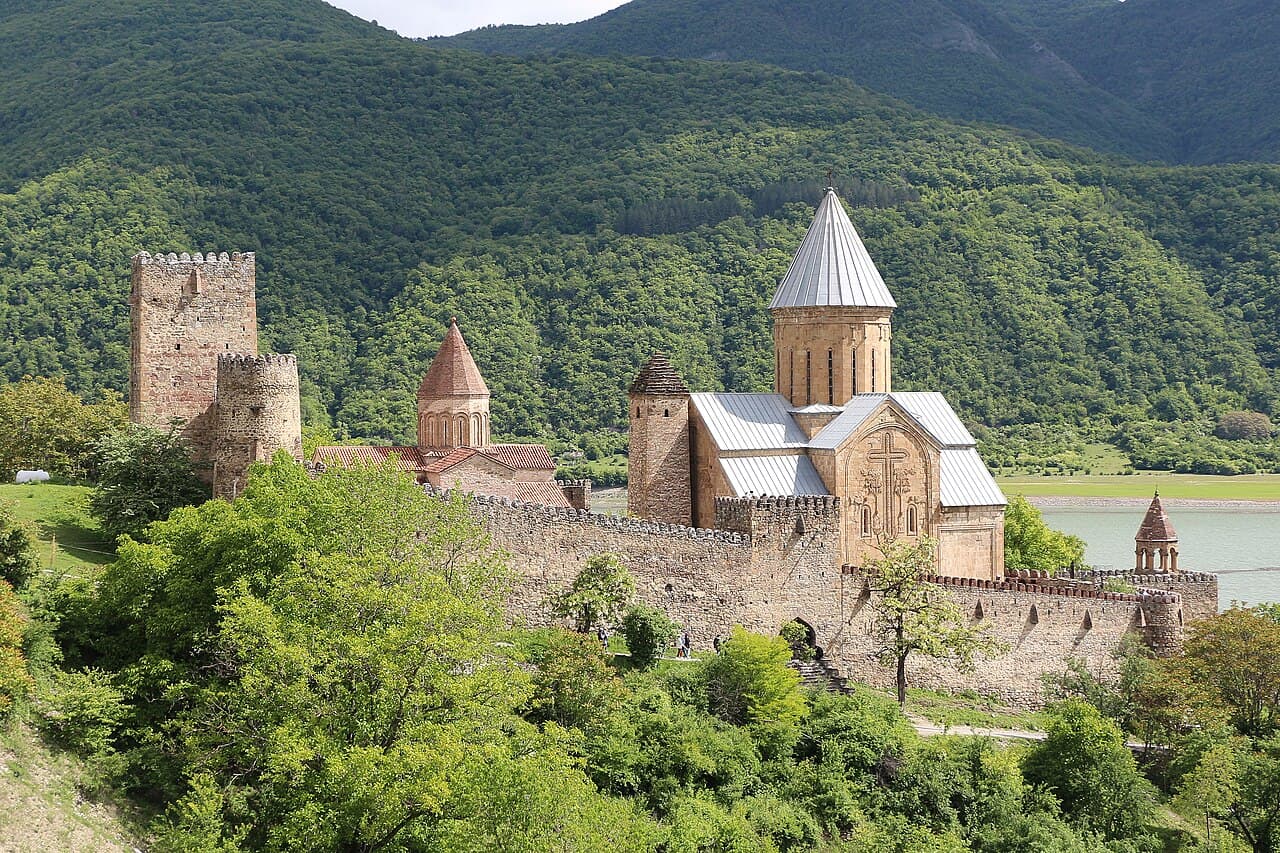
Ananuri Castle
Ananuri Castle is a remarkable bastioned fortress located in the Mtskheta-Mtianeti region of Georgia, near the village of Ananuri in the Dusheti municipality. This historic complex, perched strategically on a hill at the confluence of the Arkala and Aragvi rivers, now overlooks the southern shore of the Zhinvali Reservoir, a result of the nearby Zhinvali Dam construction. The castle's origins and architectural evolution reflect the turbulent history and cultural richness of the region, making it a significant monument in Georgian heritage.
The origins and architectural evolution of Ananuri Castle
The oldest surviving element of the complex is the watchtower, built in the style characteristic of the Khevsuri highlanders. This tower dates back to the 14th or 15th century and stands adjacent to the largest church within the fortress walls. The main body of the castle, however, was constructed during the 17th and 18th centuries and served as the seat of the Dukes of Aragvi, a prominent feudal dynasty in Georgian history.
The fortress features a rectangular ground plan and is composed of two main castles connected by a crenellated curtain wall, a defensive feature typical of bastioned fortresses. The upper fortification includes a large square tower known as Sheupovari, which functioned as the keep and was the site of the final defense against rival forces. The lower fortification, featuring a round tower, is mostly in ruins today but once contributed to the castle's formidable defenses.
Religious architecture within the fortress
Within the castle complex stand two notable churches, each reflecting different architectural and historical phases. The smaller, the Church of the Virgin, was built in the first half of the 17th century. Constructed primarily of brick, it abuts the tall square watchtower and contains the graves of several Dukes of Aragvi. Although its interior decoration has largely been lost, a significant feature is the stone baldaquin erected by the widow of Duke Edishera, who died in 1674.
The larger church, known as the Church of the Mother of God (Ghvtismshobeli), was constructed in 1689 for the son of Duke Bardzem. This church is a fine example of a central dome style structure with richly decorated façades. Noteworthy are the intricately carved north entrance and the iconic Georgian Orthodox grapevine cross carved into the south façade. Despite suffering extensive damage from a fire in the 18th century, remnants of frescoes still survive, offering a glimpse into the religious art and symbolism of the period.
Historical significance and turbulent past
Ananuri Castle was a focal point of political and military activity in Georgia. It was the seat of the eristavis (Dukes) of Aragvi, who ruled the region from the 13th century. The castle witnessed numerous battles and sieges, including a devastating attack in 1739 by forces led by Shanshe, Duke of Ksani. During this assault, the castle was set on fire and the Aragvi clan was massacred.
Following this tragedy, local peasants revolted against the new rulers imposed by Shanshe, killing the usurpers and inviting King Teimuraz II to assume direct control. The castle then became the residence of royal officials. However, unrest continued, and in 1746, King Teimuraz, with assistance from King Erekle II of Kakheti, suppressed another peasant uprising.
By 1786, the castle was part of a small town, but its strategic importance waned over time. During the 1812 Kakheti revolt, Russian troops overran the fortress, marking the beginning of its decline. Since then, Ananuri gradually lost its military and administrative significance.
Preservation and modern significance
Today, Ananuri Castle is well preserved and accessible to visitors during opening hours. The site remains a popular tourist destination due to its proximity to Tbilisi, attracting many visitors daily. However, the influx of tourists and the commercial activity in the large square in front of the castle can somewhat detract from the historic ambiance.
Visitors can explore most of the fortress, though the smaller Church of the Virgin is not open to the public, and photography is prohibited inside the larger Church of the Mother of God. Despite these restrictions, the castle offers a rich experience of Georgian medieval architecture and history.
Since 2007, Ananuri Castle has been on the tentative list for UNESCO World Heritage Site designation, reflecting its cultural and historical importance. The complex stands as a testament to Georgia's feudal past, architectural ingenuity, and the resilience of its people through centuries of conflict.
Architectural influences and stylistic features
The design of Ananuri Castle illustrates a unique blend of architectural influences, combining elements from Georgian Orthodox ecclesiastical architecture with military fortification techniques. The churches exhibit stylistic features reminiscent of Byzantine and Persian traditions, particularly in their decorative motifs and structural designs.
The fortress's defensive structures, including the curtain walls, towers, and battlements, showcase the evolution of military architecture in the region during the Renaissance period. The use of bastions and curtain walls reflects advancements in fortification responding to the introduction of gunpowder and artillery warfare.
Visitor experience and accessibility
Ananuri Castle is open to the public with no significant restrictions on visiting hours, making it an accessible destination for those interested in history and architecture. The site offers panoramic views of the surrounding landscape, including the turquoise waters of the Aragvi River and the Zhinvali Reservoir.
While the castle is a major draw for tourists, visitors should be prepared for crowds, especially during peak seasons. The commercial activity around the entrance provides amenities but can affect the tranquility of the visit. Guided tours are available and recommended to fully appreciate the complex's historical and architectural significance.
Frequently asked questions (FAQ)
- How do I get to Ananuri Castle?
- Ananuri Castle is located approximately 70 kilometers from Tbilisi, making it easily accessible by car or public transport. You can take a marshrutka (minibus) from Tbilisi to Kazbegi and request to stop at Ananuri. The scenic drive along the Aragvi River adds to the experience.
- What is the historical significance of Ananuri Castle?
- Ananuri Castle dates back to the 16th century and served as a defensive stronghold for the Dukes of Aragvi. It played a vital role in the region's history, particularly during the feudal period, and is a significant example of Georgian military architecture. The site is also a UNESCO World Heritage candidate, highlighting its cultural importance.
- When was Ananuri Castle built?
- Construction of Ananuri Castle began in the late 16th century, although some parts may date back even earlier. The castle complex consists of several churches and defensive structures built to protect the region from invasions. Over the centuries, it has witnessed numerous historical events and changes in power.
- Can I enter the castle grounds?
- Yes, visitors can enter the castle grounds and explore its various structures, including the churches and watchtowers. There is a small entrance fee, which helps with the maintenance of the site. It’s advisable to wear comfortable shoes as the terrain can be uneven.
- Why is Ananuri Castle a popular tourist attraction?
- Ananuri Castle is popular for its stunning architecture, rich history, and breathtaking views of the surrounding mountains and the Zhinvali Reservoir. The unique blend of natural beauty and historical significance makes it a must-visit for travelers in Georgia. Additionally, its proximity to Tbilisi adds to its accessibility for day trips.
- Is it possible to visit Ananuri Castle year-round?
- Yes, Ananuri Castle is open year-round, allowing visitors to experience its beauty in every season. However, the best time to visit is during the spring and fall when the weather is mild and the landscapes are particularly picturesque. Winter visits can be magical but may require additional preparations for cold weather.
- What are the opening hours for Ananuri Castle?
- Ananuri Castle is generally open to visitors from 9:00 AM to 6:00 PM, though hours may vary seasonally. It’s recommended to check local resources or the official tourism website for the most current information before planning your visit. Arriving early can help you avoid crowds and enjoy a more peaceful experience.
- Are there any nearby attractions to visit?
- Yes, nearby attractions include the Zhinvali Dam, which offers stunning scenic views, and the Jinvali Reservoir, perfect for a relaxing day outdoors. The town of Mtskheta, a UNESCO World Heritage site, is also just a short drive away and offers rich cultural experiences. Exploring these sites can enhance your visit to Ananuri.
- What are the ticket prices for Ananuri Castle?
- The entrance fee for Ananuri Castle is quite affordable, typically around 2-5 GEL per person. This small fee contributes to the preservation of the castle and its grounds. It’s a worthwhile investment to experience such a significant piece of Georgian heritage.
Photo gallery

Information
Loading map...
Visitor reviews
No reviews yet. Been here? Write the first review and help other travelers!
Write the first reviewVisited this castle? Share your experience
Your review helps other travelers and adds first-hand knowledge to our encyclopedia.



