
Zweibrücken Castle
Zweibrücken Castle stands as the largest and one of the most impressive secular buildings in the Palatinate region of Germany. Originally constructed as a ducal residence, the castle today serves as the seat of the Palatine Higher Regional Court and the Zweibrücken law courts. Its history spans several centuries, reflecting architectural evolution, political upheaval, and cultural significance.
The origins and early development of Zweibrücken Castle
The site of Zweibrücken Castle was initially fortified in the 12th century by the Counts of Zweibrücken. Located on an important medieval trade route, the castle was strategically placed on the eastern side of an open triangular area that remains a defining feature of the town's layout. Throughout the 16th and 17th centuries, the ducal family undertook significant modernization and expansion efforts to reflect their rising status and the evolving architectural tastes of the time.
In 1585, a new palace was constructed on the northern side of the Schlossplatz, equipped with a water-mill and a library. However, the castle complex suffered extensive damage during the Franco-Dutch War (1672–1678), particularly in 1677, when both the old and newer buildings were badly damaged by military action.
Baroque reconstruction under Duke Gustav
In the early 18th century, Gustav, Duke of Zweibrücken, commissioned the construction of a new palace that would better reflect his rank and ambitions. Between 1720 and 1725, this new Baroque residence was erected on the northern side of the Schlossplatz. Due to the marshy nature of the site, extensive groundwork was necessary, involving the driving of numerous oak piles into the soil to ensure a solid foundation for the palace.
This Baroque palace was notable for its elegant design and grandeur, befitting a ducal residence. It underwent two cycles of destruction and rebuilding, with the current structure dating from its second reconstruction phase. The palace became a cultural hub during the reign of Christian IV, Duke of Zweibrücken (1735–1775), who hosted prominent artists such as the celebrated operatic composer Christoph Willibald von Gluck.
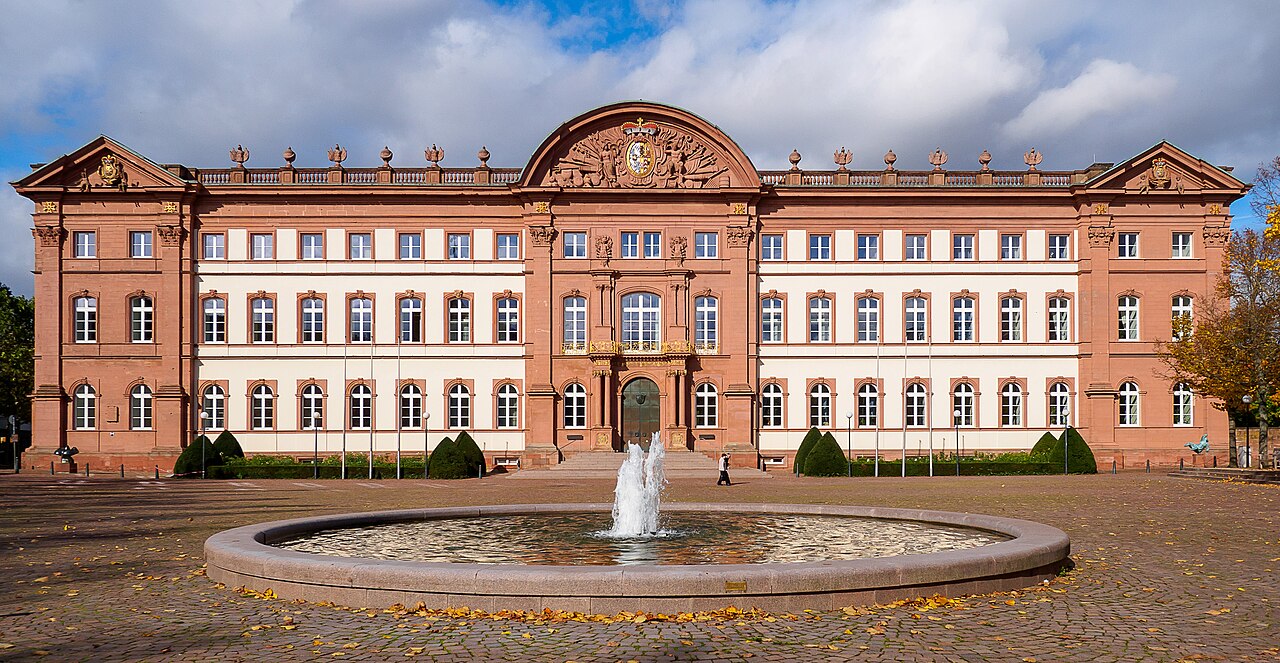
Photo by TeKaBe • CC BY-SA 4.0
Historical events and transformations in the 18th and 19th centuries
The castle also played a role in the turbulent political landscape of the late 18th century. On 3 May 1793, during the War of the First Coalition, Zweibrücken was overrun and sacked by French troops, resulting in significant damage to the palace. Following this, in 1817, King Maximilian I of Bavaria (formerly Duke of Zweibrücken) transferred the ruined building to the town's Catholic community with instructions to convert it into a church.
The central section of the palace was separated from its wings and roofed with slate to serve as the Maximilianskirche, which was consecrated on 28 May 1820. A bell tower was later added, and the wings were repurposed: the east wing became a clergy residence, while the west wing served as a royal residence and later the seat of the Royal Court of Appeals of the Palatinate.
By 1867, the Maximilianskirche was deconsecrated, and the entire building was dedicated to judicial administration. The bell tower was removed, marking the end of the castle's ecclesiastical function.
Destruction and restoration in the 20th century
During the final stages of World War II, on 14 March 1945, Zweibrücken was heavily bombed by Allied forces. The castle was gutted, with only its outer walls left standing. Fortunately, a copy of the original architectural plans by Sundahl was discovered in Nancy, France, which enabled accurate reconstruction.
Between 1962 and 1964, the castle was rebuilt using authentic materials such as red sandstone from the northern Palatinate and yellow sandstone from Lorraine. The restoration faithfully followed the original Baroque design, and in 1965, the castle reopened as the seat of the Palatine Higher Regional Court and the Zweibrücken law courts, restoring its role as a center of regional governance and justice.
Architectural features and significance
Zweibrücken Castle exemplifies Baroque architecture with its balanced proportions, refined ornamentation, and stately presence. Its construction on a marshy site required innovative foundation techniques, including the use of oak piles to stabilize the structure. The palace's layout around the Schlossplatz integrates it into the urban fabric of Zweibrücken, emphasizing its prominence.
Throughout its history, the castle has served various functions—from ducal residence to church, and finally to a judicial building—reflecting the changing political and social landscape of the Palatinate. Its restoration after World War II preserved an important cultural landmark and architectural heritage site in the region.
Frequently asked questions (FAQ)
- How do I get to Zweibrücken Castle?
- Zweibrücken Castle is easily accessible by public transportation, with regular bus and train services connecting it to nearby cities. If you are driving, there is parking available near the castle, making it convenient for visitors traveling by car.
- What is the historical significance of Zweibrücken Castle?
- Zweibrücken Castle has a rich history dating back to the 16th century, serving as a residence for various noble families. It played a crucial role in the region's political and cultural development, and today, it stands as a testament to the architectural styles of its time.
- When was Zweibrücken Castle built?
- Construction of Zweibrücken Castle began in the early 16th century and was completed in the late 17th century. Over the years, the castle has undergone several renovations and restorations, preserving its historical charm and significance.
- Can I visit the interior of Zweibrücken Castle?
- Yes, visitors can explore the interior of Zweibrücken Castle during designated opening hours. Guided tours are available, providing insights into the castle's history and architectural features.
- Why is Zweibrücken Castle considered an architectural gem?
- Zweibrücken Castle showcases a blend of Renaissance and Baroque architectural styles, characterized by its ornate facades and intricate details. The castle's design reflects the grandeur of its era, making it a significant site for architecture enthusiasts.
- Is it possible to host events at Zweibrücken Castle?
- Yes, Zweibrücken Castle offers facilities for hosting various events, including weddings and corporate gatherings. The picturesque settings and historical ambiance make it a popular choice for memorable celebrations.
- What are the opening hours of Zweibrücken Castle?
- Zweibrücken Castle is typically open for visitors from Tuesday to Sunday, with specific hours varying by season. It is advisable to check the official website for the most current information on opening times before your visit.
- What are the ticket prices for visiting Zweibrücken Castle?
- Ticket prices for Zweibrücken Castle are generally affordable, with discounts available for students, seniors, and groups. Family tickets are also offered, making it a great value for visitors of all ages.
- What is the best time to visit Zweibrücken Castle?
- The best time to visit Zweibrücken Castle is during the spring and summer months when the weather is pleasant, and the gardens are in full bloom. Additionally, special events and festivals often take place during this time, enhancing the visitor experience.
- Are there any nearby attractions to visit?
- Yes, in addition to Zweibrücken Castle, there are several nearby attractions, including the beautiful gardens of the castle and the historic town center of Zweibrücken. Visitors can also explore local museums and parks, making it a perfect day trip destination.
Photo gallery

Information
Current owner
State administration
Loading map...
Visitor reviews
No reviews yet. Be the first to share your experience!