
Zebrák Castle
Zebrák Castle is a striking hilltop fortress located in the Central Bohemian Region of the Czech Republic, near the town of Žebrák and within the municipality of Točník. Built in the 13th century by the noble Zajíc family, it stands as a remarkable example of high medieval castle architecture in Bohemia. The castle is part of a unique pair with the nearby Točník Castle, together protected as a national cultural monument. This fortress not only reflects the military and residential needs of its era but also bears witness to significant historical events and royal patronage.
The origins and early history of zebrák castle
Zebrák Castle was established in the latter half of the 13th century by Oldřich Zajíc III, a member of the influential Bohemian noble family Zajíc. Its location on a narrow quartzite ridge was strategically chosen to oversee a vital trade route connecting Prague and Bavaria, which underscored its military and economic importance. The castle's initial design followed the bergfried type, characterized by its massive defensive towers primarily intended for protection rather than residential comfort.
Shortly after its construction, the Zajíc family relocated, selling the castle to the Bohemian crown. In 1336, the House of Luxembourg acquired Zebrák, marking a new phase in the castle's history as it became a royal residence. King John of Luxembourg and later his son, Emperor Charles IV, took a keen interest in the site, with Charles IV frequently visiting and initiating enhancements. The castle's prominence was further elevated when it hosted important events, including the death of Charles IV's son Václav in 1351.
Architectural evolution under the luxembourg dynasty
During the 14th century, the castle underwent significant modifications, particularly under the reign of Wenceslaus IV, Charles IV's son. Between 1383 and 1396, Wenceslaus IV transformed Zebrák from a purely defensive fortress into a more refined and comfortable royal residence. This included the construction of a new palace wing, the addition of rectangular windows to illuminate large halls, and the installation of an early central warm-air heating system, a technological innovation for its time.
The castle also featured two round towers, one of the earliest examples of such architecture in Bohemian noble castles. These towers, with walls up to two meters thick, provided formidable defense and symbolized the castle's strength. The large bergfried tower was heightened and decorated with stone painting techniques that imitated rusticated stone blocks, enhancing its imposing appearance.
Access to the castle was secured through a gate tower leading into an outer bailey, typical of hill castles. Defensive improvements included the construction of fishponds around the castle, serving as natural water barriers. The castle's chapel, dedicated to Saint Apollinaris and Saint Margaret, was likely built during the reign of Charles IV and stood above the castle's neck ditch, an artificial trench protecting the narrow access point.
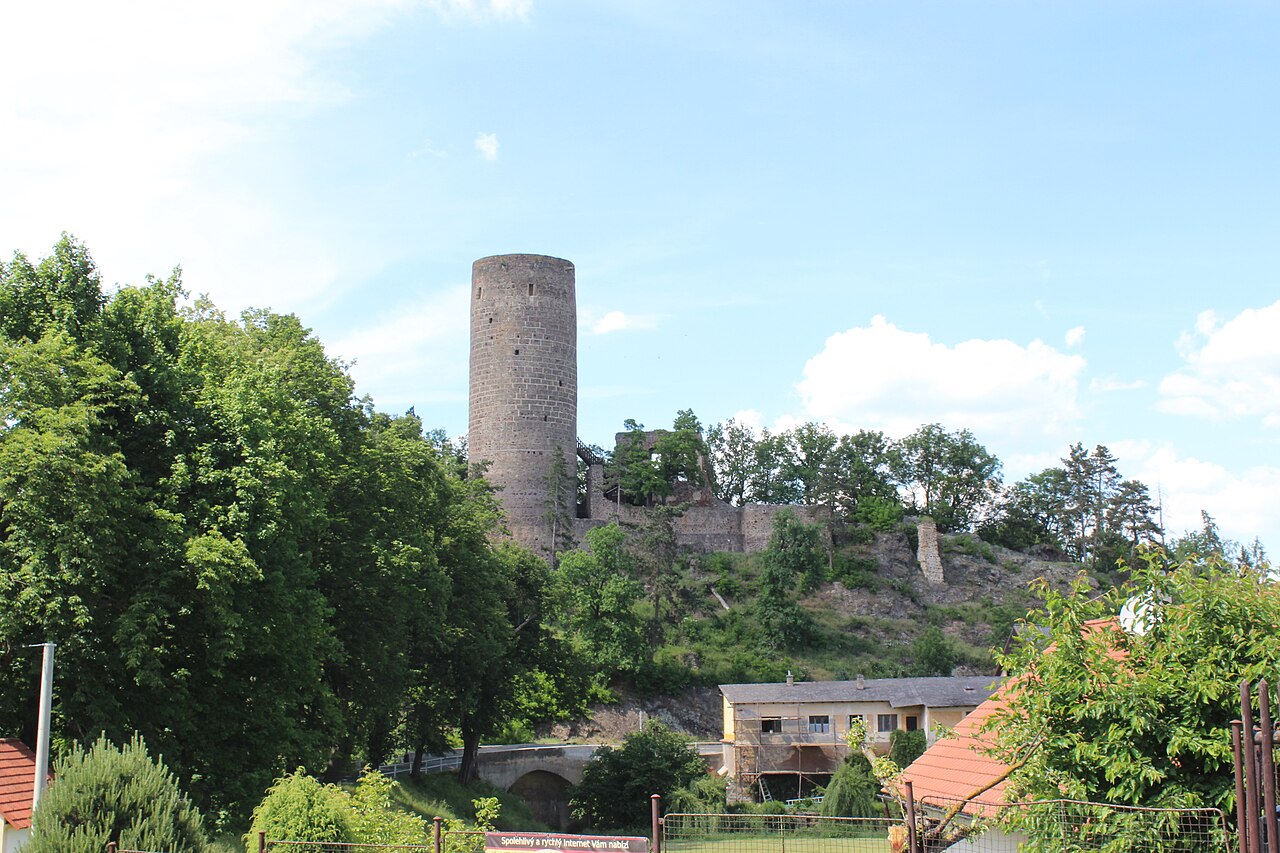
Photo by Janmanak • CC BY-SA 4.0
The impact of conflict and decline
Zebrák Castle endured significant challenges during its history, notably during the Hussite Wars in the early 15th century. The castle withstood two sieges by the Hussite army in 1425 and 1430, demonstrating its robust fortifications. However, the surrounding towns of Točník and Hořovice were burned down by the Hussites, highlighting the turbulent times.
A devastating fire in 1395, attributed to the forces of nobleman Jindřich III of Rožmberk, severely damaged Zebrák. In response, Wenceslaus IV constructed the nearby Točník Castle on a higher, more defensible position, which gradually overshadowed Zebrák in strategic importance. Another major fire in 1532 inflicted extensive damage, after which the castle was abandoned and fell into ruin.
Architectural remains and preservation efforts
Today, Zebrák Castle stands as a partially preserved ruin that offers valuable insights into medieval castle construction and royal residence life. The remains include the large bergfried tower and the passage connecting it to the thick curtain walls. Portions of the old palace survive, including the large hall with its rectangular windows and the internal spiral staircases that connected the chambers.
The castle's defensive structures, such as the outer bailey with its third round tower built in the 15th century, reflect adaptations to evolving military technologies, including early artillery. This tower featured thick walls, narrow arrow slits, and a wooden or half-timbered upper floor for defenders, illustrating the castle's continued strategic relevance during and after the Hussite Wars.
Ownership of the castle passed to the Czechoslovak Tourist Club in the early 20th century, which initiated conservation and preservation efforts. These efforts were interrupted by World War II but resumed in the latter half of the century. Since 1965, Zebrák has been protected as a cultural monument, and since 2002, it holds the status of a national cultural monument under the stewardship of the Czech state.
Zebrák castle in cultural and historical context
The castle's proximity to Točník Castle creates a rare example of two medieval fortresses standing side by side, offering a unique perspective on the evolution of castle architecture and royal strategy in Bohemia. Zebrák's transformation from a noble family stronghold to a royal residence and its eventual decline encapsulate the broader historical shifts in medieval Central Europe.
Its architectural features, including the early use of round towers, advanced heating systems, and defensive fishponds, highlight the innovations of the period. The castle's role in significant historical events, such as the religious disputation involving Jan Hus and its resilience during the Hussite Wars, underscores its importance in Czech history.
Today, Zebrák Castle attracts visitors interested in medieval history, architecture, and the dramatic stories of Bohemian nobility and royalty. Its ruins, set against the scenic backdrop of the Central Bohemian landscape, continue to inspire appreciation for the region's rich cultural heritage.
Frequently asked questions (FAQ)
- What is the historical significance of Zebrák Castle?
- Zebrák Castle, located in Točník, Czechia, dates back to the 14th century and is an important example of medieval architecture. It served as a noble residence and has witnessed various historical events, reflecting the rich history of the region. Today, it stands as a testament to the architectural styles and defensive strategies of its time.
- When is the best time to visit Zebrák Castle?
- The best time to visit Zebrák Castle is during the spring and early autumn months when the weather is mild and pleasant. This allows visitors to explore the grounds and enjoy the scenic views without the discomfort of extreme heat or cold. Additionally, these seasons often see fewer crowds, providing a more intimate experience.
- How do I get to Zebrák Castle?
- Zebrák Castle is accessible by car or public transportation from nearby cities like Prague. If traveling by train, you can take a train to the nearby town of Točník and then enjoy a scenic walk to the castle. There are also local bus services that connect to the area.
- Is it possible to access the castle for those with mobility issues?
- Zebrák Castle has some accessibility features, but due to its historical architecture, certain areas may be challenging for individuals with mobility issues. It is recommended to check in advance for specific accessibility options or to contact the castle administration for assistance. The staff is usually helpful in providing guidance to ensure a pleasant visit.
- What are the opening hours for Zebrák Castle?
- Zebrák Castle typically opens its doors to visitors from April to October, with hours varying by season. Generally, the castle is open from 10 AM to 6 PM on weekdays and until 8 PM on weekends. It's advisable to check the official website for the most up-to-date information on opening hours before your visit.
- Can I purchase tickets online for Zebrák Castle?
- Yes, tickets for Zebrák Castle can be purchased online through its official website, which can save you time during peak visiting hours. Online purchase options often include discounts for groups or advance bookings. However, tickets can also be bought at the entrance if you prefer to decide on the day of your visit.
- What nearby attractions can I visit while in Točník?
- While visiting Zebrák Castle, you can also explore the picturesque Točník Castle, which is just a short distance away. The area is rich in natural beauty, providing opportunities for hiking and enjoying the scenic landscapes of the Czech countryside. Additionally, local museums and historical sites add to the cultural experience of your visit.
- What architectural styles can be seen in Zebrák Castle?
- Zebrák Castle showcases a blend of Gothic and Renaissance architectural styles, reflecting its construction period and subsequent renovations. The castle features stunning stonework, impressive towers, and intricate details that highlight the craftsmanship of the era. Exploring the castle allows visitors to appreciate these historical architectural elements firsthand.
Photo gallery

Information
Website
Visit websiteLoading map...
Visitor reviews
No reviews yet. Be the first to share your experience!