
Várgesztes Castle
Várgesztes Castle stands prominently on a flattened hilltop within the Vértes Mountains near the village of Várgesztes in Hungary. This hill castle was originally constructed in the late 13th century by the powerful Csák noble family as a fortified stronghold to secure their estates and assert control over the surrounding lands. The castle’s location on a plateau provided a natural defensive advantage, overseeing key routes and the dense forested region.
The earliest written record of the castle dates to 1332, situating it firmly in the High medieval period. The castle’s original stone structure was part of a network of fortifications built by Hungarian nobility during a time of internal conflict and territorial consolidation. The Csák family supported Charles Robert during civil wars, but in 1326, the crown took control of the castle to curb noble power and reinforce royal authority in this strategic region.
Medieval origins and royal transformation
Following the royal acquisition, King Louis the Great ordered the demolition of the initial Csák fortress around the mid-14th century. The intent was to replace the purely military stronghold with a more comfortable royal hunting lodge. This transformation reflected the castle’s evolving role from a defensive fortress to a residence suited for royal leisure activities, particularly hunting in the nearby Vértes forest, a favored pastime among Hungarian kings.
The castle’s layout was adapted to accommodate this change, balancing residential comfort with defensive features. The inner castle was built on an elongated rectangular plan with a distinctive three-room layout. The main entrance faced north and was accessed by a drawbridge supported by pillars, a typical medieval defensive mechanism. A nearby gate tower guarded the entrance, overseeing the approach and serving as an early warning point against attackers.
Ownership changes and political significance in the 15th century
During the 15th century, Várgesztes Castle changed hands multiple times, reflecting its ongoing strategic and political importance. King Sigismund used the castle as a pledge to Frederick of Brandenburg, illustrating its value in diplomatic and military negotiations. Subsequently, it passed to prominent Hungarian noble families, including the Rozgonyi and Újlaki clans, who maintained and adapted the fortress to suit their needs during a period marked by regional power struggles.
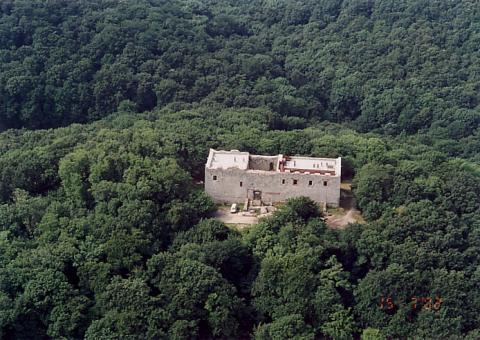
Photo by Civertan • CC BY-SA 3.0
Defensive upgrades during the Ottoman wars
With the rise of the Ottoman Empire and their expansion into Central Europe in the 16th century, Várgesztes Castle resumed a critical military role. Positioned on routes leading towards Vienna, the fortress was part of the defensive line against Ottoman incursions. The castle successfully repelled a raiding force in 1529, but was eventually surrendered to the Ottomans in 1543.
During the Ottoman occupation, the castle underwent significant modifications to enhance its defensive capabilities. Two "wolf pits"—deep traps designed to hinder enemy advances—were installed near the drawbridge. The entrance was heavily fortified to resist sieges. A covered casemate corridor was constructed between the inner gate and the western tower, allowing protected movement within the fortress walls. Additional ovens were built into the outer walls to support the garrison’s needs, and a new tower was erected on the southern facade, enhancing surveillance and defense.
Ottoman census records from 1577 indicate the garrison consisted mainly of Serbian infantry serving under Ottoman command, highlighting the castle’s role as an Ottoman military outpost. The fortress remained under Ottoman control until the decisive defeat of Ottoman forces near Vienna in 1683, after which the castle was peacefully evacuated in the autumn of that year.
Decline and preservation efforts
Following its military abandonment, Várgesztes Castle gradually fell into ruin. Local inhabitants dismantled parts of the structure, repurposing stones for nearby construction projects such as the Majk Camaldolese monastery. This reuse was officially sanctioned by Count Joseph Esterházy. By the late 18th century, the castle was recorded as a ruin, a silent marker of the region’s turbulent history.
Interest in the site revived in the late 19th century, with the first detailed surveys conducted in 1877 by Floris Rómer. Archaeological excavations during the Second World War led by Géza Lux and Károly Csányi further explored the castle’s remains. In 1932, a hostel was established near the castle to accommodate visitors, reflecting growing cultural and historical interest.
Preservation and partial restoration began in the 1960s, focusing on the inner castle. This area was adapted to house a restaurant and guest accommodations, blending heritage conservation with tourism. Ownership of the ruins has shifted between state and local authorities. Due to safety concerns, the castle was closed in 2013, with planned repairs initiated in 2014 to stabilize and conserve the site.
Architectural features and phases of construction
Original structure and layout
The castle’s original design featured a two-part structure comprising an outer defensive circuit with a high wall and a square tower guarding the approaches. This outer ward was separated from the inner castle by a courtyard, creating multiple layers of defense.
The inner castle was built on an elongated rectangular plan with three main rooms. The northern main entrance was protected by a drawbridge and a gate tower, combining residential and defensive functions. This design reflects typical medieval fortification principles while accommodating the castle’s later role as a royal hunting lodge.
Construction phases and modifications
Archaeological research has identified four major phases in the castle’s development. Initially, the site functioned as a fortified hunting lodge emphasizing comfort alongside defense. Under King Sigismund in the 14th century, the inner castle was raised with a second floor, enhancing both its residential space and defensive capabilities.
In response to increasing Ottoman threats in the mid-16th century, the castle’s defenses were significantly reinforced. The installation of wolf pits and fortification of the entrance aimed to delay or prevent enemy sieges. The Ottoman period saw further adaptations, including the addition of the casemate corridor and new defensive towers.
Current condition and visitor experience
Today, Várgesztes Castle remains a partially preserved ruin. The outer walls have mostly crumbled to their foundations due to centuries of stone removal and natural decay. However, significant portions of the inner castle still stand, providing valuable insights into its varied history and architectural evolution.
The site offers visitors a glimpse into medieval Hungarian castle architecture, royal hunting traditions, and Ottoman military adaptations. Preservation efforts continue to focus on stabilizing the ruins and enhancing visitor safety. The castle’s dramatic hilltop setting within the Vértes Mountains adds to its appeal for tourists and history enthusiasts alike.
Frequently asked questions (FAQ)
- How do I get to Várgesztes Castle?
- Várgesztes Castle is located in Hungary, easily accessible by car or public transportation. If you're traveling from Budapest, you can take a train to Székesfehérvár and then a bus to Várgesztes. Make sure to check local transport schedules for the most convenient options.
- What is the historical significance of Várgesztes Castle?
- Várgesztes Castle dates back to the 14th century and played a crucial role in the defense of the region during various conflicts. It reflects the architectural styles of its time and serves as a reminder of Hungary's rich medieval history. Today, it stands as a symbol of heritage and attracts history enthusiasts from all over.
- When was Várgesztes Castle built?
- Várgesztes Castle was originally constructed in the late 14th century, with significant renovations occurring in the following centuries. The castle has undergone various changes over time, which have contributed to its unique architectural style. Its long history makes it an interesting place to explore for visitors.
- Can I visit Várgesztes Castle year-round?
- Yes, Várgesztes Castle is open to visitors throughout the year, though specific opening hours may vary by season. It is advisable to check the official website or contact local tourism for the most up-to-date information before planning your visit. Guided tours are available to enhance your experience.
- Why is Várgesztes Castle a popular tourist destination?
- Várgesztes Castle attracts visitors due to its fascinating history, stunning architecture, and picturesque surroundings. The castle offers a glimpse into Hungary's past and is a great spot for photography and leisurely walks. Its accessibility and proximity to other attractions further enhance its appeal.
- Is it possible to explore the interiors of Várgesztes Castle?
- Yes, visitors can explore the interiors of Várgesztes Castle during guided tours. These tours provide insights into the castle's history, architecture, and the stories of those who once lived there. Be sure to check the tour schedule in advance to secure your spot.
- What are the ticket prices for Várgesztes Castle?
- Ticket prices for Várgesztes Castle are generally affordable, with discounts available for students and seniors. It's best to check the official website for the latest pricing information and any special offers. Purchasing tickets in advance may also help you avoid long lines during peak tourist seasons.
- What are the opening hours of Várgesztes Castle?
- Várgesztes Castle typically opens at 10 AM and closes at 6 PM during the tourist season, but hours may vary in the off-season. It's recommended to verify the opening hours before your visit to ensure a smooth experience. Guided tours may have specific time slots, so plan accordingly.
- What are some nearby attractions to Várgesztes Castle?
- Nearby attractions include the picturesque village of Várgesztes, known for its beautiful landscapes and hiking trails. Additionally, the city of Székesfehérvár, with its rich history and cultural sites, is just a short drive away. Visitors can enjoy a full day of exploring both the castle and its surrounding area.
Photo gallery

Information
Loading map...
Visitor reviews
No reviews yet. Be the first to share your experience!