
Vlašim Castle
Vlašim Castle stands majestically over the river Blanice in the town of Vlašim, Czechia, embodying centuries of architectural evolution and noble history. Originally constructed in the 14th century as a Gothic fortress, the castle has undergone significant transformations that reflect the changing tastes and needs of its successive owners. From its medieval origins to its present-day form as a refined neoclassical chateau, Vlašim Castle offers a vivid narrative of Bohemian aristocratic life, architectural innovation, and cultural heritage.
The castle's foundation dates back to shortly after 1318, attributed to Hynek of Vlašim. It initially served as a fortified residence for the local nobility, strategically positioned to oversee the surrounding landscape. Throughout the 14th century, Vlašim Castle gained prominence as a residence for significant religious figures, including Jan Očko of Vlašim, the second Archbishop of Prague, and his successor Jan of Jenštejn. Their tenure saw enhancements that elevated the castle beyond a mere military stronghold to a symbol of ecclesiastical power and prestige.
Medieval origins and gothic architecture
Originally conceived as a hill castle in the late medieval period, Vlašim Castle exemplified typical Gothic defensive features of the era. The fortress was constructed with robust stone walls, battlements, and a polygonal tower clock topped with a low cupola, which remains a distinctive architectural element today. The castle's layout included four wings arranged around a central courtyard, with a north wing featuring the prominent tower. Defensive earthworks were added in the 15th century by the Trčka of Lípa family, enhancing the castle's military capabilities during a turbulent period marked by regional conflicts.
Renaissance transformation and residential adaptation
By the late 16th century, the castle's role shifted from purely defensive to residential and representational. Under the ownership of Jan Ostrovec of Krakovice, beginning in 1580, Vlašim Castle underwent a significant transformation into a Renaissance chateau. This reconstruction, completed by 1620, introduced architectural elements emphasizing comfort, elegance, and aesthetic appeal. Features such as enclosed rectangular staircases supported by semi-columns and the addition of Baroque-style facades in the eastern wing reflected contemporary tastes and the influence of Renaissance humanism.
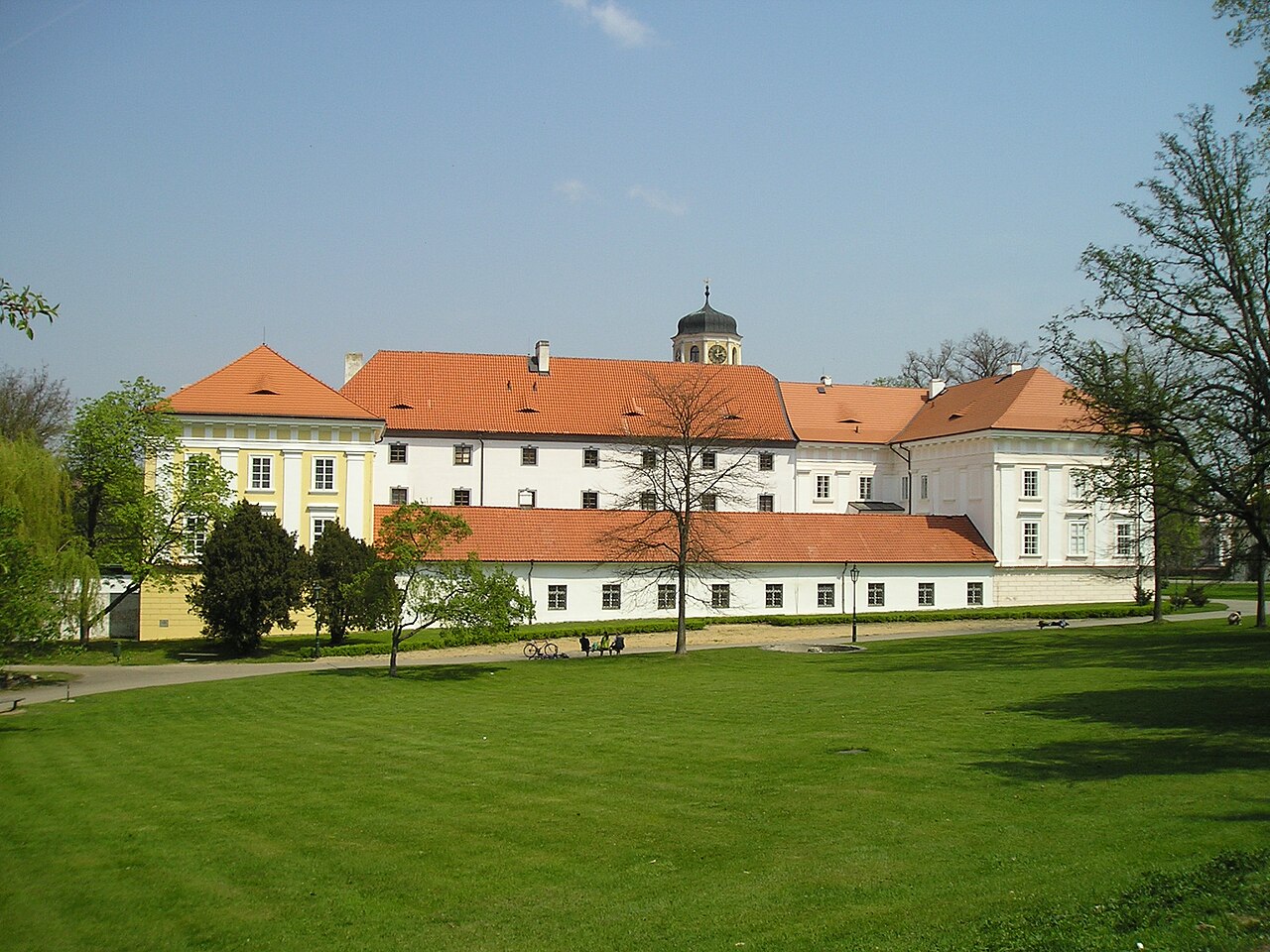
Photo by Marcus33 • CC BY 2.5
Baroque and neoclassical modifications under the auersperg family
The Auersperg princely family acquired Vlašim Castle in the 18th century and maintained ownership until 1945. Their tenure marked the most extensive remodeling phase, reshaping the castle in the neoclassical style that defines its current appearance. Key alterations included the addition of a new gate leading to an honorary courtyard and the installation of neo-Gothic gates after 1846. The Auerspergs also preserved significant interior features such as the 1771 chapel and a mid-19th century theatre adorned with original wall decorations.
The landscaped park and garden features
Adjacent to the castle lies a landscaped park established in 1775, one of the earliest English landscape parks in the region. Initially designed with geometric precision, the park was later transformed into a naturalistic style featuring winding paths, water features, and ornamental structures. Surviving elements include a Chinese pavilion, an artificial ruin, a statue of Samson, and grand pseudo-Gothic gates pointing towards the nearby villages of Znosín and Domašín. Although other original garden features such as a mosque, obelisk, grotto, and a small temple dedicated to Amor no longer exist, the park remains a vital component of Vlašim Castle's cultural landscape.
Historical significance and cultural heritage
Throughout its history, Vlašim Castle has served multiple roles—from a fortified medieval stronghold to a noble residence and cultural hub. The castle's association with prominent figures such as Jan Očko of Vlašim and the Auersperg family highlights its importance within the Bohemian aristocracy. Its architectural layers tell a story of adaptation and survival through centuries of political change, including the impacts of wars and social transformations.
Today, Vlašim Castle functions as a museum showcasing an extensive collection of original weapons, hunting trophies, historic costumes, and tools used by past inhabitants. The castle's halls and chambers host exhibitions that illuminate the region's history and the lifestyle of its noble residents. The castle tower offers panoramic views, serving as a vantage point that connects visitors with the surrounding landscape.
Architectural features and preservation
The castle's structure comprises four wings arranged around a central courtyard, with the north wing distinguished by its polygonal tower clock. The east wing, a Baroque addition, features pilaster façades and is located near the gate closing the honorary courtyard. The castle also includes outbuildings and a rectangular staircase extension supported by semi-columns. Despite numerous alterations, the preservation of the 1771 chapel and the mid-19th century theatre within the complex underscores the castle's architectural and historical value.
After a devastating fire in 1992 destroyed the southern wing, careful reconstruction was completed by 2005, ensuring the castle's continued use and preservation. Part of the southern wing now houses a vocational school, integrating educational functions within the historic setting.
Visitor experience and educational opportunities
Visitors to Vlašim Castle can explore its rich historical exhibitions, including displays of noble family coats of arms, taxidermy trophies, and engravings depicting the castle's park evolution. The surrounding park features a three-kilometer educational trail that highlights local historical monuments and natural heritage, making it an engaging destination for cultural tourism and outdoor activities.
The castle also serves as a venue for events such as weddings and chamber music concerts, utilizing its representative halls and atmospheric interiors. The Vlašimská Gate, one of the castle's original defensive gates, now functions as a regional art gallery, blending the site's historical architecture with contemporary cultural life.
Frequently asked questions (FAQ)
- How do I visit Vlašim Castle?
- Vlašim Castle is open to the public with guided tours available. Visitors can explore the castle's museum, chapel, and park. Check the official website for current opening hours and tour schedules.
- What architectural styles are present in Vlašim Castle?
- The castle showcases a blend of Gothic, Renaissance, Baroque, and Neoclassical architectural styles, reflecting its long history and various renovations.
- Can I see historical exhibits inside Vlašim Castle?
- Yes, the castle houses exhibitions of original weapons, hunting trophies, historic costumes, and tools used by previous owners, offering insight into its noble past.
- Is the park around Vlašim Castle accessible to visitors?
- The landscaped park is open to the public and features walking trails, ornamental structures like a Chinese pavilion, and historical monuments, ideal for leisurely exploration.
- What happened to Vlašim Castle during the 1992 fire?
- A fire in 1992 destroyed the southern wing of the castle, but it was carefully reconstructed by 2005, preserving the castle's historical integrity.
Photo gallery

Information
Website
Visit websiteLoading map...
Visitor reviews
No reviews yet. Be the first to share your experience!