
Vilafamés Castle
Vilafamés Castle stands as a commanding hilltop fortress in the town of Vilafamés, Spain, embodying centuries of layered history and architectural evolution. Its origins trace back to the era of Al-Andalus, when the site was initially fortified by the Muslim community known as Beni-Hamez. The castle’s strategic position atop a hill approximately 400 meters above sea level offers commanding views over the surrounding plains, underscoring its military importance throughout the Late Medieval period and beyond.
The castle’s most visible remains date primarily to the 14th century, a time when the Order of Montesa undertook significant strengthening and refurbishment of the fortress following the Christian reconquest under King Jaime I in 1233. This period marked the transformation of the site from its original Muslim fortifications into a robust medieval stronghold. Vilafamés Castle’s architecture vividly illustrates the transition from Islamic to Christian rule, with surviving elements such as the underground cistern reflecting its Muslim heritage, while the imposing curtain walls and towers demonstrate the medieval military engineering of the Christian era.
The historical evolution of Vilafamés Castle
Muslim origins and early fortifications
The earliest fortifications at Vilafamés were established during the period of Muslim rule on the Iberian Peninsula. The site was part of the territory controlled by the Beni-Hamez Arab community. Archaeological remains and historical records confirm that the castle’s foundations include structures dating from this Islamic period, including the essential cistern used for water storage during sieges. This cistern remains one of the few tangible links to the castle’s original Muslim fortifications.
Christian conquest and medieval strengthening
In 1233, King Jaime I of Aragon conquered the area, incorporating Vilafamés into the expanding Christian kingdom. Following this conquest, the castle underwent a series of repairs and enhancements to adapt to new military and administrative needs. The 14th century saw the Order of Montesa assume control, directing the fortification of the castle and the surrounding town. The castle’s walls were reinforced, and additional defensive features were added to withstand ongoing regional conflicts. The castle’s curtain walls and two rectangular towers, alongside the central circular tower, form a comprehensive defensive perimeter characteristic of Late Medieval military architecture.
19th-century Carlist Wars modifications
Vilafamés Castle’s military significance extended into the 19th century during the Carlist Wars, a series of civil conflicts in Spain. The castle was adapted to meet the demands of modern warfare, particularly the use of firearms. The central circular tower, or tower of homage, was modified with the addition of gun loopholes, replacing the earlier machicolated balconies designed for dropping projectiles on attackers. These changes make Vilafamés Castle a rare example of Carlist military architecture in the Region of Valencia. The castle’s current appearance largely reflects these 19th-century adaptations, blending medieval defensive features with innovations suited to the era’s evolving combat technology.
Architectural features and layout
Defensive walls and towers
The castle is enclosed by nearly intact curtain walls that follow the natural contours of the hill, creating a formidable defensive enclosure. The reddish stone used in construction contrasts strikingly with the whitewashed buildings of the village below, enhancing the castle’s visual prominence. The walls incorporate two rectangular towers in addition to the prominent central circular tower, providing overlapping fields of fire and strong defensive positions. The circular tower rises nearly to the height of the walls and is pierced by multiple windows and firing slits, offering panoramic views and strategic vantage points.
Residential and functional spaces
Within the castle walls lie residential quarters designed in a palatial style, facing the tower of homage. These chambers reflect the dual role of the castle as both a military fortress and a noble residence. The presence of a rectangular courtyard housing the underground cistern underscores the practical considerations of sustaining the castle’s inhabitants during sieges. The cistern remains a rare and valuable architectural feature linking the castle to its Muslim past.
Surrounding fortifications and town walls
A section of the old town’s defensive walls, known as La Sangre Church site, survives near the castle. These walls once formed the first line of defense for the settlement surrounding Vilafamés Castle. The church itself, built shortly after the Christian conquest by Jaime I, exhibits architectural features from various periods, reflecting the evolving religious and cultural landscape of the town.
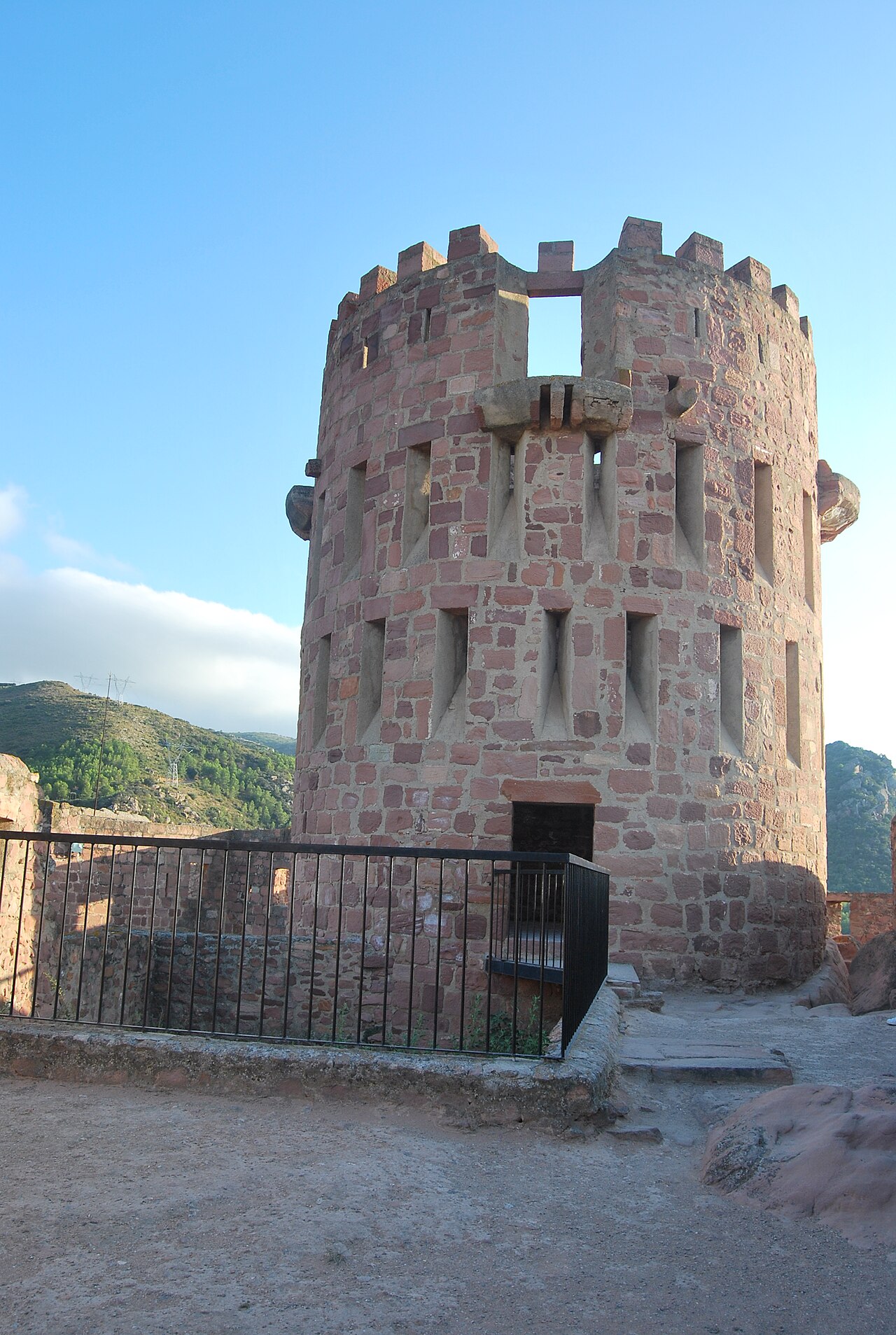
Photo by Mónica Talón • CC BY-SA 3.0 es
Vilafamés castle in cultural heritage and tourism
Recognized for its historical and architectural significance, Vilafamés Castle was declared a protected cultural heritage monument by the Spanish Ministry of Culture on September 20, 1994. This designation highlights the castle’s importance as a tangible witness to the region’s complex history, from Islamic governance through Christian reconquest to 19th-century military conflicts.
Today, the castle remains a popular destination for visitors interested in medieval architecture, military history, and cultural heritage. Its well-preserved walls, distinctive towers, and commanding hilltop location offer an immersive experience into Spain’s turbulent past. The castle’s layered history is reflected in its architecture, making it a valuable site for understanding the military, religious, and social transformations that shaped the Region of Valencia.
Visiting vilafamés castle and its surroundings
Visitors to Vilafamés Castle can explore the extensive defensive walls, the central circular tower with its unique Carlist-era adaptations, and the residential quarters within the enclosure. The castle’s elevated position provides spectacular views of the surrounding landscape, enhancing its appeal as a historic site. Nearby, the town of Vilafamés offers additional points of interest, including the La Sangre Church and remnants of the medieval town walls.
The castle’s preservation state, with largely intact walls and significant architectural elements, allows for an engaging and educational visit. Interpretive signage and guided tours often provide insights into the castle’s construction, historical phases, and role in regional conflicts. The site’s combination of military and residential architecture, alongside its visible traces of Muslim, Christian, and Carlist influences, makes it a unique example of Spanish castle heritage.
Frequently asked questions (FAQ)
- What is the historical significance of Vilafamés Castle?
- Vilafamés Castle, dating back to the 13th century, played a crucial role in the defense of the region during the Reconquista. It stands as a testament to the rich history of the area, showcasing the architectural styles and strategic importance of medieval fortifications in Spain.
- When was Vilafamés Castle built?
- The construction of Vilafamés Castle began in the late 13th century, around the year 1233, and it was completed in the subsequent decades. The castle has undergone various modifications throughout its history, reflecting the changing architectural trends and defensive needs of the time.
- Can I visit Vilafamés Castle year-round?
- Yes, Vilafamés Castle is open to visitors throughout the year, though specific hours may vary by season. It’s advisable to check the official website or local tourism information for the most accurate opening hours before planning your visit.
- What are the ticket prices for visiting Vilafamés Castle?
- Admission to Vilafamés Castle is typically free, making it an accessible destination for all visitors. However, guided tours may have a fee, so it’s best to inquire upon arrival or check online for any special events that might require tickets.
- Is it possible to access Vilafamés Castle with mobility aids?
- The castle has some uneven terrain and steep paths, which might pose challenges for visitors with mobility aids. While efforts have been made to improve accessibility, it’s recommended to plan ahead and contact local services for assistance if needed.
- What is the best time to visit Vilafamés Castle?
- The best time to visit Vilafamés Castle is during the spring and fall when the weather is mild and ideal for exploring. These seasons also avoid the peak tourist crowds of summer, allowing for a more enjoyable experience.
- Are there nearby attractions to Vilafamés Castle?
- Yes, there are several attractions near Vilafamés Castle, including the charming village of Villafamés itself, known for its picturesque streets and art galleries. Additionally, the surrounding natural parks offer beautiful hiking trails and stunning views of the landscape.
- What architectural features can I expect to see at Vilafamés Castle?
- Vilafamés Castle features a mix of Romanesque and Gothic architectural elements, including its impressive stone walls and towers. Visitors can explore the remnants of its defensive structures and enjoy panoramic views from its elevated position.
Photo gallery

Information
Loading map...
Visitor reviews
No reviews yet. Be the first to share your experience!