
Veľký Kamenec Castle
Veľký Kamenec Castle is a significant medieval fortress located in the village of Veľký Kamenec in present-day Slovakia. This hill castle was constructed in the aftermath of the Mongol invasion of Central Europe, a period that profoundly influenced the development of defensive architecture in the region during the late 13th and early 14th centuries. The castle's location atop a hill provided a strategic vantage point to oversee and protect the surrounding estate, which was vital for the local nobility's control and defense.
Early history and ownership
The earliest historical records associate the estate with Matthias of the Ratold family in 1283. Shortly thereafter, by 1288, the property passed to the Bokš family. The year 1323 marks the first documented mention of the castle itself, coinciding with the division of the Bokš family estate. This suggests that the castle was already established as a fortified residence by the early 14th century. Initially, the fortress likely centered around a main tower, serving both as a stronghold and a symbol of feudal authority.
Architectural evolution and military significance
During the 15th century, Veľký Kamenec Castle rose in military importance amid the turbulent political landscape of the region. By 1438, documentation confirms the existence of a tower, which formed the core of the defensive complex. The castle's design was adapted to meet the evolving demands of warfare, particularly with the introduction of rounded and polygonal bastions at its corners in the late 15th century. These bastions were advanced fortification features that allowed for better artillery placement and improved defensive coverage.
Role in regional conflicts
In 1451, the castle fell under the control of Ján Jiskra, a notable mercenary leader who used it as a base for launching raids across the surrounding territory. This period highlights the castle's strategic importance in regional power struggles. The castle was reclaimed by royal forces in 1458, the same year it hosted a peace treaty between Jiskra and Ján Hunyadi, a prominent Hungarian military commander. This event underscores Veľký Kamenec's dual role as both a military fortress and a diplomatic venue.
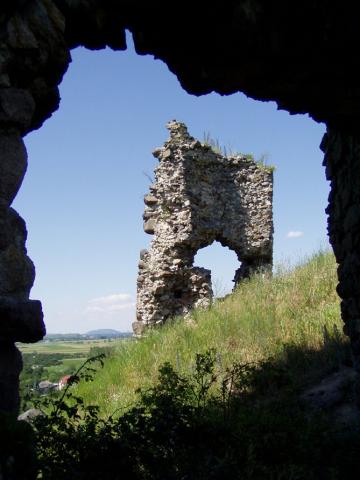
Photo by Civertan • CC BY 3.0
Later history and destruction
Following these events, the Soós family acquired the estate and undertook significant repairs and fortification enhancements in the late 15th century, reflecting the period's military architectural advancements. The castle remained an important noble residence and defensive site until the 17th century.
The vesselényi uprising and aftermath
During the Vesselényi uprising in the 17th century, a noble revolt against Habsburg rule, the castle's owner, Juraj Soós, actively participated in the rebellion. In response, imperial troops destroyed Veľký Kamenec Castle in 1672, ending its function as a military stronghold and noble residence. Since then, the castle has remained in ruins, preserving the memory of its turbulent past.
Architectural features and surviving remains
The castle was originally designed on a roughly triangular plan, conforming to the natural contours of the hilltop. At its heart was a main tower surrounded by defensive walls, typical of hill castles of the period. The late medieval modifications introduced rounded and polygonal bastions at the corners, reflecting the adaptation to gunpowder artillery warfare.
Defensive structures
Today, visitors can observe several preserved sections of the outer walls, including a polygonal corner bastion notable for its angular design. This bastion, along with connecting fortress walls, features openings for cannons and windows, indicating the castle's role in both defense and habitation. A heavily damaged round artillery bastion remains visible, further illustrating the castle's evolution to accommodate early modern military technology.
Additional features
The castle's ramparts extend down the slope to a nearby church, which is believed to have been part of the original complex, serving the religious needs of the castle's inhabitants and retainers. Within the former courtyard, a stone-carved cistern is clearly identifiable. This cistern was essential for collecting and storing water, ensuring the castle's sustainability during sieges or periods of isolation.
Cultural and historical significance
Veľký Kamenec Castle stands as a testament to the layered history of medieval fortification in Slovakia. Its remains offer valuable insights into the architectural adaptations necessitated by changing military technologies and political conditions from the late medieval period through the early modern era. The castle's involvement in significant historical events, such as the conflicts involving Ján Jiskra and the Vesselényi uprising, highlights its importance as both a military and political center.
Today, the ruins of Veľký Kamenec Castle attract historians, architects, and visitors interested in medieval history and fortification architecture. The site exemplifies the transition from traditional tower-centered castles to more complex fortresses incorporating bastions designed for artillery defense. Its preservation, though partial, allows for the study and appreciation of these developments within the broader context of Central European castle architecture.
Frequently asked questions (FAQ)
- What is the historical significance of Veľký Kamenec Castle?
- Veľký Kamenec Castle dates back to the late 13th century and played a crucial role in the defense against invasions in the region. Its strategic location made it a vital stronghold during various conflicts throughout history, particularly during the Ottoman wars.
- When was Veľký Kamenec Castle built?
- The construction of Veľký Kamenec Castle began in the late 1200s, with various additions and modifications made over the centuries. The castle has witnessed many architectural changes, reflecting the styles and needs of different periods.
- Can I visit Veľký Kamenec Castle?
- Yes, Veľký Kamenec Castle is open to visitors, allowing you to explore its rich history and stunning architecture. Guided tours are often available, providing insights into the castle's past and its significance in Slovak history.
- What are the opening hours for Veľký Kamenec Castle?
- The opening hours for Veľký Kamenec Castle vary by season, with extended hours during the summer months. It is advisable to check the official website or local tourist information for the most current visiting times before planning your trip.
- Is it possible to access Veľký Kamenec Castle with mobility issues?
- While Veľký Kamenec Castle has some paths and areas that are accessible, the terrain can be challenging due to its historical construction. Visitors with mobility concerns should contact the castle management in advance for information on accessibility options and assistance.
- When is the best time to visit Veľký Kamenec Castle?
- The best time to visit Veľký Kamenec Castle is during the late spring and early autumn when the weather is mild and pleasant. Additionally, visiting during these times allows you to enjoy the surrounding natural beauty and the vibrant colors of the landscape.
- What are the ticket prices for Veľký Kamenec Castle?
- Ticket prices for Veľký Kamenec Castle are generally affordable, with discounts available for children, students, and seniors. It's recommended to check the official website for the latest pricing information and any special promotions that may be offered.
- Are there any nearby attractions to explore while visiting Veľký Kamenec Castle?
- Yes, there are several nearby attractions, including beautiful hiking trails and other historical sites that reflect the rich cultural heritage of the region. You can also find charming local villages and museums that provide further insights into Slovak history and traditions.
Photo gallery

Information
Loading map...
Visitor reviews
No reviews yet. Be the first to share your experience!