
Ōuchi-shi Yakata
Ōuchi-shi Yakata (大内氏館) served as the fortified residence and administrative center of the prominent Ōuchi clan during the Muromachi period through the Sengoku period in Japan. Located in Yamaguchi Prefecture, this site was a significant political and military base for the clan, who were powerful feudal lords controlling large parts of western Japan. The ruins of Ōuchi-shi Yakata have been preserved as a National Historic Site, reflecting its cultural and historical importance.
The Ōuchi clan and their fortified residence
The Ōuchi clan rose to prominence in the 14th century and maintained influence until the mid-16th century. They were known for their extensive trade connections, including with China and Korea, which brought wealth and cultural exchange to their domain. The clan’s residence, Ōuchi-shi Yakata, functioned not only as a home but also as a center of governance and military command.
The fortified residence was strategically positioned in Yamaguchi, which was then part of the Suō Province. It was designed primarily as a manor house with defensive features rather than a full-scale castle, reflecting the architectural style of samurai residences of the period. The complex likely included living quarters, administrative buildings, gardens, and defensive walls.
Architectural features and defensive limitations
Unlike large mountaintop castles, Ōuchi-shi Yakata was a lowland-style fortified residence that relied on moats, earthen walls, and wooden palisades for defense. Its layout was typical of the fortified manors of the Muromachi era, emphasizing residential comfort and administrative functions over heavy fortification.
Due to its relatively weak defensive capabilities, the Ōuchi clan constructed Kōnomine Castle in 1556 as a supporting fortress. Kōnomine Castle was built on higher ground to better withstand sieges and to serve as a military stronghold protecting the clan’s interests in the region.
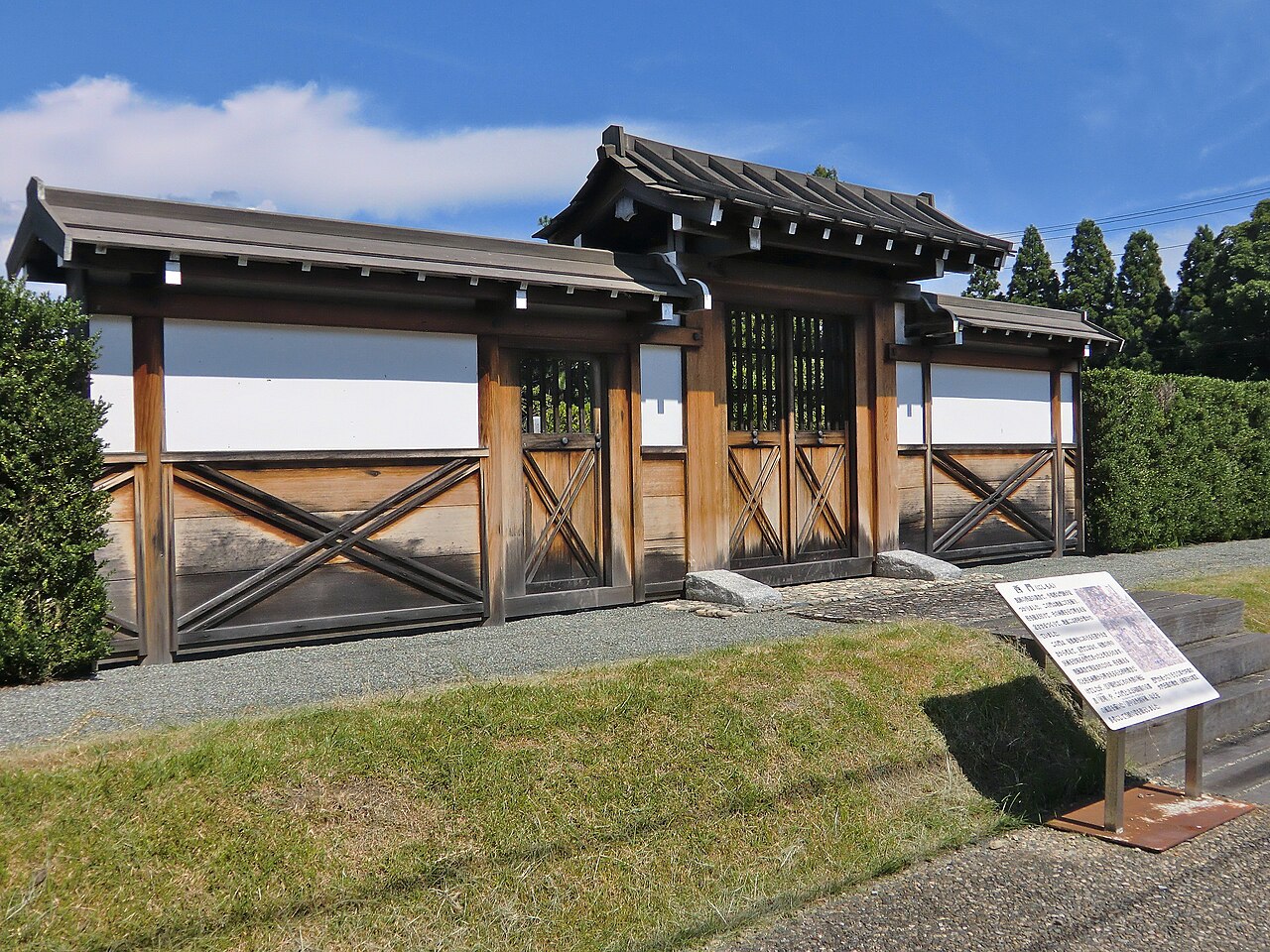
Photo by TT mk2 • CC BY-SA 3.0
The fall of Ōuchi-shi Yakata and historical significance
In the mid-16th century, the Ōuchi clan faced increasing pressure from rival clans, most notably the Mōri clan. When Mōri Motonari advanced into Suō Province, Ōuchi Yoshinaga abandoned both Ōuchi-shi Yakata and Kōnomine Castle without resistance, marking the decline of the Ōuchi clan’s power.
Despite its abandonment, the site remains an important archaeological and historical location. The ruins provide valuable insights into the lifestyle and governance of a powerful samurai clan during a turbulent period in Japanese history.
Preservation and cultural recognition
Today, Ōuchi-shi Yakata is preserved as archaeological ruins and is protected by the Japanese government as a National Historic Site. The site is often visited by those interested in Japanese history and castle architecture, offering a glimpse into feudal Japan’s political and military landscape.
In 2017, Ōuchi-shi Yakata was included in the Continued Top 100 Japanese Castles list, recognizing its historical importance despite the absence of standing structures. The nearby Ryōun-ji temple is also part of the historic designation, highlighting the cultural context of the site.
Frequently asked questions (FAQ)
- When was Ōuchi-shi Yakata primarily used by the Ōuchi clan?
- Ōuchi-shi Yakata was primarily used during the Muromachi period through the Sengoku period, roughly from the 14th to the mid-16th century.
- Why was Kōnomine Castle built near Ōuchi-shi Yakata?
- Kōnomine Castle was constructed in 1556 as a supporting fortress because Ōuchi-shi Yakata was considered unsuitable for withstanding a siege.
- What happened to Ōuchi-shi Yakata during the Mōri clan's advance?
- When Mōri Motonari's army advanced into Suō Province, Ōuchi Yoshinaga abandoned Ōuchi-shi Yakata and Kōnomine Castle without resistance, leading to the clan's decline.
- Is Ōuchi-shi Yakata accessible to visitors today?
- Yes, the ruins of Ōuchi-shi Yakata are accessible to the public and are preserved as a National Historic Site, attracting visitors interested in Japanese feudal history.
- What architectural style characterizes Ōuchi-shi Yakata?
- Ōuchi-shi Yakata was a lowland fortified residence typical of the Muromachi period, emphasizing administrative and residential functions over heavy fortification.
Photo gallery

Information
Loading map...
Visitor reviews
No reviews yet. Be the first to share your experience!