
Trikāta Castle ruins
Trikāta Castle ruins are a significant medieval archaeological site located in Latvia. Constructed in the 13th century, the castle was originally built during the high medieval period, a time characterized by the expansion of fortified structures across Europe. Though now in ruins, the site provides valuable insights into the defensive architecture and regional history of medieval Latvia.
Historical context and significance
The Trikāta Castle was established in the 13th century, a period when the area was influenced by the Livonian Order, a branch of the Teutonic Knights. This military and religious order played a crucial role in the Christianization and colonization of the Baltic region. The castle served as a strategic military stronghold and administrative center in the region, controlling important routes and overseeing local settlements.
Throughout its history, the castle witnessed various conflicts typical of the Baltic medieval frontier, including skirmishes and sieges linked to the Livonian Wars and regional power struggles. Its location was chosen for defensive advantages, likely on elevated terrain, which was typical for fortifications intended to secure territorial control and provide refuge.
Architectural features and layout
As a high medieval hill castle, Trikāta Castle was designed primarily for defense. The remains suggest typical features such as thick stone walls, remnants of towers, and defensive ditches or moats. The castle's layout would have included a central courtyard surrounded by living quarters, storage buildings, and chapels, although much of this is now lost to time.
The ruins indicate the use of local stone materials and medieval construction techniques, with walls built to withstand sieges and attacks. Defensive elements such as battlements and arrow slits would have been integral to the castle's design, allowing defenders to repel invaders effectively.
Defensive structures
The castle's defensive system likely included a gatehouse, curtain walls, and towers positioned to cover all approaches. These towers served both as lookout points and strongholds where defenders could concentrate their resistance. The strategic placement of the castle on a hill enhanced visibility and made direct assaults difficult.
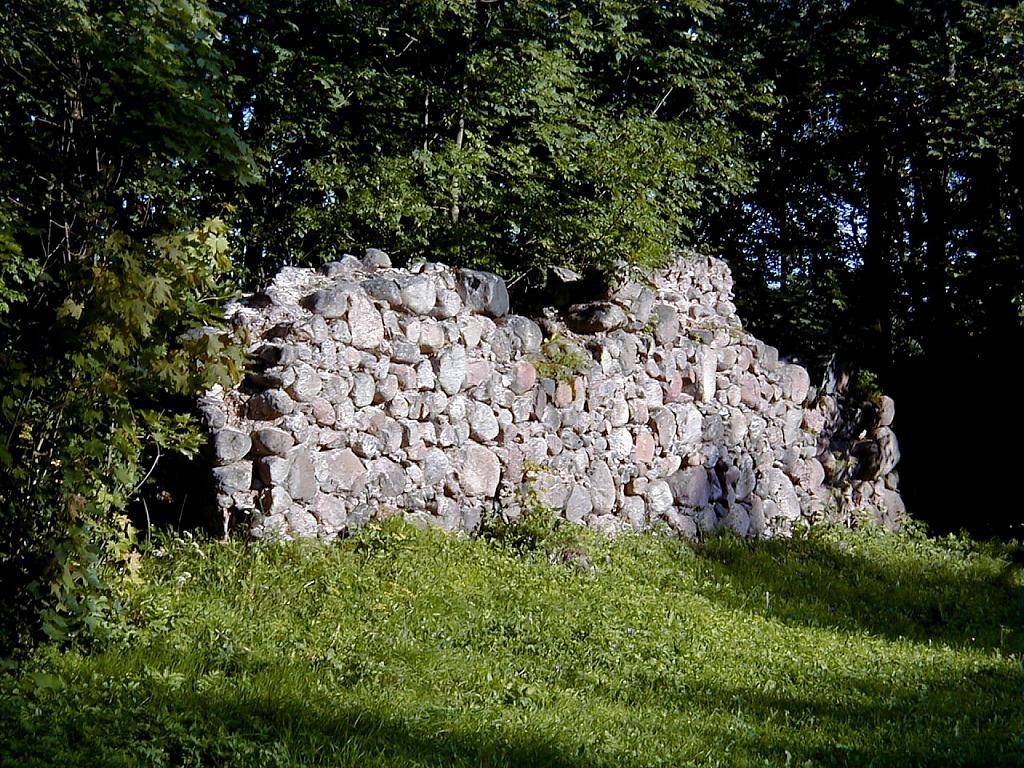
Photo by J. Sedols • CC BY 3.0
Decline and current condition
Over the centuries, Trikāta Castle fell into disuse and was eventually abandoned, likely due to changes in military technology and political shifts in the region. Today, it exists as archaeological ruins, with only fragments of the original structure visible. The site is important for archaeological study, revealing details about medieval fortification methods and local history.
Visitors to the ruins can observe the remaining stone foundations and partial walls, which evoke the castle's former strength. Preservation efforts focus on stabilizing the ruins to prevent further decay while allowing public access for educational and cultural purposes.
Visiting the trikāta castle ruins
The ruins of Trikāta Castle are accessible to the public and offer a glimpse into Latvia's medieval past. The site is typically open year-round, though there may be limited facilities on-site. Visitors interested in medieval architecture and Baltic history find the ruins a compelling destination for exploration and study.
Nearby attractions
The castle's location in the Vidzeme region places it near other historical sites and natural landmarks, making it suitable for combined cultural and outdoor excursions. Exploring the surrounding countryside provides additional context to the castle's strategic importance and the medieval landscape.
Archaeological importance and research
Ongoing archaeological investigations at Trikāta Castle contribute to understanding the Livonian Order's influence and the broader medieval history of Latvia. Excavations have uncovered artifacts and structural remains that help reconstruct the castle's original appearance and function.
These studies also shed light on the daily lives of the castle's inhabitants, including military personnel, administrators, and possibly clergy. The site remains a valuable resource for scholars and historians specializing in Baltic medieval fortifications.
Frequently asked questions (FAQ)
- When was Trikāta Castle built?
- Trikāta Castle was built in the 13th century during the high medieval period, reflecting typical medieval fortification styles of that era.
- What remains can visitors see at Trikāta Castle ruins?
- Visitors can see the stone foundations, partial walls, and remnants of defensive structures such as towers and curtain walls that highlight its medieval military architecture.
- Is Trikāta Castle accessible to the public?
- Yes, the ruins are accessible to the public year-round, allowing visitors to explore the site and learn about Latvia's medieval history.
- What was the strategic importance of Trikāta Castle?
- The castle was strategically located on a hill to control important routes and oversee the surrounding region, serving as a military and administrative center for the Livonian Order.
- Are there archaeological studies ongoing at the site?
- Yes, archaeological excavations continue to uncover artifacts and structural details that provide insights into the castle's history and the lives of its medieval inhabitants.
Photo gallery

Information
Loading map...
Visitor reviews
No reviews yet. Be the first to share your experience!