
Terezín
Terezín, also known by its German name Theresienstadt, is a historically significant fortress town located in the Ústí nad Labem Region of the Czech Republic. Founded in 1780 during the post-Renaissance period, it was designed as a bastioned fortress to serve as a strategic military stronghold on the Ohře River. The fortress comprises a well-planned citadel and an adjacent walled garrison town, both of which are remarkably well preserved today. The urban layout and defensive structures reflect advanced military architectural principles of the 18th century, emphasizing the bastion system that allowed for effective defense against artillery attacks.
Historical background and strategic importance
The construction of Terezín fortress was initiated by the Habsburg monarchy under the reign of Emperor Joseph II. Its primary purpose was to strengthen the northern defenses of the empire against potential Prussian incursions. The fortress was strategically positioned at the confluence of important trade and military routes, making it a critical point for controlling movements in the region. Its bastioned design, featuring angled walls and protruding bastions, provided overlapping fields of fire, a hallmark of military engineering in the 18th century.
Throughout its history, Terezín served various military functions, including as a garrison town housing soldiers and officers. The fortress's robust walls, ramparts, and moats were designed to withstand sieges and artillery bombardment, reflecting the evolving nature of warfare during the post-Renaissance era.
Architectural features and fortress layout
The fortress is characterized by its extensive bastioned fortifications, which include multiple bastions, curtain walls, and defensive ditches. The citadel forms the core of the fortress, surrounded by the fortified town that was built to support the military presence. The town itself is enclosed by walls with gates that controlled access and provided security.
Inside the fortress, the urban plan follows a geometric layout typical of military towns of the period, with streets arranged in a grid pattern. The buildings within the fortress served both military and civilian purposes, including barracks, officers' quarters, administrative offices, and supply depots. The preservation of these structures allows visitors to gain insight into the daily life of a fortress town in the 18th and 19th centuries.
Bastions and defensive works
The bastions are the most prominent features of Terezín's fortifications. Their angular design minimized blind spots and maximized defensive coverage. The walls were constructed using stone and brick, with earthen ramparts behind them to absorb artillery fire. The fortress also included moats and glacis, which added layers of defense against attackers.
Gates and access points
Terezín's gates were heavily fortified and often featured guardhouses and drawbridges. These controlled entry points were critical for security and for regulating the flow of troops and supplies. The gates also served as symbolic entrances, often decorated to reflect the fortress's importance.
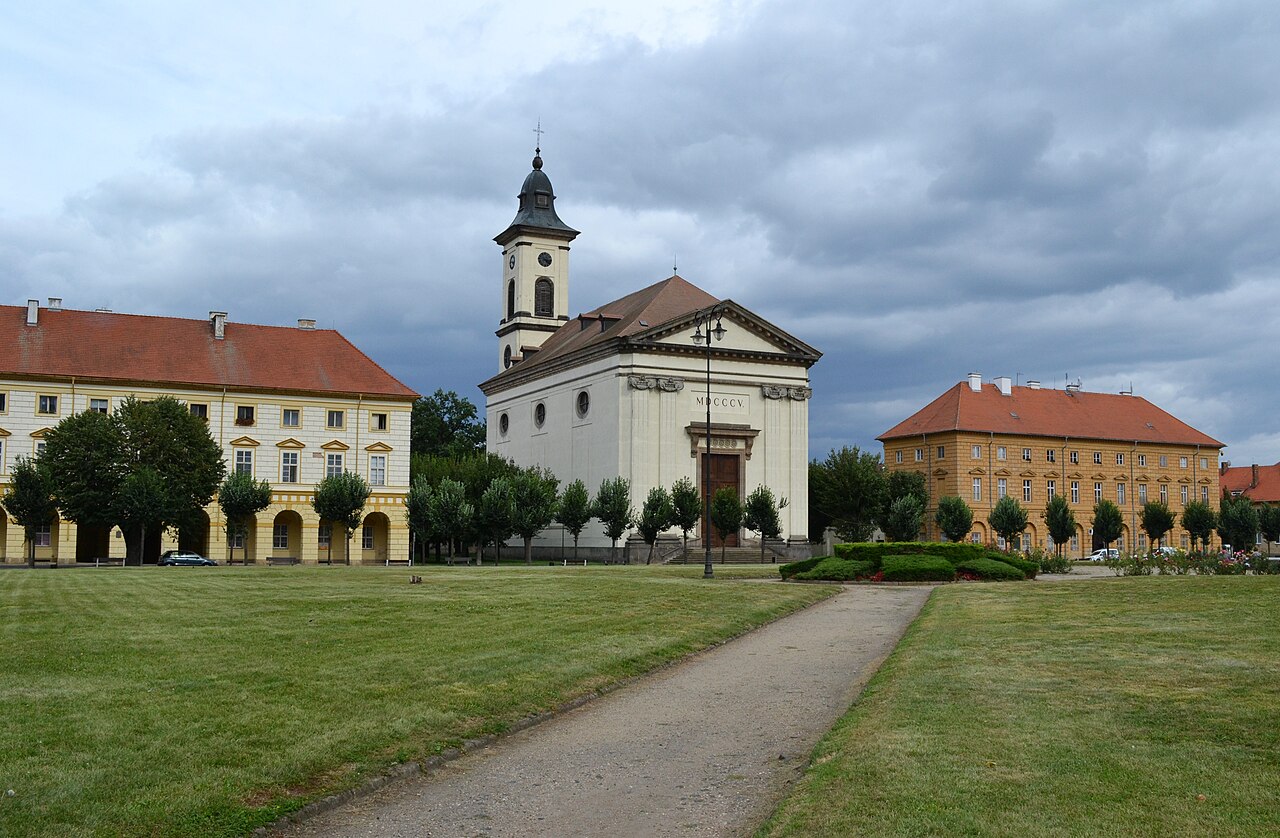
Photo by RomanM82 • CC BY-SA 4.0
Terezín during world war ii
During World War II, Terezín gained infamy as the site of the Theresienstadt Ghetto, a Nazi concentration camp and ghetto established in the fortress town. The Nazis used the fortress's existing structures to imprison and deport thousands of Jews from Czechoslovakia and other parts of Europe. The ghetto was presented by the Nazis as a "model Jewish settlement" in propaganda, but in reality, it was a place of severe deprivation, forced labor, and deportations to extermination camps.
The historical significance of Terezín is deeply tied to this tragic chapter, and the fortress now serves as a memorial and museum dedicated to the victims of the Holocaust. Visitors can explore the preserved fortifications alongside exhibitions that document the history of the ghetto and the broader context of Nazi persecution.
Preservation and cultural importance
Terezín is protected as an urban monument reservation, recognizing the value of its well-preserved military architecture and its role in European history. The fortress town's preservation allows for educational and commemorative activities, drawing visitors interested in military history, architecture, and Holocaust remembrance.
The site includes museums, memorials, and guided tours that highlight both the fortress's architectural features and its complex history. The combination of military heritage and human tragedy makes Terezín a unique location for understanding the intersections of history, architecture, and memory.
Frequently asked questions (FAQ)
- What is the historical significance of Terezín?
- Terezín, originally built as a fortress in the late 18th century, is most known for its role during World War II as a ghetto for Jewish people before their deportation to concentration camps. It was also a place of cultural activity, where many artists, writers, and musicians were imprisoned. Today, Terezín serves as a memorial to the victims of the Holocaust and a site for education about this dark chapter in history.
- When was Terezín constructed?
- Construction of Terezín began in 1780 under the orders of Emperor Joseph II, and it was designed to serve as a military fortress. The fortress was completed in 1790, and over the years, it evolved to play various roles, including that of a garrison town and later a Jewish ghetto during the Nazi regime.
- Can I visit Terezín and what are the opening hours?
- Yes, Terezín is open to visitors, and you can explore its historical sites, including the Small Fortress and the Ghetto Museum. The typical opening hours are from 9 AM to 5 PM, but it’s always a good idea to check the official website for any seasonal changes or special events.
- Is Terezín accessible for visitors with mobility issues?
- Terezín has made efforts to improve accessibility for visitors with mobility challenges, including ramps and designated paths. However, some areas, especially within the fortress and museum, may still present challenges due to historical architecture. It is advisable to contact the visitor center in advance to inquire about specific accommodations.
- What are the ticket prices for visiting Terezín?
- Ticket prices for Terezín vary depending on the sites you wish to visit. As of now, a standard ticket for the Ghetto Museum is around 100 CZK, while combined tickets for multiple sites can range higher. Discounts are often available for students and seniors, so be sure to bring necessary identification.
- When is the best time to visit Terezín?
- The best time to visit Terezín is during the spring and early autumn when the weather is mild, making it pleasant for outdoor exploration. Additionally, these seasons tend to attract fewer tourists, allowing for a more reflective experience. Summer can be crowded, while winter may pose challenges due to weather conditions.
- What nearby attractions can I explore while visiting Terezín?
- While visiting Terezín, you can also explore the nearby city of Litoměřice, known for its beautiful historic architecture and charming old town. Additionally, the Bohemian Paradise National Park is within driving distance, offering stunning landscapes and hiking opportunities. Both locations provide enriching cultural and natural experiences to complement your visit to Terezín.
Photo gallery

Information
Loading map...
Visitor reviews
No reviews yet. Be the first to share your experience!