
Templštejn Castle
Templštejn castle stands as a remarkable example of a medieval hill castle in the Czech Republic, located near the village of Templštejn-Moravský Krumlov. Established in the late 13th century by the Knights Templar, this fortress served as a crucial commandery seat, replacing their earlier base at Gomolitz. The castle's origins are closely tied to the religious military order's expansion in the Bohemian and Moravian lands, authorized by King Wenceslaus I in 1232. Construction of the castle took place between 1281 and 1298, reflecting the strategic and administrative importance of the site during the High Medieval period.
The castle's foundation marked the consolidation of Templar holdings in the region, overseeing extensive estates including villages such as Ober-Dubin, Unter-Dubin, and Tokkowan. The first documented mention of the commandery is dated July 16, 1298, underscoring its early significance. Following the suppression of the Knights Templar in 1312, Templštejn passed through several noble families, including the Schellenbergs, the Lords of Leipa, and the Osovský family. The Lords of Leipa notably expanded and renovated the castle, enhancing its defensive capabilities and residential quarters.
Architectural features and defensive design
Perched atop a forested rocky promontory rising over 100 meters above the Jihlava River valley, Templštejn exemplifies the spur castle typology. Its original core measured approximately 40 by 30 meters, enclosed by a robust circular curtain wall reinforced with a prominent pillar near the main entrance. This design reflects medieval English architectural influences, adapted to local stone materials.
The castle's defensive system was augmented with a partially double ring of fortifications, designed to provide layered protection against assaults. Remnants of the palas (the main residential building), sections of the curtain wall, and the main gate ruins remain visible today. The courtyard contains a deep accumulation of rubble, marking the collapse of masonry over centuries.
Significant features include the vestiges of a Gothic chapel, indicating the castle's religious functions during its active use, and a well that ensured a reliable internal water supply. Outside the main enclosure lies the ruin of a later-added high gable wall intended to shield the fortress from artillery fire, a testament to early modern military adaptations, although this addition was never completed.
Historical events and ownership transitions
Templštejn castle was never conquered by enemy forces but suffered severe damage from a fire in the first half of the 16th century. Archaeological evidence of charred masonry confirms the destructive blaze. Reconstruction efforts commenced around 1552 but were soon abandoned, leading to the castle's gradual decline into ruin.
After the confiscations following the Battle of White Mountain in 1621, the castle became the property of the Liechtenstein family, who retained ownership until 1908. Subsequently, the Kinsky family held the site until 1945. Over these centuries, the castle saw little preservation, accelerating its deterioration.
Since 2011, Templštejn has been privately owned by David Hamza, who has dedicated efforts to preserve the ruins using traditional materials and techniques. Starting in 2014, infrastructural improvements such as a wooden cabin, informative displays, and a viewing staircase were installed to enhance visitor experience. Archaeological rescue excavations led by Mgr. Miroslav Dejmal began in 2017, significantly advancing knowledge of the castle's medieval defensive systems and architectural fabric.
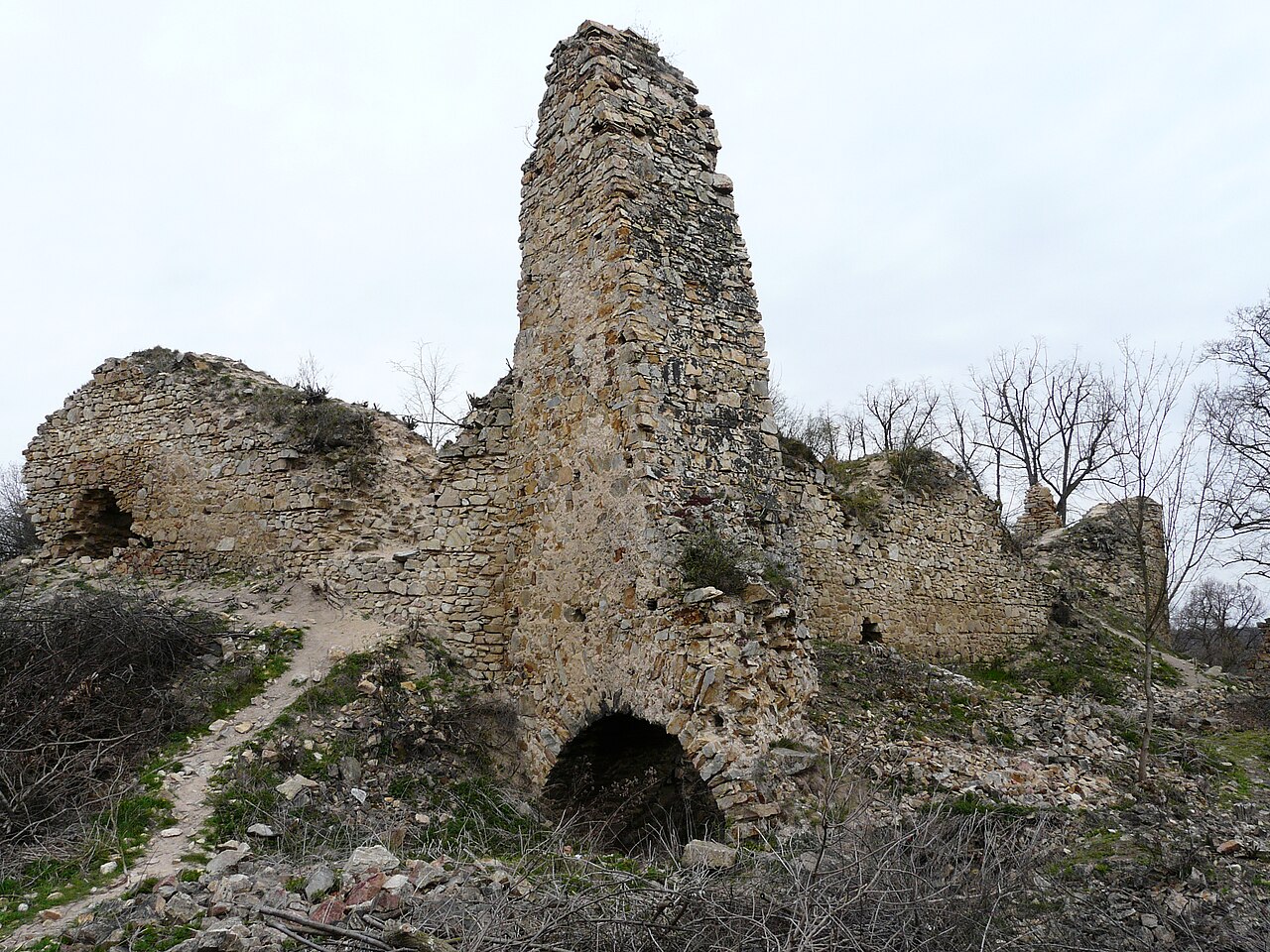
Photo by Delfínka • Public domain
Conservation and archaeological significance
Recognized as a cultural monument since 1958, Templštejn has received restoration awards, notably in 2016, for conservation efforts. The site has undergone clearing of overgrown vegetation that threatened the stonework, stabilization of precarious structures such as the gable wall, and installation of stone steps to improve access. Wooden bridges now connect parts of the curtain wall to the palace ruins, facilitating exploration.
Surrounding the castle are visible earthworks and defensive ditches that form ramparts still discernible in the landscape. Prior to recent excavations, no extensive archaeological investigations had been conducted, making the ongoing work crucial to understanding the castle's historical context and architectural evolution.
Templštejn castle remains an important site for studying medieval fortifications, the legacy of the Knights Templar in Central Europe, and the transition of military architecture from the medieval to early modern periods. Its combination of Gothic elements, strategic location, and layered defensive structures make it a significant heritage site in Czechia.
Frequently asked questions (FAQ)
- How do I get to Templštejn castle from Moravský Krumlov?
- Templštejn castle is located near Moravský Krumlov in the South Moravian region. Visitors can reach the castle by car or local hiking trails from the village of Templštejn-Moravský Krumlov. The castle sits atop a forested hill, so comfortable walking shoes are recommended for the ascent.
- What is the historical significance of Templštejn castle?
- Templštejn castle was founded by the Knights Templar in the late 13th century and served as their central commandery in the region. It played a key role in managing extensive estates and reflects medieval military and religious architecture. The castle's history spans ownership by prominent noble families and its survival through significant events like the Battle of White Mountain.
- Can I visit the ruins of Templštejn castle year-round?
- The castle ruins are accessible year-round, but visiting conditions vary with weather due to the castle's hilltop location. Spring to autumn offers the best experience with clearer paths and better visibility. Winter visits require caution as the terrain can be slippery and challenging.
- Are there guided tours available at Templštejn castle?
- Currently, Templštejn castle is primarily a ruin with limited visitor infrastructure. While there are informative displays on-site, guided tours are not regularly offered. Visitors can explore the site independently and benefit from the educational materials provided.
- What architectural features remain visible at Templštejn castle?
- Visitors can see the remains of the circular curtain wall, the palas, the main gate, a Gothic chapel, and a well within the courtyard. The partially double ring of fortifications and a later-added high gable wall ruin are also notable features reflecting the castle's defensive design.
Photo gallery

Photo by Delfínka•Public domain
Information
Website
Visit websiteLoading map...
Visitor reviews
No reviews yet. Be the first to share your experience!