
Sárvár Castle
Sárvár Castle, located in the town of Sárvár, Hungary, stands as a remarkable example of a Renaissance water castle with a rich history dating back to the 13th century. Originally constructed as a medieval fortress, it evolved through centuries of architectural transformations and noble ownership, becoming a significant cultural and military stronghold in Hungarian history.
The castle's earliest recorded mention is from 1288, with its initial structure centered around a three-storey dwelling tower in the southwest corner and a single-storey northern wing. Over time, the fortress was expanded and fortified, especially during the 15th century under the Kanizsai family, who added a three-storey residential wing and enhanced its defenses in the Gothic style. The lower level of the present gate-tower also dates to this period.
Architectural evolution and defensive features
By the beginning of the 16th century, the castle had developed a large, enclosed courtyard surrounded by earth ramparts and wooden palisades, reflecting medieval defensive strategies. Between 1534 and 1671, the castle was owned by the influential Nádasdy family, who transformed it extensively in the Renaissance style. This period saw the construction of the castle's current form, including the addition of Old Italian style bastions between 1588 and 1615, designed to withstand the evolving threats of artillery warfare, particularly from the Ottoman Empire.
The castle's defensive system originally included five angular bastions and a broad moat, characteristic of Renaissance military architecture inspired by Italian fortifications. Although the moat was drained in the 19th century to create a landscaped park, the bastions remain a defining feature of the fortress's silhouette.
The Nádasdy family and cultural significance
The castle is closely associated with the Nádasdy family, especially Ferenc Nádasdy, known as the "Black Knight" of Hungary, who used the castle as a base for campaigns against the Ottoman Turks in the late 16th century. His marriage to the infamous Elizabeth Báthory adds a layer of dark legend to the castle's history, as she was imprisoned here after accusations of heinous crimes.
During the 17th century, the castle became the administrative center of the Nádasdy estates under Ferenc III Nádasdy. He commissioned the construction of a grand ceremonial hall, completed in 1653, richly decorated with monumental ceiling frescoes by Hans Rudolf Müller that depict the family's military victories. The hall's walls feature scenes from the Old Testament painted by István Dorfmeister in 1769, blending oil and fresco techniques to create a unique artistic ensemble.
Inside the ceremonial hall, visitors can admire two elaborately decorated double-door cabinet wardrobes originally from the Ocskay family, showcasing intricate marble inlays and gilded details that reflect the refined interior tastes of the Hungarian nobility.
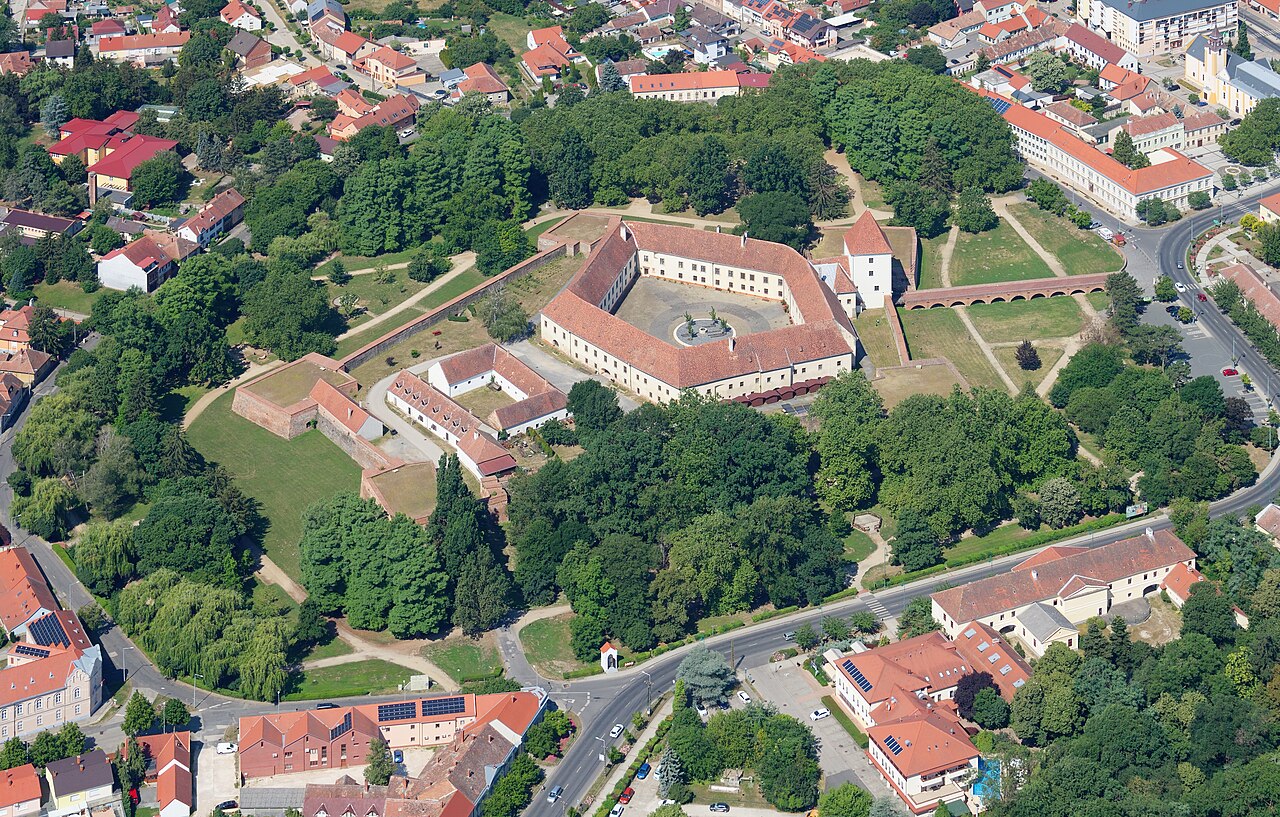
Photo by Carsten Steger • CC BY-SA 4.0
Later history and preservation
Following the Nádasdy era, the castle passed through various noble hands, including the Archduke Ferdinand Estei in the early 19th century, who initiated renovations that introduced Classicist architectural elements. These changes included filling in the castle moat and building corridors along the upper levels of the eastern wing, allowing visitors to circumnavigate the castle's interior.
In 1875, the castle became property of the Wittelsbach family, who maintained it until the mid-20th century. During World War II, it served as a retreat for Prince Albert of Bavaria. Post-war, the castle was nationalized and repurposed for residential and educational uses before restoration efforts began in the 1960s.
Archaeological excavations since 1962 have uncovered multiple layers of the castle's construction phases, revealing its complex history from medieval origins through Renaissance and Baroque periods. Today, Sárvár Castle stands as one of Hungary's most complete historical fortresses, offering visitors a glimpse into the architectural and cultural heritage of the region.
Architectural highlights and visitor experience
Defensive bastions and fortifications
The castle's five bastions, built in the Old Italian Renaissance style, are among its most striking features. These angular bastions were designed to provide overlapping fields of fire, a revolutionary concept in military architecture of the time, enhancing the castle's ability to resist sieges and artillery attacks.
Interior decoration and ceremonial hall
The Great Hall remains a highlight for visitors, with its 1653 ceiling frescoes celebrating the Nádasdy family's military exploits. The combination of Baroque artistic elements with Renaissance structural design creates a richly layered aesthetic experience. The Old Testament wall paintings add a spiritual dimension, reflecting the religious and cultural values of the Hungarian nobility during the 18th century.
Surrounding landscape and moat transformation
Originally encircled by a water-filled moat, the castle's defensive perimeter was transformed in the 19th century when the moat was drained and converted into a park. This change reflects broader shifts in castle function from military fortress to noble residence and cultural monument. The landscaped grounds today offer a peaceful setting that contrasts with the castle's martial past.
Historical significance in Hungarian culture
Sárvár Castle played a pivotal role in the development of Hungarian culture and printing. It was here that the first Hungarian book, the New Testament of 1541, was printed, marking a milestone in the spread of literature and literacy in Hungary. The castle's association with the Nádasdy family, one of Hungary's most influential noble houses, further cements its place in the nation's history.
The castle also witnessed numerous historical events, including noble conspiracies, Ottoman wars, and shifts in political power through the centuries. Its survival and preservation offer valuable insights into the evolution of Hungarian fortifications and noble residences from the medieval period through the Renaissance and beyond.
Today, Sárvár Castle functions as a museum and cultural venue, attracting visitors interested in history, architecture, and art. Its well-preserved bastions, frescoes, and noble chambers provide a tangible connection to Hungary's rich past and the legacy of the families who shaped it.
Frequently asked questions (FAQ)
- When was Sárvár Castle originally built?
- Sárvár Castle was originally built in the 13th century, with the first written mention dating back to 1288.
- What architectural styles are represented in Sárvár Castle?
- The castle features a blend of Gothic, Renaissance, Baroque, and Classicist architectural styles, reflecting its development from the 13th to the 19th centuries.
- Who were the notable historical figures associated with Sárvár Castle?
- Notable figures include Ferenc Nádasdy, known as the Black Knight of Hungary, and Elizabeth Báthory, who resided there before her imprisonment.
- Can visitors see the original defensive bastions?
- Yes, the castle's five Renaissance-style bastions are well preserved and remain a prominent feature of the fortress.
- Is the castle open to the public and are there guided tours?
- Sárvár Castle operates as a museum open to visitors, offering guided tours that explore its history, architecture, and art collections.
Photo gallery

Information
Loading map...
Visitor reviews
No reviews yet. Be the first to share your experience!