
São Sebastião Museum
São Sebastião Museum is located in the city of São Tomé, the capital of São Tomé and Príncipe, and is housed within a 16th-century bastioned fortress originally constructed for defensive purposes. The fortress stands at the southeastern end of Ana Chaves Bay, in the northeastern part of the city center, strategically positioned to guard the port and city from maritime threats during the colonial period.
Historical background and construction
The fortress was built in 1566 by the Portuguese colonial administration as part of their efforts to secure their overseas territories and protect vital trading routes along the Gulf of Guinea. It was designed as a bastioned fortress, a style that reflects the military architectural innovations of the Renaissance period, emphasizing angled bastions to deflect cannon fire and provide overlapping fields of defense.
This defensive structure played a crucial role in safeguarding São Tomé from frequent pirate attacks and potential invasions, which were common threats during the 16th and 17th centuries. The fortress's robust stone walls and bastions allowed defenders to mount artillery and repel attackers effectively.
Architectural features and modifications
The fortress exhibits typical characteristics of Renaissance military architecture adapted to the tropical climate and local conditions. Its bastions are positioned to cover all approaches by sea, with thick walls constructed from local stone and lime mortar. The layout includes a central courtyard, surrounded by barracks, storage rooms, and defensive positions.
In 1866, a lighthouse was established within the fortress to aid navigation in Ana Chaves Bay, reflecting the continued strategic importance of the site. This lighthouse was later rebuilt in 1928, incorporating modern lighting technology of the time.
The fortress underwent significant restoration in the late 1950s, which helped preserve its structural integrity and adapt the space for its new role as a museum.
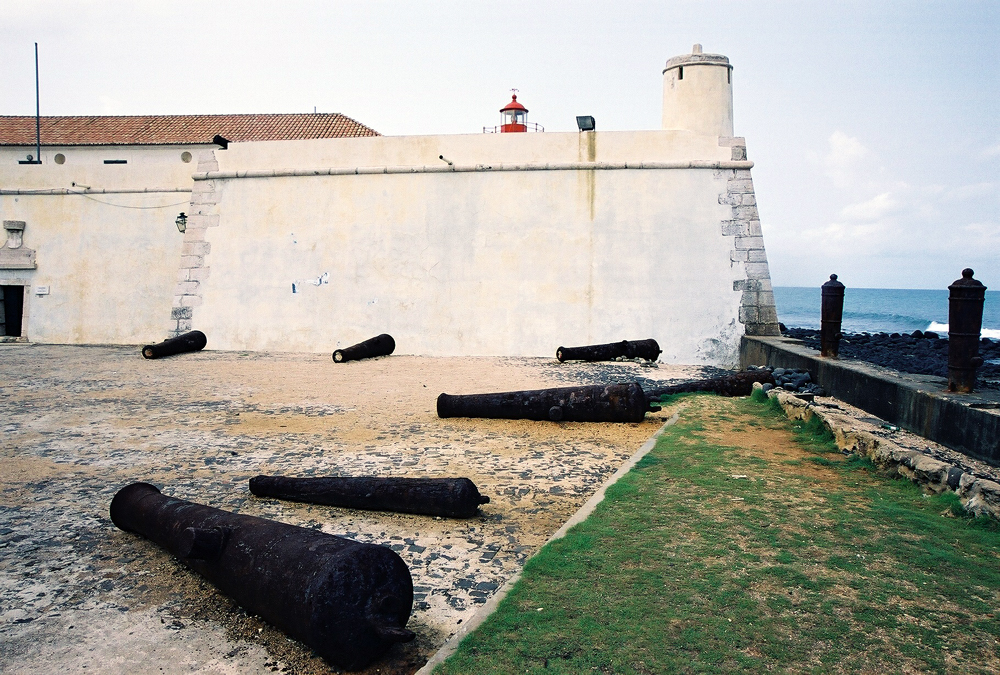
Photo by No machine-readable author provided. Kotoviski assumed (based on copyright claims). • CC BY-SA 3.0
São Sebastião Museum: collections and cultural significance
Today, the fortress serves as the São Sebastião Museum, showcasing an extensive collection of religious art and colonial-era artifacts. The museum's exhibits provide insight into the island's complex history, including the Portuguese colonial period, the transatlantic slave trade, and the cultural interactions between Europe and Africa.
The museum's religious art collection includes sculptures, paintings, and liturgical objects that reflect the influence of the Catholic Church during the colonial era. These pieces illustrate the blend of European artistic traditions with local cultural elements.
In addition to art, the museum houses historical artifacts such as weapons, navigational instruments, and everyday items used by the island's inhabitants over several centuries. These exhibits contribute to understanding the social, economic, and political history of São Tomé and Príncipe.
Visiting São Sebastião Museum
The museum is accessible to visitors interested in history, architecture, and cultural heritage. Its location near the city center and the bay makes it a convenient destination for tourists. The fortress's well-preserved bastions and walls offer a tangible connection to the island's colonial past and maritime defenses.
Visitors can explore the fortress's architectural features, including its bastions, ramparts, and the lighthouse, while learning about the historical context through the museum's exhibits. The site provides a unique opportunity to experience a Renaissance-era military structure adapted to an African island setting.
Preservation and legacy
As a restored bastioned fortress, São Sebastião Museum stands as a significant cultural landmark in São Tomé and Príncipe. It reflects the island's colonial history and the architectural responses to military threats in the early modern period. The museum plays an important role in preserving and interpreting the heritage of the region for both locals and visitors.
Frequently asked questions (FAQ)
- How do I get to the São Sebastião Museum?
- The São Sebastião Museum is located in São Tomé, the capital city of São Tomé and Príncipe. You can reach the museum by taking a taxi or walking from the city center, as it is easily accessible and well-signposted.
- What is the historical significance of the São Sebastião Museum?
- The São Sebastião Museum is housed in a 16th-century fort, which played a crucial role in the island's colonial history. It showcases artifacts and exhibits that highlight the cultural heritage and history of São Tomé and Príncipe.
- When was the São Sebastião Museum established?
- The museum was officially established in 1995, although the fort itself dates back to 1575. Since its opening, it has served as a vital institution for preserving and presenting the history of the islands.
- Can I take photographs inside the museum?
- Yes, visitors are generally allowed to take photographs inside the São Sebastião Museum, but it is advisable to check for any specific restrictions upon arrival. Capturing the exhibits and the stunning architecture is a great way to remember your visit.
- Why is the architecture of the São Sebastião Museum noteworthy?
- The architecture of the São Sebastião Museum reflects a combination of Portuguese colonial and military design, exemplifying the strategic importance of the fort during its time. The structure's robust walls and unique layout provide insight into the defensive strategies employed during the colonial era.
- Is it possible to visit the museum with children?
- Absolutely, the São Sebastião Museum is family-friendly and offers engaging exhibits that can be enjoyed by visitors of all ages. The historical context and cultural displays can be both educational and entertaining for children.
- What are the opening hours of the São Sebastião Museum?
- The São Sebastião Museum is typically open from Tuesday to Sunday, with visiting hours from 9 AM to 5 PM. It is closed on Mondays, so plan your visit accordingly to ensure you have enough time to explore the exhibits.
- What are the ticket prices for the museum?
- Entrance to the São Sebastião Museum is affordably priced, with tickets generally costing around 2 to 5 USD. This nominal fee contributes to the preservation of the museum and its collections, making it an economical choice for visitors.
- When is the best time to visit the São Sebastião Museum?
- The best time to visit the museum is during the dry season, which runs from June to September, as the weather is typically more pleasant. Visiting during these months also allows you to enjoy other outdoor attractions in São Tomé and Príncipe.
- Are there any nearby attractions to explore after visiting the museum?
- Yes, after visiting the São Sebastião Museum, you can explore the nearby historic city center of São Tomé, including the churches and colonial buildings. Additionally, the picturesque coastline and local markets offer great opportunities for further exploration and cultural immersion.
Photo gallery

Photo by No machine-readable author provided. Kotoviski assumed (based on copyright claims).•CC BY-SA 3.0
Information
Loading map...
Visitor reviews
No reviews yet. Be the first to share your experience!