
Šostýn Castle
Šostýn castle is a significant medieval fortress located in the municipality of Kopřivnice in the Moravian region of the Czech Republic. Established in the late 13th century, this hill castle was strategically positioned on a prominent elevation at 442 meters above sea level, overseeing the surrounding landscape. The castle's origins trace back to the noble counts of Hückeswagen, who settled in Moravia during the early 1200s. Construction likely occurred between 1280 and 1290, with some historical sources suggesting a date near 1293, situating Šostýn firmly within the high medieval period.
The castle first appears in written records in 1347, identified as the property of Jan VII. Volek, the bishop of Olomouc and an illegitimate son of King Václav II. This connection highlights the castle's importance within the regional power structures of medieval Moravia. Throughout the late 13th to early 15th centuries, Šostýn served as a feudal stronghold, frequently changing hands among notable noble families such as the Vikštejn and Lamberk clans. Its role extended beyond a mere residence, acting as a fortified base during the turbulent territorial disputes characteristic of the era.
Historical significance and conflicts
Šostýn castle was a focal point in the complex feudal conflicts of Moravia. It was involved in the power struggles between the Moravian margraves Jošt and Prokop Lucemburský, illustrating its strategic and political value. In 1404, the castle was attacked by knights under the command of King Władysław II Jagiełło of Poland. This assault was reportedly a response to complaints about robberies by Polish nobles who had taken refuge within Šostýn's walls, underscoring the castle's role as a contested stronghold in cross-border disputes.
The early 15th century saw Šostýn embroiled in prolonged legal battles and violent clashes between rival noble families, particularly the factions of Záviš z Vikštejna and the Lamberk family. Around 1420, the fortress was captured and destroyed by forces loyal to Bishop Jan XII. Železný amid these ongoing conflicts. The castle's decline accelerated during the Hussite Wars, a period of religious and social upheaval in Bohemia and Moravia, leading to its abandonment by approximately 1426.
By the mid-15th century, Šostýn had lost its strategic relevance as nearby towns like Frenštát rose in prominence. In 1467, Bishop Tas of Boskovice officially reported the castle as ruined and beyond repair, marking the end of its active use as a fortress.
Architectural features and layout
Šostýn castle's ruins occupy a hill approximately 1.5 kilometers southeast of Kopřivnice's town center, on the western slope of Piaskownia hill. The site's topography includes steep inclines on the southwest and west sides, providing natural defensive advantages. The northern and eastern slopes are gentler, connected by an earthwork embankment to a plateau featuring a pond, indicating careful planning for water access and defense.
The castle was primarily constructed from stone, a common material for fortifications of its era, ensuring durability and strength. Among the most prominent surviving elements are the foundations of the bergfried, the main tower that served as the castle's last line of defense and lookout point. Adjacent to this are the partially reconstructed vaulted cellars of the castle's palace, showcasing the use of medieval stone vaulting techniques that provided both structural support and fire resistance.
Remnants of the entrance buildings remain, indicating controlled access points designed to protect against invaders. The surrounding landscape was modified with earthworks and rock cuttings to enhance defensive capabilities, illustrating the integration of natural terrain with man-made fortifications. These features reflect the castle's role as a fortified residence and military stronghold.
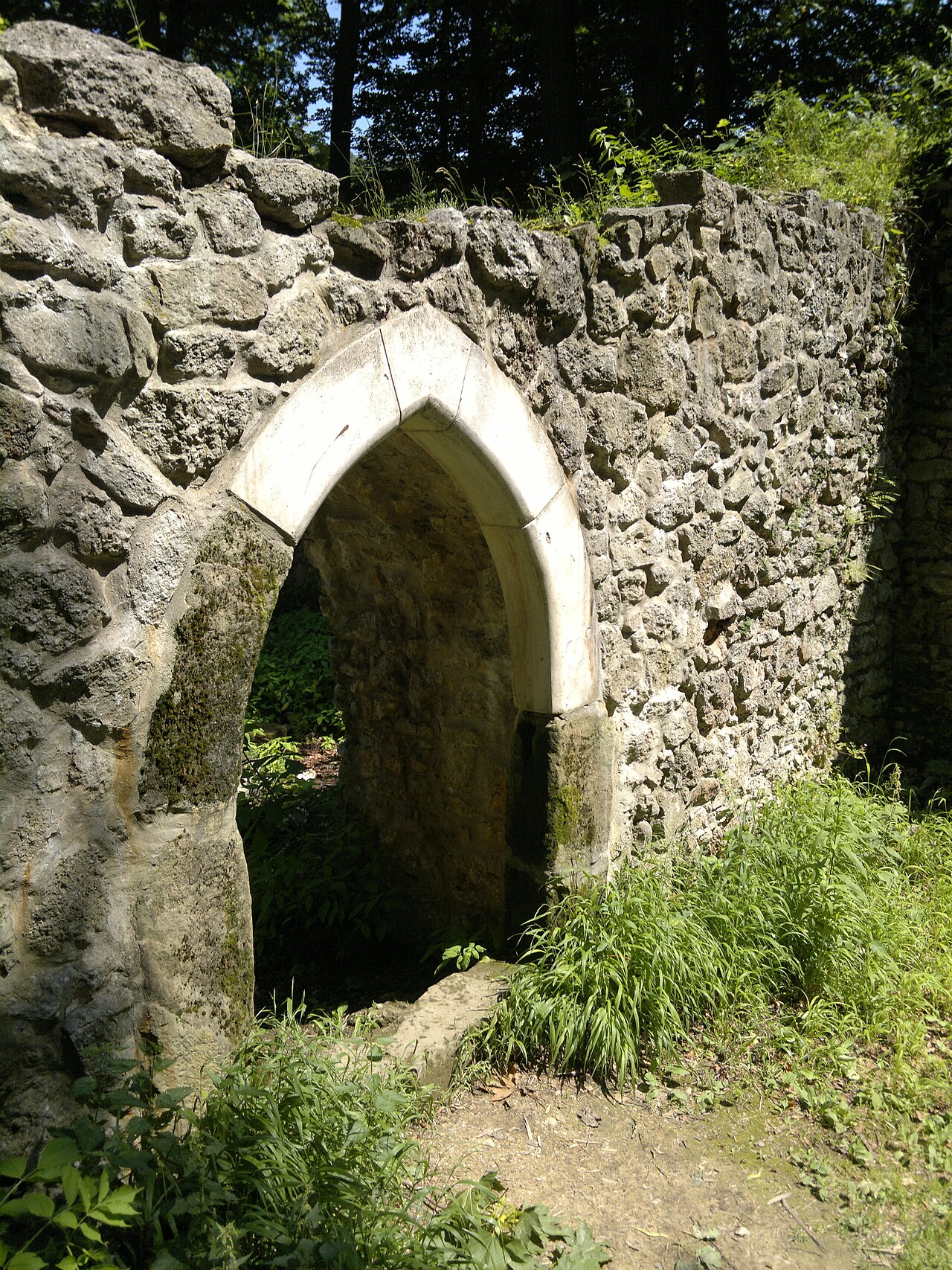
Photo by Tedmek • CC BY-SA 3.0
Later history and archaeological significance
Following its abandonment, Šostýn castle fell into ruin. Starting in 1814, local entrepreneur Ignác Raška undertook systematic dismantling of the ruins to repurpose the stone for his pottery business. This activity continued through the mid-19th century, significantly reducing the visible remains.
After World War II, ownership of the site transferred to the state in 1945, leading to increased efforts to preserve what remained. Archaeological excavations have uncovered important artifacts, including the notable Venus of Šostýn, a small ivory figurine that adds cultural depth to the site's historical narrative. These findings contribute to understanding the castle's long-term occupation and the broader medieval context of the region.
Today, the ruins of Šostýn castle are accessible to the public, offering visitors a glimpse into medieval fortification architecture and regional history. The preserved foundations and cellars allow for appreciation of the castle's original scale and defensive design. As a hill castle with rich historical associations, Šostýn remains a valuable cultural heritage site within Moravia.
Frequently asked questions (FAQ)
- What is the historical significance of Šostýn Castle?
- Šostýn Castle, built in the 13th century, is a remarkable example of medieval architecture in Czechia. It served as a defensive fortress and a noble residence, playing a crucial role in the region's history during the Middle Ages.
- When was Šostýn Castle built?
- Šostýn Castle was constructed in the mid-13th century, around 1250. Its strategic location and robust design made it an important stronghold throughout its history.
- Can I visit Šostýn Castle year-round?
- Yes, Šostýn Castle is open to visitors throughout the year, but specific opening hours may vary by season. It's advisable to check the official website for the most current visiting information before planning your trip.
- What are the opening hours of Šostýn Castle?
- Typically, Šostýn Castle is open from 9 AM to 5 PM during the peak season, which runs from April to October. During the off-season, hours may be shortened, so be sure to verify ahead of your visit.
- Is Šostýn Castle accessible for visitors with mobility challenges?
- Access to Šostýn Castle can be challenging due to its historical structure and terrain. However, staff can assist with some accommodations, so it's recommended to contact them in advance if you have specific needs.
- What is the best time to visit Šostýn Castle?
- The best time to visit Šostýn Castle is during the spring and early autumn months when the weather is mild, and the surrounding landscape is vibrant. This timing allows for pleasant exploration of the castle grounds and nearby hiking trails.
- Can I purchase tickets online for Šostýn Castle?
- Yes, tickets for Šostýn Castle can typically be purchased online through the official website. This is a convenient option to avoid long queues and ensure your visit during peak tourist seasons.
- Are there any nearby attractions to visit along with Šostýn Castle?
- Yes, visitors to Šostýn Castle can also explore the beautiful town of Kopřivnice, which is known for its automotive history and the nearby Technical Museum. Other attractions include scenic hiking paths and panoramic views of the surrounding countryside.
- What are the ticket prices for Šostýn Castle?
- Ticket prices for Šostýn Castle vary depending on age and group size, with discounts available for students and seniors. It's best to check the official website for the latest pricing details before your visit.
Photo gallery

Information
Website
Visit websiteLoading map...
Visitor reviews
No reviews yet. Be the first to share your experience!