
Üngüzek Castle
Üngüzek Castle, also known locally as Üngüzek Kalesi, is a striking medieval fortress located near the town of Uzundere in the Erzurum province of Turkey. Perched on a very steep cliff overlooking the Tortum river and the main road connecting Erzurum to Artvin, the castle commands a strategic vantage point that highlights its historical military significance. The castle's dramatic setting on the edge of a cliff offers expansive views of the surrounding landscape, emphasizing its role in defense and surveillance during its active use.
The castle is known by several names, including Dikyar Kalesi and Aǧcakale, reflecting its proximity to the nearby Dikyar village and local naming variations. A road sign near the site refers to it as Engüzekkapi Kalesi, although this name is less commonly documented. These multiple names indicate a layered local history and the castle's importance in regional identity.
Historical context and uncertain origins
The precise origins of Üngüzek Castle remain unclear due to limited historical records. It is generally believed to have been constructed during the Middle Ages, possibly by Turkish beys who controlled the region. However, some theories suggest Byzantine or Genoese involvement in its construction, reflecting the complex political and military dynamics of northeastern Anatolia during the medieval period. This uncertainty highlights the castle's position at a crossroads of cultures and powers.
Architectural features and layout
Üngüzek Castle is classified as a bastioned fortress, a type of fortification characterized by projecting bastions designed to improve defensive capabilities by allowing enfilading fire along the walls. The fortress structure integrates naturally with the cliff's rugged terrain, enhancing its defensibility. The castle's walls and bastions are built to conform to the cliff face, making it a formidable stronghold against potential attackers.
Unique north side structure
One of the most distinctive architectural elements of Üngüzek Castle is a peculiar structure on its north side resembling a beehive attached to the cliff wall. This feature is interpreted as a covered staircase descending from the castle's summit nearly halfway down the cliff. Its design suggests it was intended to provide safe and concealed access to a freshwater stream at the cliff's base, essential for the castle's inhabitants during sieges or prolonged occupation.
Interior remains and facilities
Inside the castle, there are reported remains of a shrine, a bakery, and a bath, indicating that the fortress was not only a military installation but also supported daily life and religious practices. These features reflect the self-sufficiency expected of a medieval fortress designed to withstand sieges. Access to these interior areas is challenging due to the castle's precarious location and the difficult terrain, which has limited detailed archaeological exploration.
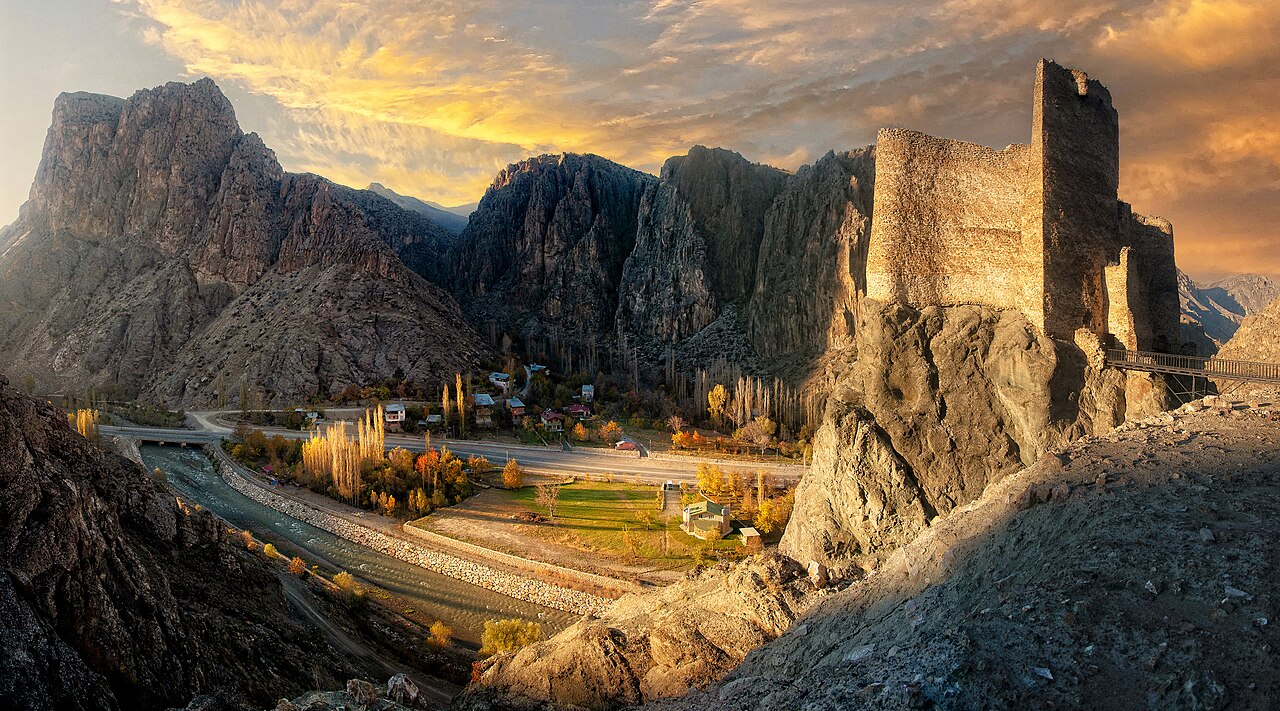
Photo by Arif miletli • CC BY-SA 4.0
Access and current condition
Üngüzek Castle is situated in a remote and rugged area, requiring visitors to hike approximately 20 minutes uphill over loose gravel and through dense shrubs to reach its base. The steepness of the cliff and the challenging terrain contribute to the castle's excellent preservation by limiting human interference. The fortress is currently in a partially preserved state, with many of its defensive structures still visible but some areas inaccessible due to natural erosion and safety concerns.
Significance and cultural heritage
While Üngüzek Castle lacks extensive historical documentation, its architectural features and strategic placement underscore its importance in the defense systems of medieval northeastern Anatolia. The fortress represents the complex interactions between various powers, including Turkish beys, Byzantines, and possibly Genoese merchants or military forces. Its preservation offers valuable insights into medieval military architecture adapted to challenging landscapes.
Üngüzek Castle remains a fascinating destination for historians, archaeologists, and adventurous visitors interested in medieval fortifications and the rich cultural tapestry of the Erzurum region. Its unique structures and commanding location continue to draw attention despite the limited accessibility and sparse historical records.
Frequently asked questions (FAQ)
- How do I reach Üngüzek Castle from Erzurum?
- Üngüzek Castle is accessible by traveling south from Erzurum towards Artvin via the main road near the Tortum river. From the town of Uzundere, a 20-minute hike uphill over loose gravel and shrubs leads to the castle's base.
- What is the historical significance of Üngüzek Castle?
- Üngüzek Castle served as a medieval bastioned fortress with strategic importance due to its location on a steep cliff overlooking key routes. It reflects the military architecture and regional power struggles of northeastern Anatolia in the Middle Ages.
- Is it possible to explore the interior of Üngüzek Castle?
- Exploring the castle's interior is challenging due to the steep cliff and difficult terrain. Some remains of a shrine, bakery, and bath exist, but accessing them requires caution and climbing skills, as there are no safe, established paths.
- What unique architectural features does Üngüzek Castle have?
- The castle features a distinctive beehive-like covered staircase on its north side, providing secure access down the cliff to a freshwater stream. This is an unusual adaptation to its cliffside location enhancing its defensive capabilities.
- When was Üngüzek Castle likely built?
- While the exact construction date is unknown, Üngüzek Castle was most probably built during the late medieval period, possibly by Turkish beys, with some theories suggesting Byzantine or Genoese origins.
Photo gallery

Information
Loading map...
Visitor reviews
No reviews yet. Be the first to share your experience!