
Fort Tigné
Fort Tigné (Maltese: Il-Forti Tigné or Il-Fortizza ta' Tigné) is a significant bastioned fortress located on Tigné Point in Sliema, Malta. Constructed between 1793 and 1795 by the Order of Saint John, it was designed to protect the strategic entrance to Marsamxett Harbour. Fort Tigné is notable for being one of the earliest examples of a polygonal fort in the world, marking a transition in military architecture from traditional bastioned designs to more modern fortification concepts.
Historical context and strategic importance
During the late 18th century, the Order of Saint John recognized the need to strengthen Malta's coastal defenses in response to evolving military threats and artillery technology. The location at Tigné Point was critical as it guarded one of the main entrances to the harbors of Malta, alongside Fort Manoel and Fort Saint Elmo. Fort Tigné's construction was part of a broader effort to modernize the island's fortifications amid increasing European conflicts.
Architectural design and innovations
The fort's design is a compact, polygonal shape, differing from the traditional star-shaped bastioned forts common in earlier centuries. This polygonal layout allowed for better angles of fire and reduced blind spots, reflecting advancements in military engineering. The fort features thick limestone walls, low-profile ramparts, and a glacis designed to absorb and deflect cannon fire. Its bastions and curved curtain walls were optimized for defense against both naval and land attacks.
Inside, Fort Tigné contained barracks, magazines, and gun emplacements arranged efficiently within its limited footprint. The fort's compact size was innovative, allowing a smaller garrison to defend a critical point effectively.
British modifications and military use
After the British took control of Malta in the early 19th century, Fort Tigné underwent several modifications to adapt to new artillery technologies and military requirements. The British enhanced the fort's gun emplacements and added new defensive features, ensuring it remained a key part of Malta's coastal defense network. The fort continued to serve military purposes until 1979, after which it was decommissioned.
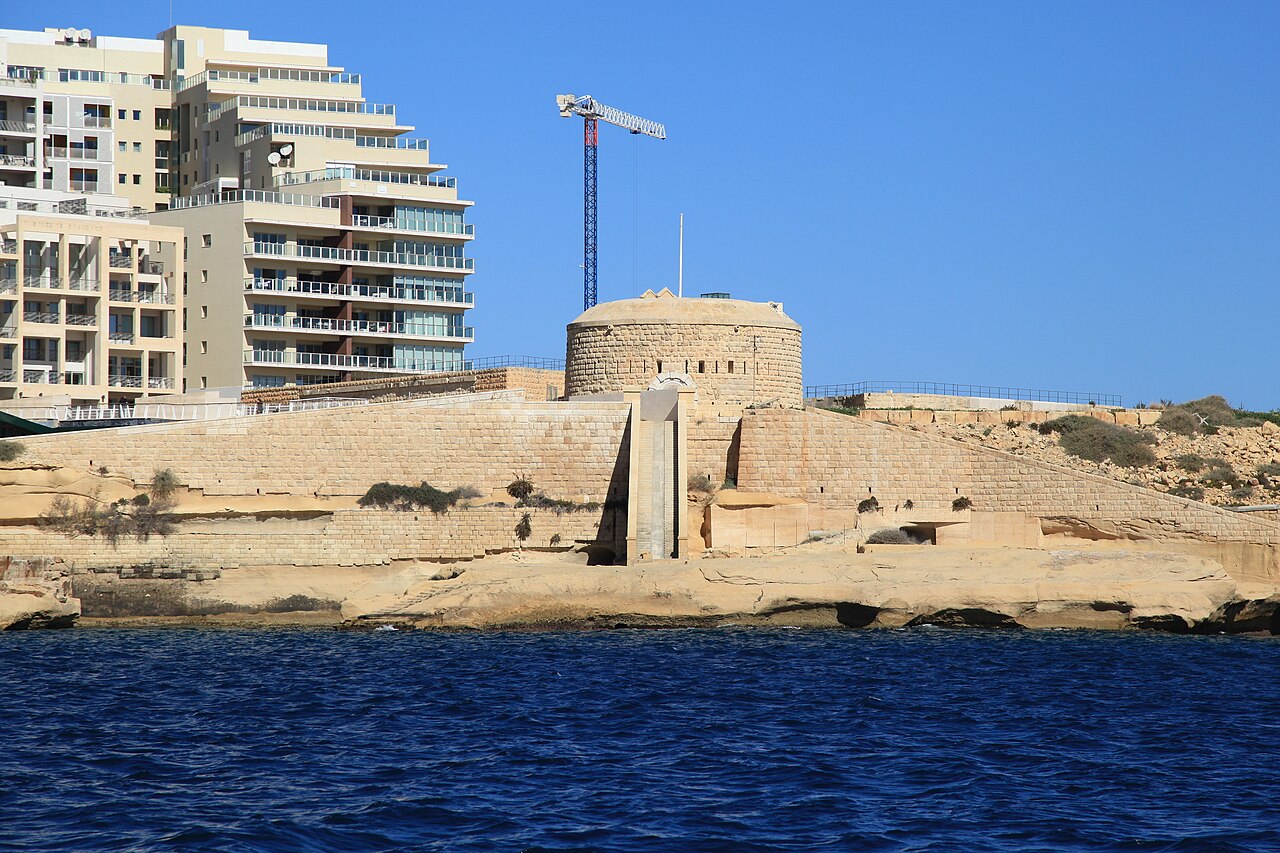
Photo by Frank Vincentz • CC BY-SA 3.0
Restoration and current status
In the early 21st century, Fort Tigné underwent extensive restoration to preserve its historical and architectural significance. Today, it stands in well-preserved condition, showcasing the evolution of fortification design from the late post-Renaissance period. The fort is part of Malta's tentative list for UNESCO World Heritage Sites under the grouping "Knights' Fortifications around the Harbours of Malta," reflecting its cultural and historical importance.
Visitors to Fort Tigné can explore its ramparts, bastions, and interior spaces, gaining insight into the military architecture of the late 18th century and the strategic role Malta played in Mediterranean defense.
Architectural features and military technology
The fort's polygonal design was pioneering for its time, moving away from the angled bastions of earlier fortresses towards a more streamlined shape that minimized vulnerable points. Its thick limestone walls were constructed to withstand cannon bombardment, and the fort included multiple gun ports for artillery placement.
Fort Tigné's glacis — a gently sloping embankment — was designed to expose attacking forces to defensive fire while protecting the walls from direct hits. The fort's compact layout allowed for efficient communication and movement within the garrison, critical during engagements.
Comparison with contemporary forts
Compared to other fortifications of the late 18th century, Fort Tigné's design reflected emerging military engineering trends seen across Europe. Its polygonal style influenced later fort designs, particularly in how forts adapted to the increasing power and range of artillery.
Legacy and cultural significance
Fort Tigné represents a key moment in the history of military architecture, bridging the gap between traditional bastioned fortresses and the polygonal forts that became standard in the 19th century. Its preservation allows historians and visitors to study these transitional design features firsthand.
The fort also symbolizes Malta's strategic importance in the Mediterranean and the island's layered history under the Knights of St John and British rule. As part of the collective fortifications around Malta's harbors, Fort Tigné contributes to understanding the island's defense system that shaped regional geopolitics.
Frequently asked questions (FAQ)
- How do I get to Fort Tigné?
- Fort Tigné is located in Sliema, Malta, and is easily accessible by public transport. You can take a bus to Sliema and then walk to the fort, or opt for a taxi for a more direct route.
- What is the historical significance of Fort Tigné?
- Fort Tigné was built by the Knights of St. John in the 18th century as a strategic military outpost. It played a crucial role in defending the Grand Harbour and has significant historical value related to Malta's military history.
- When was Fort Tigné constructed?
- Construction of Fort Tigné began in 1792 and was completed in 1796. The fort was designed by the French engineer Charles François de Mondion and reflects the military architectural style of the period.
- Can I visit Fort Tigné year-round?
- Yes, Fort Tigné is open to visitors throughout the year. However, it is advisable to check the specific opening hours and any seasonal changes before planning your visit.
- Why is Fort Tigné considered an architectural marvel?
- Fort Tigné is an excellent example of 18th-century military architecture, designed to withstand attacks and protect the harbor. Its unique design and well-preserved structure make it an important site for both history and architecture enthusiasts.
- Is it possible to access Fort Tigné for those with mobility challenges?
- Yes, Fort Tigné is equipped with facilities to assist visitors with mobility challenges. Ramps and accessible pathways are available to ensure that everyone can enjoy the historical site.
- What are the best times to visit Fort Tigné?
- The best times to visit Fort Tigné are during the spring and autumn months when the weather is mild and pleasant. Early mornings or late afternoons are also ideal to avoid the crowds and enjoy a peaceful experience.
- Are there any nearby attractions to Fort Tigné?
- Yes, Fort Tigné is located close to several attractions, including the picturesque Sliema promenade and the bustling city of Valletta. You can also explore the nearby beaches and shopping areas for a full day of activities.
- What are the ticket prices for visiting Fort Tigné?
- Ticket prices for Fort Tigné are generally affordable, with discounts available for students and seniors. It’s best to check the official website or local tourist information for the latest pricing and any special offers.
- What are the opening hours for Fort Tigné?
- Fort Tigné typically opens at 10:00 AM and closes at 5:00 PM, but these hours may vary seasonally. Be sure to verify the current opening times before your visit to ensure a smooth experience.
Photo gallery

Information
Address
Tigné Point, Sliema, Malta
Loading map...
Visitor reviews
No reviews yet. Be the first to share your experience!