
Fort Angké
Fort Angké is a historic bastioned fortress located in North Jakarta, Indonesia. Constructed in 1657 by the Dutch East India Company (VOC), the fort was strategically positioned along the Angke River, to the west of the city of Batavia (modern-day Jakarta). Its location at the intersection of the Mookervaart channel and the Angke River provided a vital defensive point controlling river traffic and protecting the western approaches to Batavia, the VOC's administrative and commercial hub in the region during the 17th century.
Architectural design and strategic importance
Fort Angké exemplifies the characteristics of a bastioned fortress, a style that emerged during the renaissance period and was widely adopted by European powers to improve fortifications against artillery. The fort's design likely included angular bastions that allowed defenders to cover adjacent walls with overlapping fields of fire, minimizing blind spots and strengthening its defensive capabilities. Although detailed architectural plans of Fort Angké are scarce, its classification as a bastioned fortress indicates adherence to these principles, which were standard in VOC fortifications across Southeast Asia.
Location and construction context
Built during the VOC's expansion in the Indonesian archipelago, Fort Angké served to secure Dutch interests against rival European powers and local resistance. Situated about an hour's travel from Batavia, the fort's placement along the Angke River was crucial for controlling inland waterways and protecting trade routes. The river access also facilitated the movement of supplies and reinforcements from Batavia to the fort.
Historical significance and events
Fort Angké played a role in the complex colonial dynamics of the late 17th and 18th centuries. One notable historical episode involved the imprisonment of three officers from the French corsair ship Le Modeste. These officers were held captive at the fort for five months, a fact recorded by the French naturalist J.-J. La Billardière during his visit in November 1796. This incident highlights the fort's function as a military detention site during periods of conflict between European powers competing for dominance in the region.
Cartographic evidence
A 1740 Dutch map confirms the fort's location at the strategic confluence of the Mookervaart channel and the Angke River. This cartographic documentation underscores the fort's importance in the VOC's defensive network and its role in controlling navigation and trade in the waterways around Batavia.
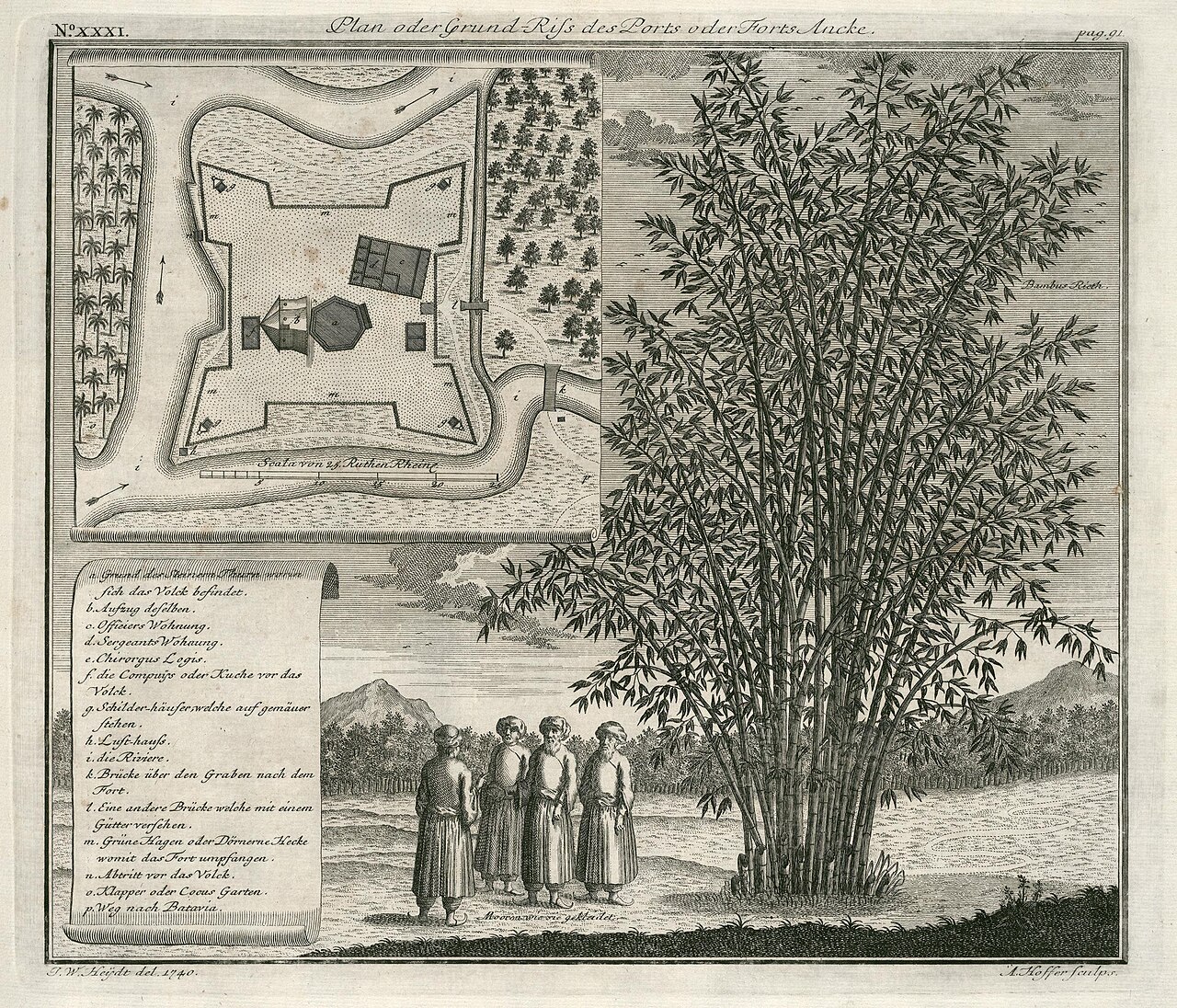
Photo by Johann Wolffgang Heydt / Andreas Hoffer • Public domain
Legacy and current state
Today, Fort Angké's remains are limited, and much of its original structure has not survived the centuries of urban development and environmental changes in Jakarta. The fort is recognized for its historical value as part of Indonesia's colonial heritage and the broader narrative of European fortifications in Southeast Asia. While it is not a major tourist attraction like some other colonial forts, Fort Angké remains a point of interest for historians and archaeologists studying the VOC's military architecture and colonial strategies.
Cultural and heritage considerations
Efforts to preserve and study Fort Angké contribute to understanding the Dutch colonial period's impact on Indonesia's urban and military landscape. The fort's story adds depth to the history of Batavia and the complex interactions between European colonizers and local populations during the 17th and 18th centuries.
Frequently asked questions (FAQ)
- What is the historical significance of Fort Angké?
- Fort Angké, built in the 17th century, played a crucial role in the defense of Batavia during the colonial era. It served as a military outpost for the Dutch East India Company and is a testament to the colonial architecture and military strategy of the time.
- When was Fort Angké constructed?
- Fort Angké was constructed between 1660 and 1665 as part of a series of forts designed to protect the port of Batavia. Its construction reflects the strategic military importance of the area during the Dutch colonial period.
- What are the opening hours for visiting Fort Angké?
- Fort Angké is open to visitors from 9 AM to 5 PM, Tuesday through Sunday. It is advisable to check for any special closure days or events that may affect visiting hours.
- Is it possible to access Fort Angké by public transportation?
- Yes, Fort Angké can be accessed by public transportation, including buses and local taxis. Visitors can also use ride-sharing services for a more convenient option, as the fort is located in North Jakarta.
- Can I take guided tours at Fort Angké?
- Yes, guided tours are available at Fort Angké, providing visitors with insights into its rich history and architectural features. It’s recommended to book a tour in advance to ensure availability.
- What is the best time to visit Fort Angké?
- The best time to visit Fort Angké is during the dry season, which runs from May to September. Visiting during these months allows for more pleasant weather and clearer skies, perfect for exploring the fort and its surroundings.
- Are there any nearby attractions to visit after Fort Angké?
- Yes, after visiting Fort Angké, you can explore several nearby attractions, including the old town of Kota Tua and the Sunda Kelapa harbor. These sites offer a glimpse into Jakarta’s colonial past and vibrant maritime history.
- How much are the ticket prices for Fort Angké?
- Ticket prices for Fort Angké are quite affordable, with general admission typically costing around IDR 10,000. Discounts may be available for students and groups, so it's worth inquiring at the entrance.
Photo gallery

Photo by Johann Wolffgang Heydt / Andreas Hoffer•Public domain
Information
Loading map...
Visitor reviews
No reviews yet. Be the first to share your experience!