
Dún Dealgan Motte
Dún Dealgan Motte is a significant medieval motte castle and a designated National Monument located in Dundalk, Ireland. This historic site represents an important example of the motte-and-bailey castle type, which was widely used across Ireland and the British Isles during the High Medieval period.
The motte and its strategic importance
The motte at Dún Dealgan consists of a large, artificial earthen mound, which would have originally supported a wooden or stone keep at its summit. This elevated position provided a commanding view over the surrounding landscape, crucial for defense and control during the turbulent medieval centuries. The motte's construction reflects the typical Norman military architecture introduced to Ireland following the Anglo-Norman invasion in the late 12th century.
Design and defensive features
The motte is surrounded by what would have been a protective ditch or moat, enhancing its defensibility. Around the base of the motte, there would have been a bailey—a fortified enclosure that housed living quarters, stables, workshops, and storage buildings. Although much of the original wooden structures have not survived, archaeological evidence and historical records help reconstruct the castle's layout and function.
Historical context and significance
Dún Dealgan Motte is closely linked to the early medieval history of Dundalk and the wider region of County Louth. The site is traditionally associated with the legendary Irish hero Cú Chulainn, who is said to have lived in the area during the Iron Age. While the motte itself dates from the medieval period, the location holds a strong cultural resonance tied to Ireland's ancient past.
Anglo-Norman influence
The motte was likely constructed during the late 12th or early 13th century as part of the Anglo-Norman efforts to consolidate control over the region. The Normans introduced the motte-and-bailey design to Ireland, which allowed rapid establishment of fortified centers to assert dominance and protect newly acquired lands. Dún Dealgan Motte thus represents a key phase in the transformation of Irish political and military landscapes.
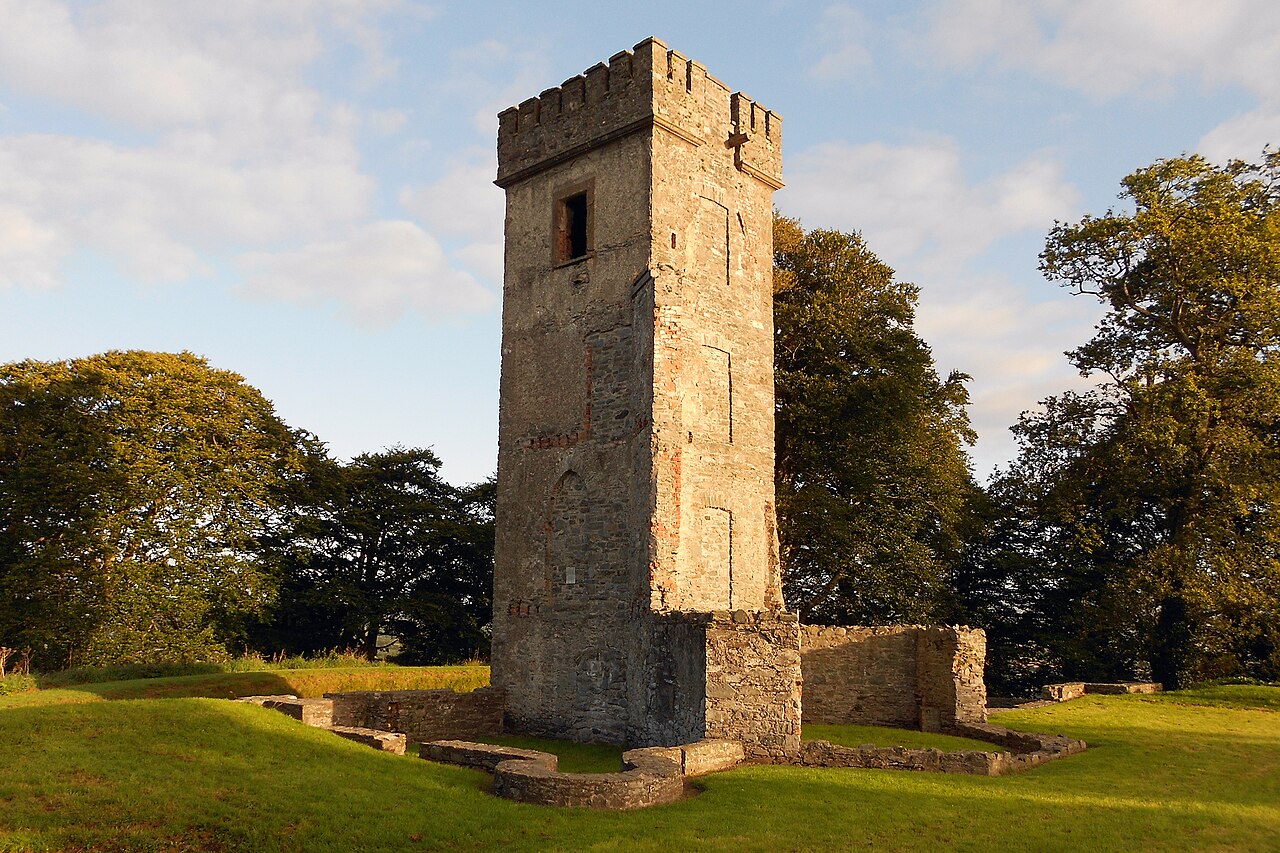
Photo by Dundalk99 • CC BY-SA 4.0
Archaeological investigations and preservation
Archaeological studies at Dún Dealgan have revealed important insights into the construction techniques and occupation phases of the motte. Excavations have uncovered remnants of defensive ditches and postholes indicating former wooden structures. The site is carefully preserved as a National Monument, with ongoing efforts to maintain its condition and facilitate public access.
Current condition and visitor experience
Today, Dún Dealgan Motte remains a prominent earthwork visible in the landscape of Dundalk. While no standing stone buildings survive, the motte's shape and surrounding features clearly convey its original defensive purpose. Visitors can explore the site and appreciate its historical significance within the context of Ireland's medieval heritage.
Architectural legacy of motte castles in Ireland
Motte castles like Dún Dealgan played a crucial role in the Norman colonization of Ireland. Their relatively simple yet effective design allowed rapid construction and provided secure bases for further expansion. As one of the better-preserved examples, Dún Dealgan Motte helps illustrate the military and social strategies employed during this transformative period.
Overall, Dún Dealgan Motte stands as a valuable monument reflecting both the medieval military architecture of motte-and-bailey castles and the layered history of the Dundalk region, from ancient legend to Norman conquest.
Frequently asked questions (FAQ)
- What is the historical significance of Dún Dealgan Motte?
- Dún Dealgan Motte is a significant medieval structure that dates back to the 12th century, representing the Norman influence in Ireland. It served as a defensive fortification and a site of local governance, reflecting the feudal system of the time.
- When was Dún Dealgan Motte built?
- Dún Dealgan Motte was constructed in the late 12th century, around the year 1170. It was built by the Normans shortly after their arrival in Ireland, marking an important period of change in the region's history.
- Can I visit Dún Dealgan Motte?
- Yes, Dún Dealgan Motte is accessible to the public. Visitors can explore the site, which offers stunning views of the surrounding area and insights into its historical context.
- What are the opening hours for Dún Dealgan Motte?
- Dún Dealgan Motte is generally open to visitors year-round, but it's best to check local resources for specific opening hours, as they may vary seasonally. Typically, the site is open during daylight hours for visitors to explore.
- Is it possible to access Dún Dealgan Motte by public transport?
- Yes, Dún Dealgan Motte is accessible by public transport, with regular bus services connecting Dundalk to nearby towns and cities. The site is a short walk from the bus stop, making it convenient for visitors without private transportation.
- What is the best time to visit Dún Dealgan Motte?
- The best time to visit Dún Dealgan Motte is during the spring and early autumn months when the weather is generally milder and more pleasant for outdoor exploration. This timing also allows visitors to enjoy the natural beauty of the surrounding landscape.
- Are there any nearby attractions to Dún Dealgan Motte?
- Yes, there are several attractions near Dún Dealgan Motte, including the picturesque town of Dundalk and the nearby Cooley Peninsula. Visitors can also explore other historical sites, such as the ruins of the old Franciscan Abbey.
- What are the ticket prices for visiting Dún Dealgan Motte?
- Visiting Dún Dealgan Motte is free of charge, allowing everyone to experience its historical significance without any entry fees. However, donations to help with the site's maintenance are always appreciated.
- How do I get to Dún Dealgan Motte from Dublin?
- To reach Dún Dealgan Motte from Dublin, you can take a train or bus to Dundalk, which is approximately 1.5 hours away. Once in Dundalk, the castle is a short walk from the town center, making it easy to explore the area.
Photo gallery

Information
Loading map...
Visitor reviews
No reviews yet. Be the first to share your experience!