
Borj le Bœuf
Borj le Bœuf is a prominent bastioned fortress located in Tunisia, representing a significant example of military architecture designed to withstand artillery attacks. Its strategic position highlights its historical role in regional defense, particularly during the period when coastal and inland fortifications were crucial for controlling trade routes and protecting against invasions.
Historical context and significance
The fortress of Borj le Bœuf was constructed during an era when fortifications were evolving to counter new military technologies, especially the widespread use of cannons and gunpowder artillery. This period saw the development of bastioned fortresses, characterized by angular bastions projecting from curtain walls, allowing defenders to cover adjacent walls with overlapping fields of fire.
While the exact construction date of Borj le Bœuf is not precisely documented, its architectural features place it within the post-medieval era, likely between the 16th and 18th centuries, when such fortifications were common in North Africa under Ottoman influence and European colonial pressures. Tunisia's strategic location on the Mediterranean made it a focal point for military and trade control, with fortresses like Borj le Bœuf playing vital roles in regional security.
Architectural features
Borj le Bœuf exemplifies the bastioned fortress design, featuring prominent angular bastions at its corners. These bastions were constructed to eliminate blind spots and provide overlapping defensive fire, a key innovation in fortification design that improved the fortress's ability to resist sieges and artillery bombardment.
The fortress walls are thick and robust, built from local stone materials to absorb and deflect cannon fire. The layout typically includes a surrounding ditch or moat, enhancing its defensive capabilities by impeding direct assaults on the walls. The entrance gate would have been fortified with additional defensive structures such as a ravelin or drawbridge, although specific details about Borj le Bœuf's gate complex are not well documented.
Inside the fortress, there would have been various functional buildings including barracks, armories, and storage facilities to support the garrison stationed there. The design reflects a balance between defensive strength and practical military needs.
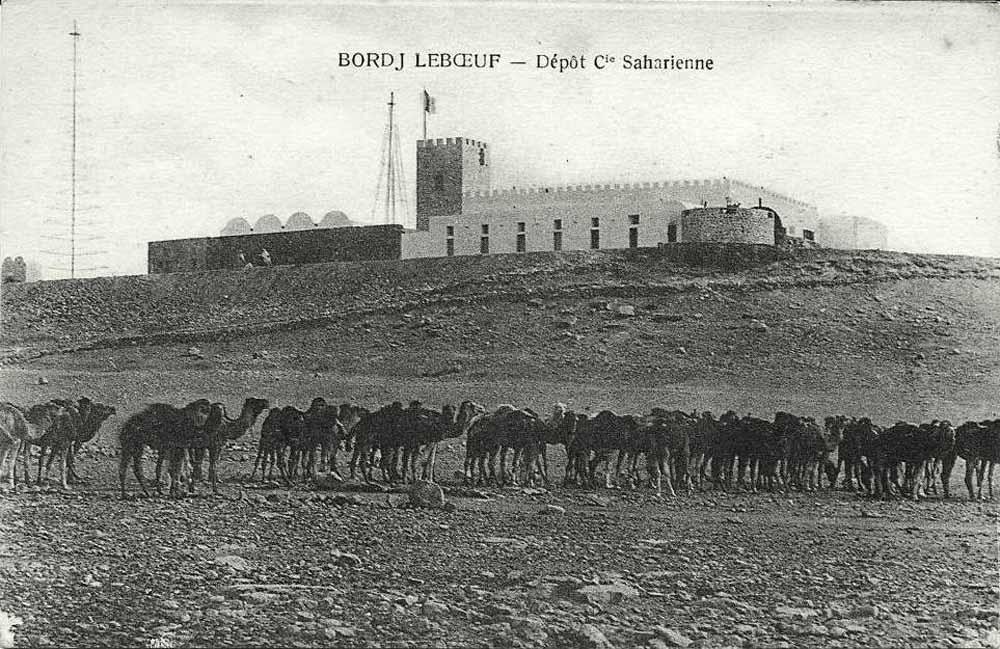
Photo by Profburp • Public domain
Strategic location and military role
Situated in Tunisia, Borj le Bœuf was part of a network of fortifications designed to secure key points along the coast and inland routes. Its bastioned design was particularly suited to withstand attacks from both land and sea, providing a stronghold against rival powers and pirates who threatened Mediterranean trade.
The fortress's military role extended beyond mere defense; it served as a base for controlling surrounding territories and projecting power in the region. Its presence contributed to the stability and security of the area during periods of conflict and political change.
Preservation and current status
Today, Borj le Bœuf remains an important cultural and historical monument in Tunisia. Although detailed information about its current condition is limited, bastioned fortresses of this type often survive as well-preserved or partially preserved structures, offering valuable insights into the military architecture of the post-medieval period.
Efforts to preserve such fortresses contribute to understanding Tunisia's historical landscape and its role in Mediterranean history. Visitors to the site can appreciate the fortress's imposing walls and bastions, which stand as a testament to the architectural and military ingenuity of the time.
Architectural legacy in Tunisia
Borj le Bœuf is part of Tunisia's broader heritage of fortifications that reflect diverse influences, including Ottoman and European military engineering. The bastioned fortress style represents a significant phase in the evolution of defensive architecture, marking a transition from medieval castles to modern fortresses designed for gunpowder warfare.
This architectural legacy is evident in other Tunisian fortresses and coastal defenses, which collectively illustrate the strategic importance of the region and its adaptation to changing military technologies.
Frequently asked questions (FAQ)
- What is Borj le Bœuf?
- Borj le Bœuf is a historic fortress located on the coast of Tunisia, known for its strategic significance in controlling maritime trade routes. Built in the 16th century, it reflects the military architecture of the Ottoman period and offers stunning views of the Mediterranean Sea.
- When was Borj le Bœuf built?
- Borj le Bœuf was constructed in the early 16th century, specifically between 1574 and 1576. It was designed to serve as a coastal defense system against potential invasions, showcasing the military ingenuity of its time.
- How do I visit Borj le Bœuf?
- To visit Borj le Bœuf, you can easily reach it by car or public transport from nearby cities. Guided tours are often available, providing insights into the castle's history and architecture, making your visit more enriching.
- What are the opening hours for Borj le Bœuf?
- Borj le Bœuf is typically open to visitors from 9 AM to 5 PM, but hours may vary seasonally. It is advisable to check in advance or call ahead to confirm current operating hours before planning your visit.
- Is it possible to access Borj le Bœuf with a wheelchair?
- While Borj le Bœuf is a historical site with some uneven terrain, efforts have been made to improve accessibility. However, due to its ancient structure, it may be challenging for those with mobility issues, so it's best to contact the site for specific accessibility options.
- Can I purchase tickets in advance for Borj le Bœuf?
- Yes, tickets for Borj le Bœuf can often be purchased in advance through various online platforms or at local tourist offices. Buying tickets ahead of time can help you avoid long lines and ensure a smooth entry into the site.
- What is the best time to visit Borj le Bœuf?
- The best time to visit Borj le Bœuf is during the spring and fall months when the weather is mild and pleasant. Visiting during these seasons allows for a more enjoyable experience as you explore the castle and its surroundings without the extreme heat of summer.
- Are there nearby attractions to visit along with Borj le Bœuf?
- Yes, there are several attractions near Borj le Bœuf, including the beautiful beaches of Tunisia and other historical sites like the ancient city of Carthage. These nearby locations provide a rich cultural experience and make for a full day of exploration.
Photo gallery

Photo by Profburp•Public domain
Information
Loading map...
Visitor reviews
No reviews yet. Be the first to share your experience!