
Çavuştepe
Çavuştepe, also known as Sardurihinilli or Haykaberd (Armenian: Հայկաբերդ, meaning 'Fortress of Hayk'), is a significant ancient fortified site from the Urartian civilization. Located on a prominent ridge near the village of Çavuştepe in the Gürpınar district of Van Province, eastern Turkey, this archaeological site stands as a remarkable example of Urartian military architecture from the 8th century BC. The fortress occupies a strategic position approximately 25 kilometers southeast of the city of Van, along the historic route toward Hakkâri, in a valley historically known as Hayots Dzor in Armenian tradition.
Historical background and significance
The fortress was established during the reign of King Sarduri II (r. 764–735 BC), one of the prominent rulers of the Urartian kingdom. Sarduri II expanded the Urartian state and fortified its borders, and Çavuştepe is believed to correspond to the fortress named Sardurihurda mentioned in his cuneiform inscriptions. As a major military and administrative center, it played a crucial role in the defense and control of the region, which was a frontier zone between Urartu and neighboring powers.
The site also holds a place in Armenian cultural memory and folklore, where it is identified as Haykaberd, the legendary fortress built by Hayk, the mythical patriarch and founder of the Armenian nation. According to tradition, this fortress was near the site where Hayk defeated the invading Babylonian king Bel, an event symbolizing the assertion of Armenian independence and identity.
Architectural features and layout
Çavuştepe fortress exemplifies the advanced military engineering of the Urartians. Constructed primarily of large, finely cut stone blocks, the fortress is situated on a naturally defensible ridge, utilizing the topography to enhance its defensive capabilities. The remains reveal a complex of defensive walls, towers, gates, and internal buildings arranged to support both military and administrative functions.
The fortress is surrounded by massive fortification walls that incorporate towers at strategic points, designed to provide overlapping fields of fire and observation. The walls are built with cyclopean masonry, characteristic of Urartian construction, which involved fitting large stones together without mortar. These walls enclosed a large area containing residential quarters, storage facilities, and workshops, indicating a self-sustaining community capable of withstanding sieges.
Archaeological excavations have uncovered remains of a palatial complex within the fortress, believed to have housed the local governor or military commander. This complex included reception halls, administrative offices, and religious spaces, reflecting the dual military and civil nature of the site. The layout demonstrates careful planning, with streets and courtyards organized to facilitate movement and defense.
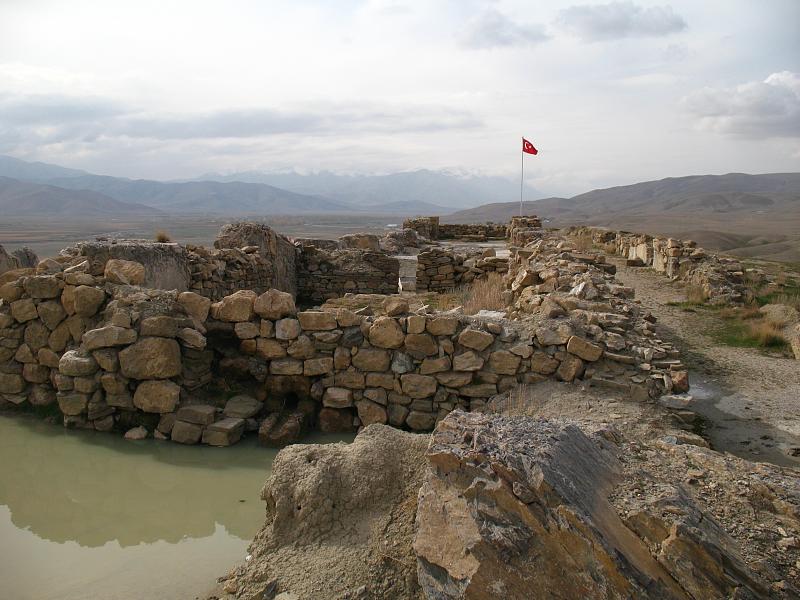
Photo by Martijn Munneke from Netherlands • CC BY 2.0
Archaeological excavations and findings
Systematic excavations at Çavuştepe began in the 20th century, revealing extensive information about Urartian architecture, society, and culture. Excavators uncovered a wealth of artifacts, including ceramics, metal objects, weapons, and inscriptions that provide insight into the daily life and governance of the fortress inhabitants.
One of the most notable discoveries is the presence of cuneiform inscriptions bearing the name of King Sarduri II, which helped confirm the site's identification with Sardurihurda. These inscriptions also shed light on the political and military activities of the Urartian kingdom during the 8th century BC.
The fortress's archaeological layers demonstrate phases of construction and repair, indicating its long-term use and strategic importance. Despite centuries of abandonment and natural decay, the ruins retain significant architectural elements that allow researchers to reconstruct aspects of Urartian fortification techniques.
Geographical and cultural context
The location of Çavuştepe in the Van Province situates it within a region rich in ancient history and cultural intersections. The Urartian kingdom was centered around Lake Van and was a major power in the Armenian Highlands during the early first millennium BC. The fortress's position near historic trade and military routes underscores its role in regional control.
Its identification with Haykaberd ties the site to Armenian national mythology, linking tangible archaeological remains with intangible cultural heritage. This dual significance enhances the site's value for historians, archaeologists, and visitors interested in the ancient Near East and Armenian history.
Current condition and preservation
Today, Çavuştepe stands as archaeological ruins that reveal the grandeur of Urartian fortifications despite the passage of nearly three millennia. The site is partially excavated and preserved, with ongoing efforts to protect its remains from environmental damage and human interference.
Visitors to the site can observe the impressive stone walls, towers, and foundations that outline the fortress's original form. Interpretive signage and guides provide context for the ruins, making Çavuştepe an important destination for those interested in ancient fortresses and Urartian civilization.
Frequently asked questions (FAQ)
- How do I get to Çavuştepe Castle?
- Çavuştepe Castle is located in Gürpınar, Turkey, and can be accessed by car or public transport from nearby cities. The castle is approximately 20 kilometers from the center of Kars, making it an easy day trip for visitors. Local bus services frequently operate to the region, so check the schedule for convenience.
- What is the historical significance of Çavuştepe Castle?
- Çavuştepe Castle dates back to the ancient Armenian kingdom, showcasing the rich cultural heritage of the region. It served as a strategic military stronghold during various periods, reflecting the historical conflicts and alliances in the area. Visitors can explore its ruins and learn about the fascinating history that shaped this site.
- When was Çavuştepe Castle built?
- Çavuştepe Castle was constructed in the 10th century and was primarily used during the medieval period. Its architecture and layout reflect the defensive needs of its time, with thick walls and strategic positioning. The castle remains an important example of medieval Armenian architecture.
- Can I take guided tours of Çavuştepe Castle?
- Yes, guided tours of Çavuştepe Castle are available for visitors who want to learn more about its history and architecture. Local guides are knowledgeable and can provide in-depth insights into the castle's significance and the surrounding area. It's a great way to enhance your visit.
- Why is Çavuştepe Castle a popular tourist destination?
- Çavuştepe Castle is popular due to its stunning views of the surrounding landscape and its rich historical background. The castle's unique architecture and its role in regional history attract history enthusiasts and adventure seekers alike. It also offers a peaceful atmosphere away from the hustle of urban life.
- Is it possible to access all areas of the castle?
- While many parts of Çavuştepe Castle are accessible to visitors, some areas may be restricted due to safety concerns. Be sure to follow the guidelines provided by staff during your visit to ensure a safe experience. Exploring the accessible sections will still provide a comprehensive view of the castle's layout and history.
- What are the opening hours for Çavuştepe Castle?
- Çavuştepe Castle is typically open to visitors from 9 AM to 5 PM, although hours may vary seasonally. It is advisable to check for any special closures or holiday hours before planning your visit. Arriving early can help you avoid crowds and enjoy a more intimate experience.
- What are the ticket prices for visiting Çavuştepe Castle?
- Ticket prices for Çavuştepe Castle are generally affordable, making it accessible for a wide range of visitors. Discounts may be available for students and groups, so it's worth inquiring about any special rates upon arrival. Ensure you have cash on hand, as card payments may not always be accepted.
- What is the best time to visit Çavuştepe Castle?
- The best time to visit Çavuştepe Castle is during the spring and early autumn months when the weather is mild and pleasant for outdoor exploration. This timing also allows visitors to enjoy the beautiful surrounding landscapes in full bloom. Summer can be hot, while winter may present challenging conditions for accessing the castle.
- Are there any nearby attractions to visit after Çavuştepe Castle?
- Yes, there are several nearby attractions worth exploring after visiting Çavuştepe Castle. The city of Kars offers historical sites such as the Kars Fortress and the Ani Ruins, a UNESCO World Heritage site. Enjoying local cuisine in Kars can also enhance your cultural experience during your visit.
Photo gallery

Information
Loading map...
Visitor reviews
No reviews yet. Be the first to share your experience!