
Çandır Castle
Çandır Castle, known locally as Çandır Kalesi and historically as Paperōn or Barbaron in medieval Armenian, is a significant fortress located on a mountain north of the village of Çandır in Mersin Province, Turkey. This castle stands as a remarkable example of early medieval fortifications in the Taurus Mountains, reflecting a rich history intertwined with Byzantine and Armenian rule.
The origins of Çandır Castle trace back to the Byzantine Empire, with construction possibly beginning as early as the 5th century. This dating aligns with historical accounts that suggest the fortress served as a refuge for the Byzantine Emperor Zeno during the turbulent years of 475/6. The castle’s strategic location atop a limestone mountain at an altitude of approximately 1,450 meters provided natural defenses that were enhanced by human ingenuity.
Historical context and Armenian influence
In the aftermath of the Seljuk invasions in the late 11th century, many Armenian nobles fled the regions north and east of Van, seeking refuge in Cilicia. This region became the foundation for the Armenian Kingdom of Cilicia, which lasted until the late 14th century. Çandır Castle was seized from the Byzantines and became a critical stronghold for Armenian rulers.
The castle was notably held by the Hethumid family, one of the most powerful Armenian noble houses. By the late 11th century, Çandır, alongside Lampron Castle, served as a principal seat of the Hethumids. An important figure associated with the castle was Abul-Gharib Arsruni, an Armenian governor who used the fortress as his treasury and was eventually buried there.
In 1329, Çandır Castle became a royal possession, marking its elevated status within the Armenian Kingdom. However, the mid-14th century saw the castle briefly fall under the control of the Karamanids, a Turkish principality. Later, it was conquered by the Mamluks in the late 14th century, after which it likely served as a district headquarters before fading from historical records.
Architectural features and layout
Çandır Castle is uniquely situated on a lofty, triangular plateau atop a limestone mountain in the Taurus range. The plateau's sides are formed by nearly vertical cliffs, creating a natural fortress that required minimal man-made defensive structures. The existing walls primarily act as revetments to stabilize the summit rather than traditional defensive walls or towers.
Access to the castle is via a winding staircase carved directly into the eastern cliff face, a remarkable example of medieval engineering adapted to the rugged terrain. This stairway was the only practical route to the summit, enhancing the fortress's defensibility.
On the summit, the remains of several significant structures are visible. Among these are the ruins of a 13th-century Armenian church, reflecting the religious and cultural life of the castle’s inhabitants. Additionally, there is a two-story residential building in ruins, which likely served as the living quarters for the castle's elite.
A more recent structure, now also in ruins, was once the residence of a fire warden affiliated with the Turkish Ministry of Forestry, indicating the site's continued albeit limited use into modern times.
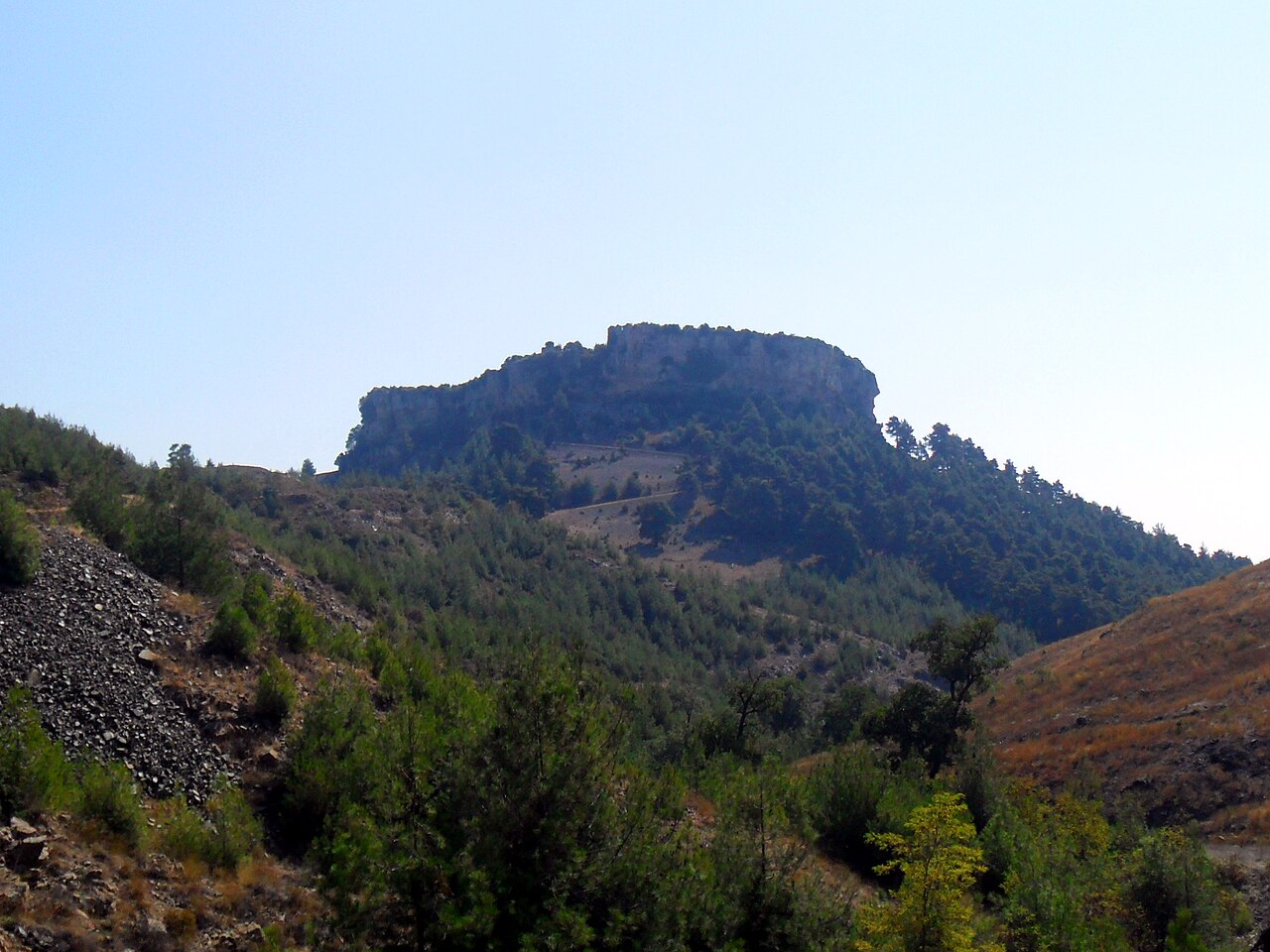
Photo by Nedim Ardoğa • CC BY-SA 3.0
Visiting Çandır Castle today
Today, Çandır Castle is accessible to visitors interested in exploring its rugged heritage. The journey to the castle requires a 4WD vehicle due to the challenging unpaved mountain roads, with the shortest route taking over 40 minutes from the nearest paved road. Visitors must locate the entrance to the cliff-carved staircase on the east side to access the summit.
While the castle is somewhat off the beaten path and lacks extensive visitor facilities, it offers a unique glimpse into the military and architectural ingenuity of the Byzantine and Armenian periods. The panoramic views from the summit provide a striking perspective of the Taurus Mountains and the surrounding Cilician landscape.
Significance in regional history
Çandır Castle’s history encapsulates the complex political and military shifts in southeastern Anatolia from the early Byzantine era through the medieval Armenian kingdom and into the period of Turkish and Mamluk control. Its natural fortifications and strategic position underscore its importance as a military stronghold and administrative center over several centuries.
The castle's connection to notable Armenian noble families, especially the Hethumids, highlights its role in the governance and defense of the Armenian Kingdom of Cilicia. The presence of religious structures such as the 13th-century church also points to the cultural and spiritual dimensions of the castle community.
Despite its current ruined state, Çandır Castle remains a valuable archaeological and historical site, offering insights into the architectural practices and feudal dynamics of the region during the early medieval and high medieval periods. Its preservation as a ruin allows for ongoing study and appreciation of its layered past.
Frequently asked questions (FAQ)
- What is the historical significance of Çandır Castle?
- Çandır Castle dates back to the Byzantine era and has played a crucial role in the region's defense throughout history. It served as a strategic point for controlling trade routes and protecting the surrounding area from invasions.
- When was Çandır Castle built?
- The exact date of construction is not well-documented, but it is believed to have been built in the 11th century. Over the centuries, it has undergone various renovations and restorations, reflecting the architectural styles of different periods.
- Can I visit Çandır Castle?
- Yes, Çandır Castle is open to visitors. You can explore the ruins and enjoy the stunning views of the surrounding landscape, making it a great spot for photography and history enthusiasts alike.
- What are the opening hours for Çandır Castle?
- Çandır Castle is typically open to visitors from 9 AM to 6 PM, but it's advisable to check for any seasonal changes or special events that might affect these hours. Planning your visit during daylight allows you to fully appreciate the site's beauty.
- Is it possible to access Çandır Castle by public transportation?
- Yes, you can reach Çandır Castle via public transportation, with local buses operating from nearby towns. However, be prepared for a short hike to the castle itself, as it is situated on elevated ground.
- What is the best time to visit Çandır Castle?
- The best time to visit Çandır Castle is during the spring and fall months when the weather is mild and pleasant. These seasons offer a comfortable climate for exploring the castle and enjoying the surrounding nature.
- Are there any nearby attractions to visit along with Çandır Castle?
- Yes, there are several nearby attractions, including historical sites and natural parks. The nearby village of Çandır itself offers charming local culture, while other historical ruins in the region provide additional context to the area's rich history.
- How much are the ticket prices for Çandır Castle?
- Entry to Çandır Castle is generally free of charge, allowing visitors to explore the site without any cost. However, it's wise to check for any special guided tours that may have associated fees.
Photo gallery

Information
Loading map...
Visitor reviews
No reviews yet. Be the first to share your experience!