
Šabac Fortress
Šabac Fortress stands as a significant historical monument in the municipality of Šabac, Serbia, embodying centuries of military and political history along the Sava River. This hill castle was originally documented in 1454 under the name “Zaslon,” highlighting its early strategic importance near one of the region's key waterways. Its location was pivotal for controlling river traffic and defending territories during the turbulent border conflicts between the Ottoman Empire and the Habsburg Monarchy.
The fortress's most notable construction phase began in 1471, commissioned by the Ottoman Empire, likely under the direction of Isa-bey Isaković, an Ottoman governor responsible for consolidating Ottoman control in the region. This initial Ottoman fortress complex included a main defensive structure along with inner and outer town sections. The early design featured nine wooden towers and a sophisticated system of moats ingeniously connected to the flow of the Sava River, integrating natural water defenses into the fortress's protection strategy.
Architectural evolution and Ottoman reconstruction
By the first half of the 16th century, the fortress underwent a major transformation to adapt to evolving military technologies and threats. The Ottomans replaced the original wooden towers and fortifications with more durable materials, reconstructing the fortress in a regular rectangular layout using stone and brick. This redesign reflected the Ottoman military architectural practices of the period, emphasizing fire resistance and structural strength.
The fortress measured approximately 150 meters in length and 60 meters in width, with a design comparable to other Ottoman fortresses along the Sava and Danube rivers, such as Kladow (Fetislam) and Zemun Fortress. Each of the four corners was fortified with a circular tower about 10 meters in diameter, providing comprehensive defensive coverage. The curtain walls connecting these towers were robust and built to withstand sieges and artillery fire.
Defensive features and water integration
A distinctive aspect of Šabac Fortress was its integration of natural water defenses. The moat system was directly linked to the Sava River, allowing water to flow through the defensive ditches, which enhanced the fortress's ability to resist attacks. This use of the river as a defensive element demonstrates the strategic ingenuity of Ottoman military engineers during this period.
Historical significance and military role
Šabac Fortress played a crucial role as a contested stronghold on the volatile border between the Ottoman Empire and the Habsburg Monarchy. Over the centuries, it changed hands at least ten times, underscoring its strategic value in regional conflicts. The fortress's control was vital for securing the surrounding lands and maintaining influence over river navigation routes.
During the 18th century, when the fortress fell under Austrian control, it was modernized to meet contemporary military standards. These upgrades reflected advances in artillery and fortification design, adapting the fortress to new forms of warfare. Despite these efforts, the fortress's military importance waned as political borders shifted.
In 1867, Šabac Fortress was permanently incorporated into the Principality of Serbia, marking the end of its role as a frontier fortress between empires. Since then, it has been preserved as a cultural and historical landmark, symbolizing the complex heritage of the region.
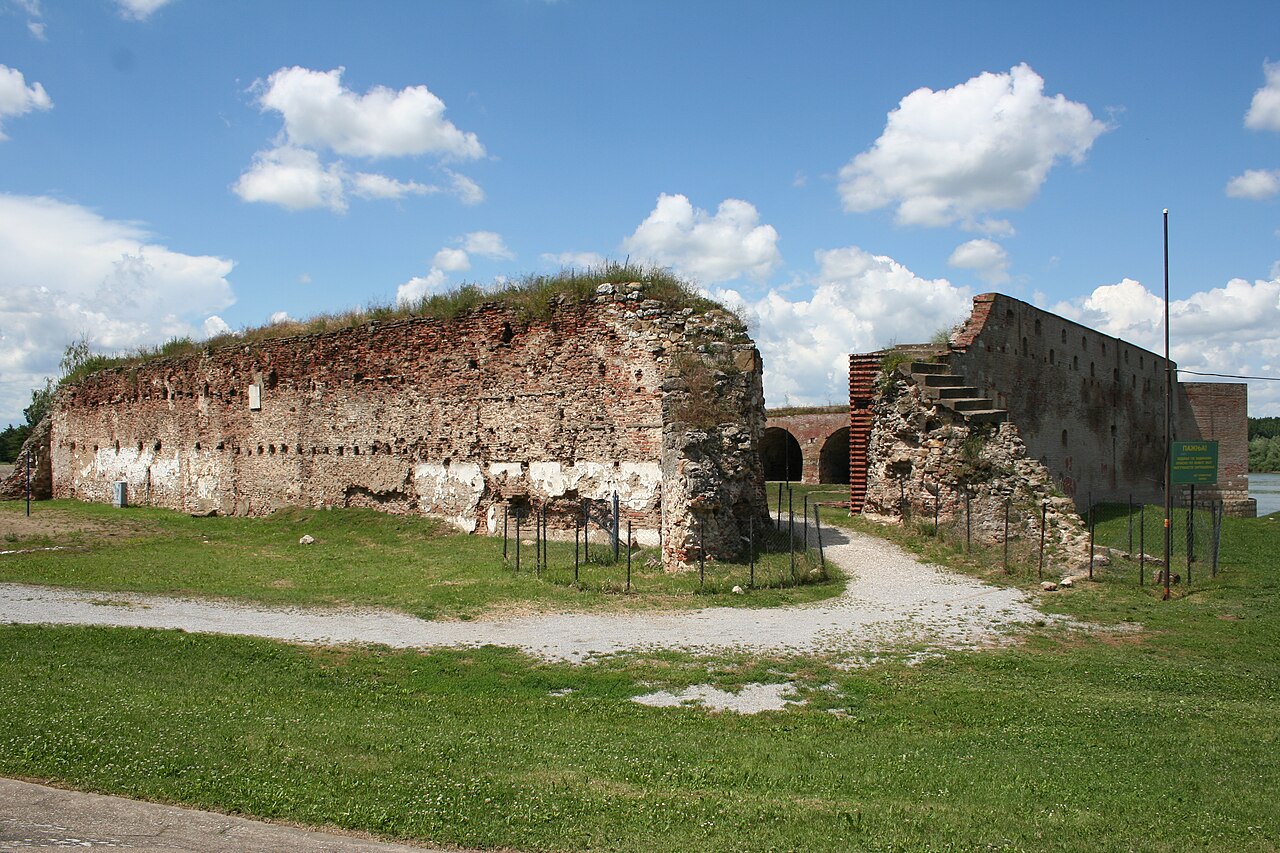
Photo by Ванилица • CC BY-SA 4.0
Current state and archaeological remains
Today, only the southern half of the fortress remains visible. This includes two of the original circular towers and a section of the curtain wall, built primarily of stone and brick from the Ottoman reconstruction era. The northern half of the fortress was lost to erosion by the Sava River, which gradually consumed this portion of the site over time.
The surviving structures provide valuable insight into Ottoman military architecture, showcasing typical construction methods that combined brick and stone to create durable, fire-resistant defenses. The remnants of the moat system still illustrate how water was incorporated into the fortress's defensive design.
While the precise remains of the earlier Serbian fortress that preceded the Ottoman construction have not been identified archaeologically, historical records suggest it occupied higher ground near the river, emphasizing the site's long-standing strategic importance.
Preservation and cultural heritage
Šabac Fortress is recognized as an important cultural monument in Serbia. Its ruins attract historians, archaeologists, and visitors interested in the military history of the Balkans and Ottoman fortifications. Efforts to preserve the remaining structures continue, highlighting the fortress's role as a testament to the region's dynamic past and architectural heritage.
Visitors to the site can explore the surviving towers and walls, gaining a tangible sense of the fortress's original scale and defensive capabilities. The fortress remains a symbol of the enduring historical conflicts and cultural exchanges that shaped the borderlands of southeastern Europe.
Frequently asked questions (FAQ)
- How do I get to Šabac Fortress?
- Šabac Fortress is located in the city of Šabac, Serbia. It is accessible by local roads and public transportation from major Serbian cities such as Belgrade. Visitors can reach the site by car or bus, with parking available nearby.
- What is the historical significance of Šabac Fortress?
- Šabac Fortress was a key Ottoman stronghold on the Sava River, playing a crucial role in the military conflicts between the Ottoman Empire and the Habsburg Monarchy. Its strategic location made it a contested border fortress for centuries.
- Can I visit the interior of Šabac Fortress?
- The fortress is mostly in ruins, with only parts of the southern half preserved, including two towers and curtain walls. Visitors can explore these remains, but there are no fully restored interior sections open for tours.
- When is the best time to visit Šabac Fortress?
- The best time to visit is during the late spring to early autumn months when the weather is favorable for outdoor exploration. The site is open year-round, but conditions are most pleasant from May to September.
- Is there an entrance fee to visit Šabac Fortress?
- Visiting Šabac Fortress is generally free of charge, as it is an open archaeological site managed by the municipality. However, special events or guided tours may have associated fees.
Photo gallery

Information
Current owner
Municipality of Šabac
Loading map...
Visitor reviews
No reviews yet. Be the first to share your experience!